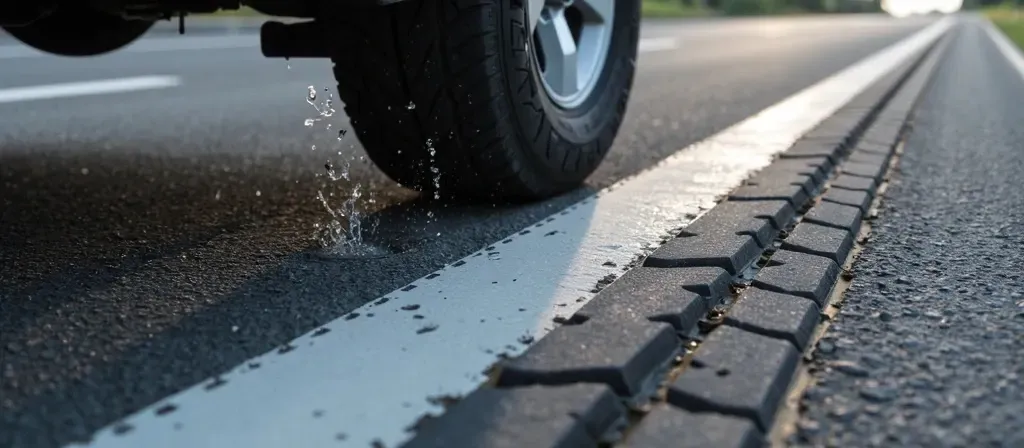
How to Prevent Repaired Driveway Cracks from Returning
Summary
Repaired driveway cracks are less likely to reopen when the repair addresses ongoing movement, drainage problems, and material compatibility. For Denver properties, freezing weather and snowmelt make moisture management especially relevant. Identify why the previous repair failed, prepare the concrete properly, and protect the new repair while it cures.
A repaired crack that opens again does not automatically need a stronger filler. The concrete may still be moving, water may be affecting its support, or the repair material may have separated from poorly prepared edges. Covering the same line again can leave those conditions unresolved.
Concrete driveway crack repair and resurfacing services in Denver cover different levels of deterioration, making the condition of the surrounding slab an important starting point.
Denver Concrete Driveway Pros is locally owned and operated and provides driveway repair and replacement services. Before deciding on either approach, establish whether the problem is limited to the repair itself or involves the slab beneath it.
Identify What Actually Failed
Look closely at the old repair before removing it. The failure pattern helps frame the questions a contractor needs to answer:
- Filler has pulled away from one edge: Poor bonding, contamination, or movement beyond the material’s capacity may be involved.
- The repair has split down the middle: The crack may still be opening and closing, or the repair material may have shrunk.
- Concrete beside the patch is breaking apart: The surrounding material may be too weak to support another surface repair.
- One side is higher than the other: Settlement, heaving, or another support problem needs evaluation.
The different types of cracks in concrete driveways include shrinkage, settlement, and heaving, so these patterns need evaluation. Photograph the crack with a ruler beside it and record the date, weather, and any height difference. Comparing the same points over time is more useful than relying on memory. Avoid choosing a repair solely from crack width: a narrow crack with continuing displacement can deserve more attention than a wider, stable opening.
Correct Water Problems Before Repeating the Repair
For a Denver driveway, inspect where snowmelt travels and where water remains after rain. A repaired crack directly beneath a downspout or beside an overwatered planting bed remains exposed to a recurring moisture source.
Check for overflowing gutters, leaking irrigation, blocked drainage routes, and soil washed away along slab edges. Correct those sources before final crack treatment. Redirecting water should provide a suitable discharge route without creating another wet area beside the house or neighboring property.
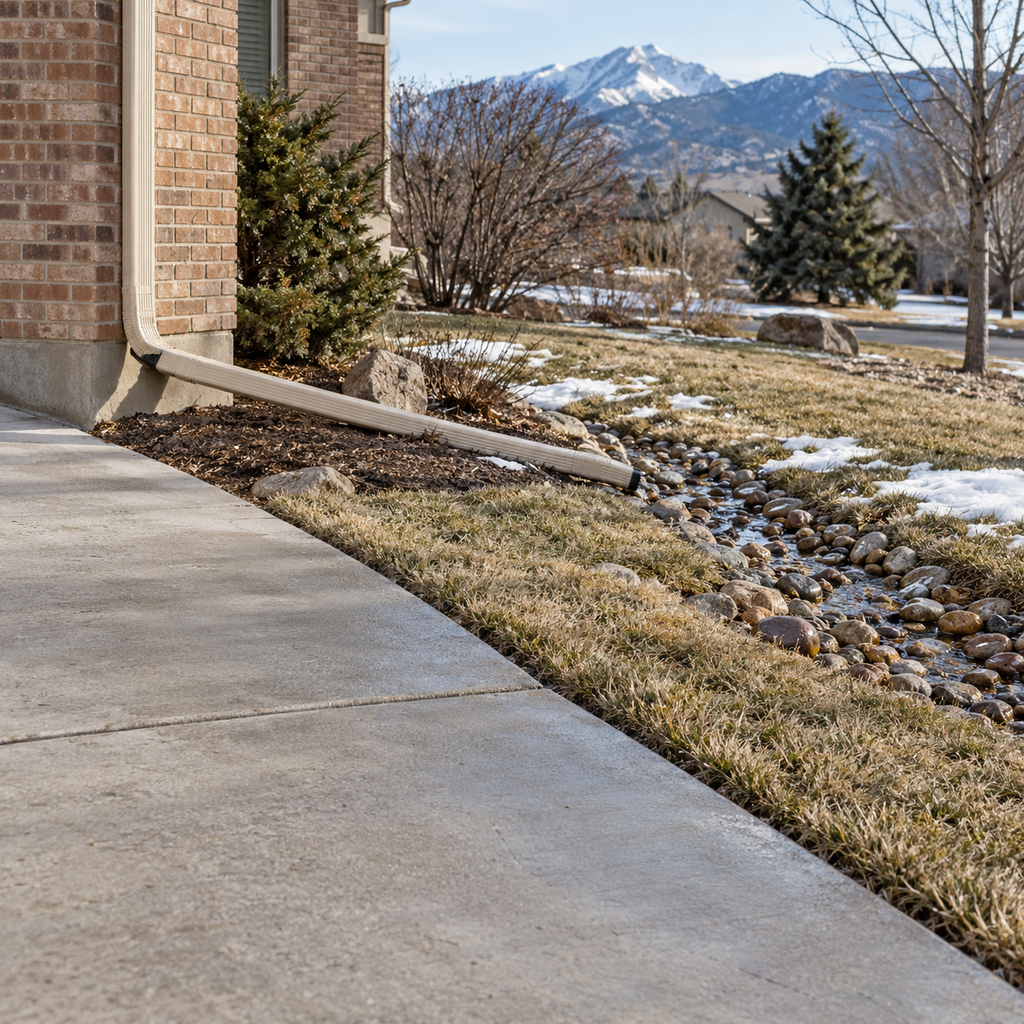
If water collects because a panel has sunk, sealing the crack will not restore the driveway’s slope. The panel and its support need assessment. Likewise, filling a visible gap along an edge does not establish that any void beneath the slab has been corrected.
Match the Repair to Movement and Slab Condition
A stable crack and a moving crack have different repair needs. A rigid repair can bond sound concrete, but continued opening and closing may break that repair or create a new crack nearby. An exterior sealant rated for the anticipated movement may suit some nonstructural cracks, although it does not restore missing support or correct vertical displacement.
Ask what the proposed material is intended to accomplish: reduce water entry, accommodate movement, repair damaged edges, or restore a structural connection. These functions are not interchangeable.
Existing joints also matter. The National Ready Mixed Concrete Association’s guidance on cracking concrete surfaces explains how temperature and moisture changes, support conditions, and inadequate jointing contribute to cracking. Filling an intended movement joint with rigid patching material can interfere with its function. If a panel requires replacement, the proposal should address drainage, uniform support, joint layout, and curing alongside the concrete itself.
Treat Preparation and Curing as Part of the Repair
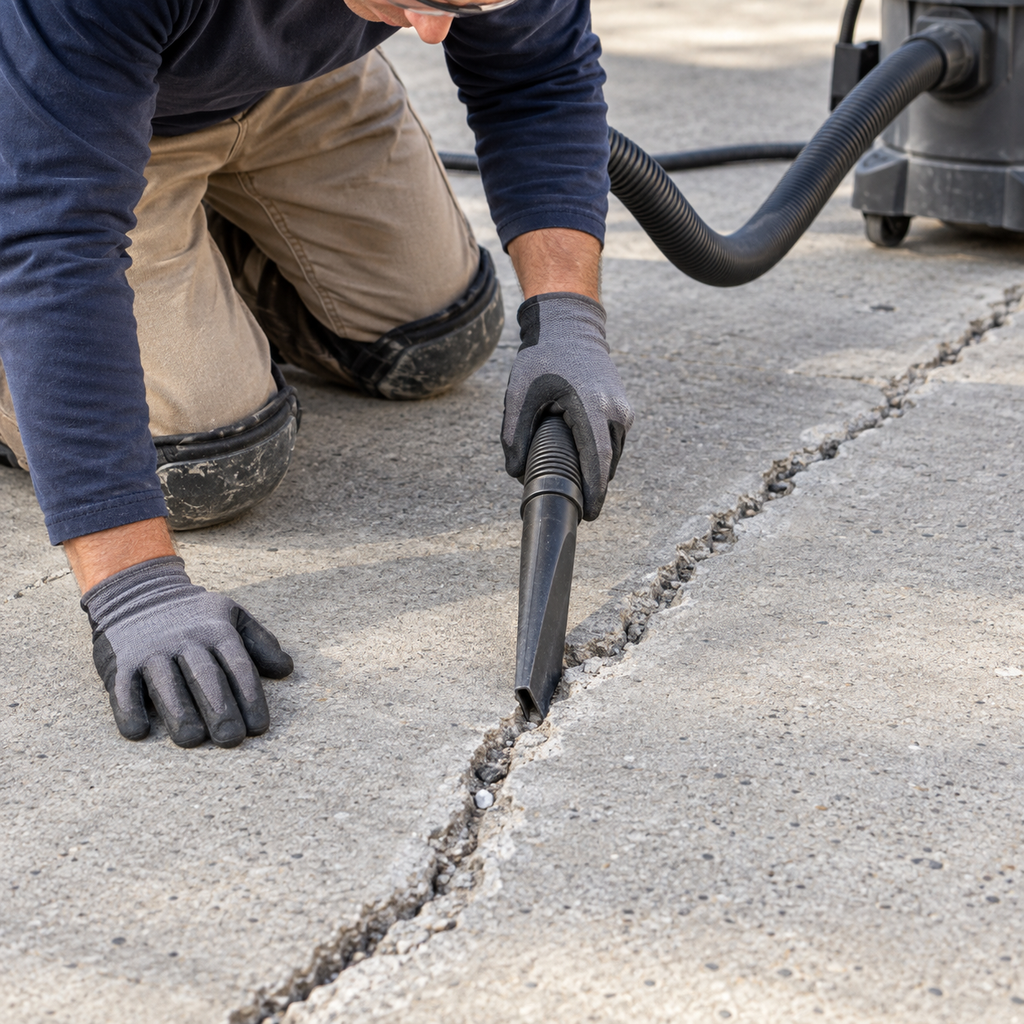
A repair depends on its connection to the existing concrete. Loose material, dust, oil, and remnants of an incompatible filler can interfere with adhesion. Spreading fresh material over a deteriorating patch may simply attach the new repair to something already failing.
The selected product determines the preparation requirements. Confirm:
- Whether failed filler and unsound concrete must be removed.
- Whether the surface must be dry or pre-dampened.
- Whether a primer, backer rod, or specific repair depth is required.
- The permitted concrete and air temperatures during application and curing.
- When the repair can receive water exposure and vehicle traffic.
For Denver work, check overnight temperatures as well as the afternoon forecast. A warm installation period does not establish suitable conditions through the night. Keep vehicles off the repair for the specified period; a surface that feels firm may still be developing the properties needed for traffic.
Protect the Repair Through Seasonal Changes
After the repair cures, keep drainage routes clear and remove snow without striking repaired edges. Avoid repeated scraping or aggressive washing directly against sealant. Follow the repair product’s guidance for cleaning and exposure to deicing products.
A compatible surface sealer may reduce moisture absorption, but it cannot stabilize moving soil, reconnect a displaced panel, or make an active crack disappear. Confirm compatibility with existing coatings and repair materials before applying it.
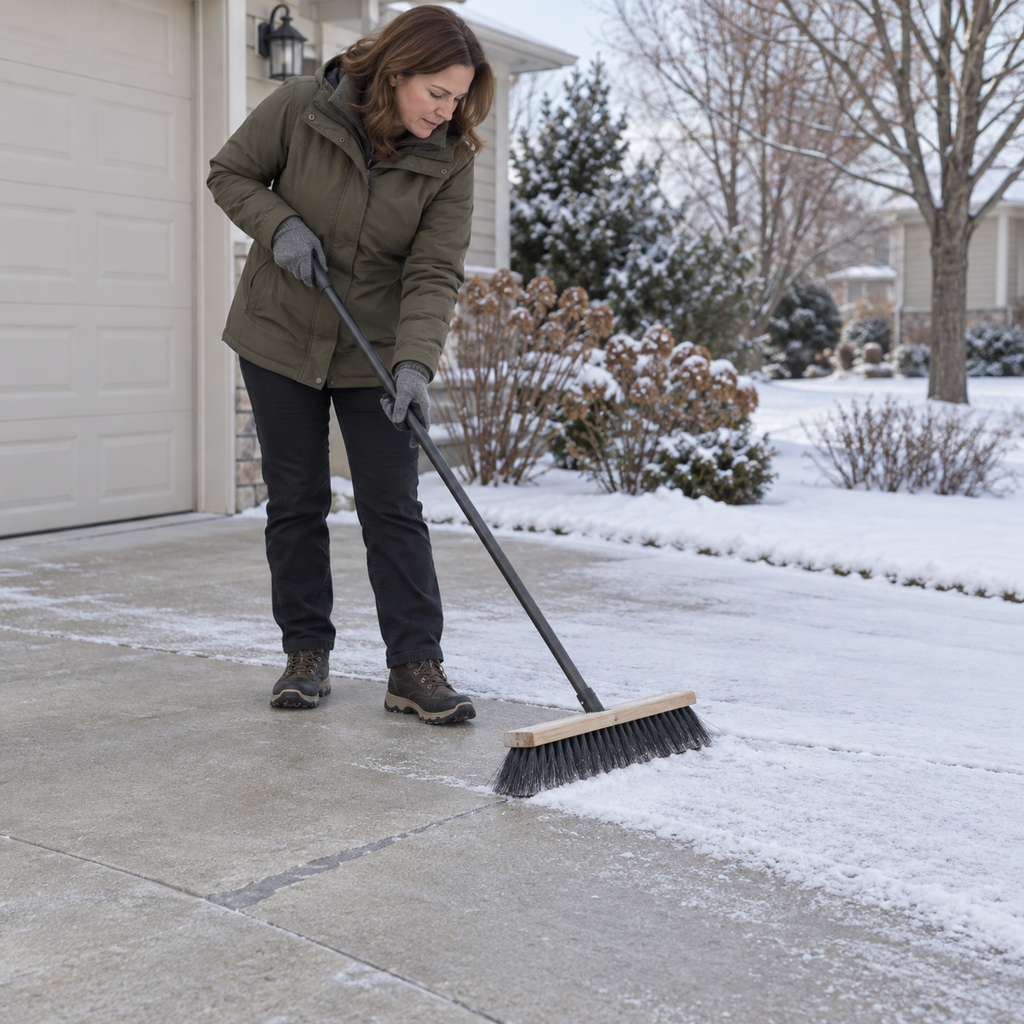
Inspect repaired areas after winter and after noticeable changes in drainage. Record separation, fresh cracking, crumbling edges, or changes in elevation. A broader maintenance plan for your Denver concrete driveway also includes routine cleaning and drainage checks. Renewing worn sealant can be routine maintenance; repeated failure accompanied by slab movement calls for reassessment.
Make the Next Repair Address the Cause
Before approving another repair, request a written explanation of the likely cause, the work needed to address it, and the limits of the proposed treatment. Ask what would make localized panel replacement more appropriate than another patch.
No repair can promise permanently crack-free concrete. Better durability comes from correcting manageable causes, choosing a treatment suited to the remaining movement, and maintaining the repaired area as conditions change.

Written By:
Kurt Manalastas
Home Improvement Research Specialist
Kurt is a Home & Property Research Journalist who researches and writes educational content on home services, property improvement, and residential decision-making. He focuses on translating real-world contractor experience, industry standards, and verified research into clear, practical guidance that helps homeowners understand their options and make informed decisions.