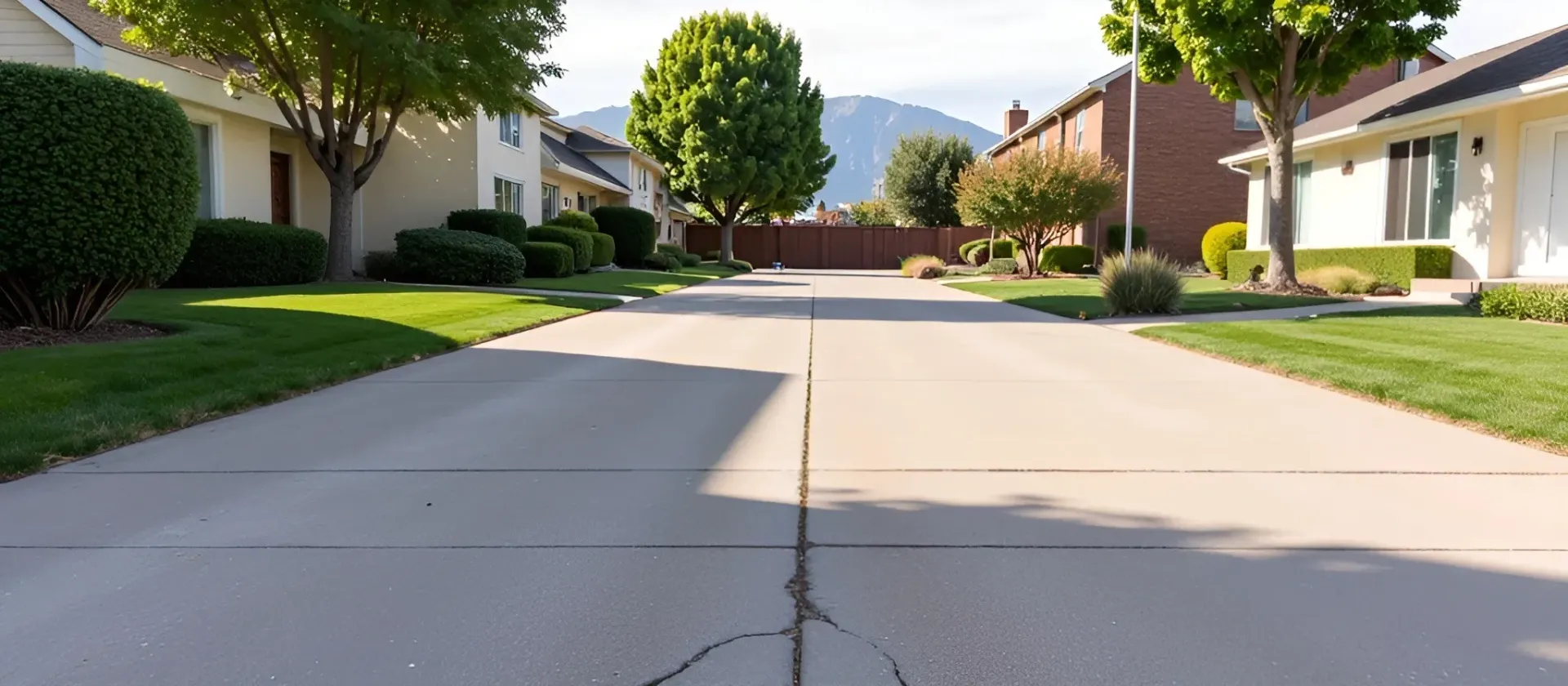
How Snow and Ice Affect Concrete Driveways in Denver
Summary
Snow alone does not usually damage a concrete driveway. Problems develop when meltwater enters pores or cracks, freezes, and contributes to repeated expansion, surface scaling, and slab movement. Prompt snow removal, controlled drainage, careful deicer use, and timely repairs can reduce winter deterioration.
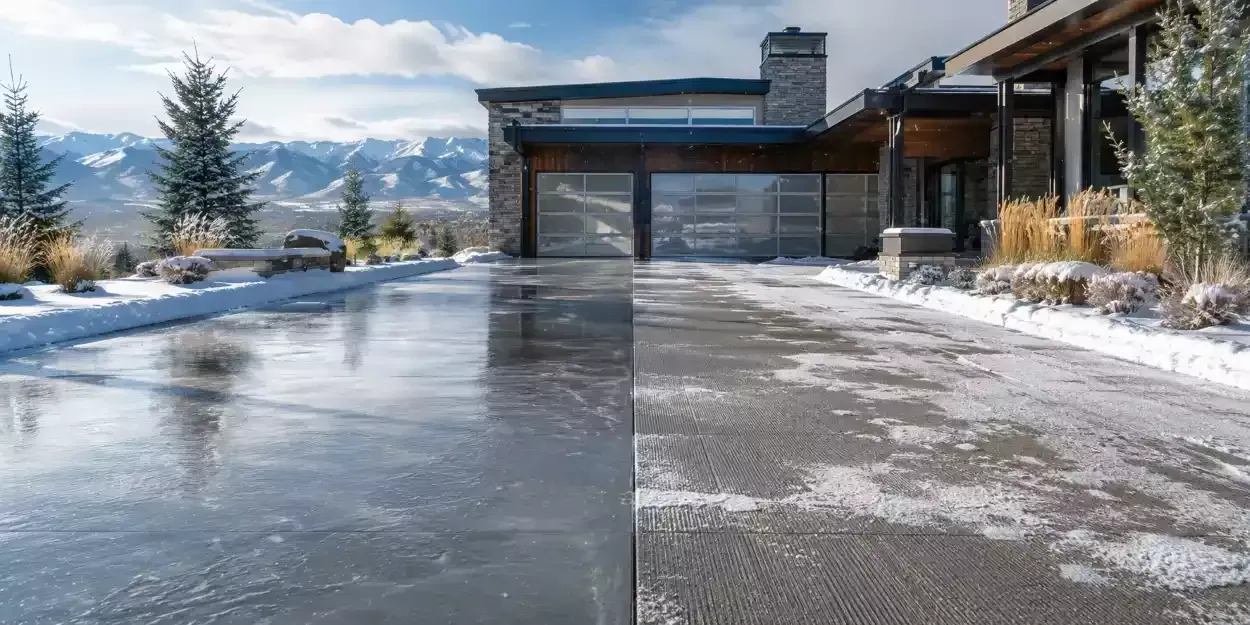
Concrete appears solid, but it contains small pores that can absorb moisture. During a Denver winter, snow may melt during warmer daylight hours and freeze again as temperatures fall. These repeated changes can gradually expose weaknesses in the surface, joints, drainage, or supporting base.
Existing damage deserves attention before another winter increases moisture exposure. Options for
concrete driveway repair in Denver for cracks, settling, and surface wear depend on whether the problem is limited to the surface or extends through the slab.
Denver Concrete Driveway Pros is a locally owned and operated business that provides concrete installation, repair, and replacement for residential and commercial properties.
Why Freeze-Thaw Cycles Matter
Moisture entering concrete does not automatically cause visible damage. The risk rises when the concrete becomes sufficiently saturated and then freezes repeatedly. Pressure can develop within the material as water turns to ice. Entrained air in properly designed exterior concrete provides microscopic spaces that help relieve that pressure.
Several conditions can make a driveway more vulnerable:
• Open cracks that collect meltwater
• Worn or porous surface areas
• Poor drainage that leaves water standing

• Weak surface concrete caused by improper finishing or curing
• Concrete that was not designed for freezing exposure
• Repeated or excessive use of deicing chemicals
The resulting deterioration usually develops over time rather than after one snowstorm. Each winter may widen an existing crack, loosen more surface mortar, or allow water to reach deeper into the slab and base.
Snow and Ice Can Cause More Than Cracking
Cracks receive the most attention, but winter-related concrete damage can take several forms.
Scaling appears as flaking or peeling at the surface. It may begin in isolated patches and eventually expose aggregate. According to NRMCA guidance on scaling concrete surfaces, saturated concrete exposed to freeze-thaw cycles is susceptible to scaling, and deicing chemicals can intensify the exposure.
Spalling involves larger or deeper pieces of concrete breaking away. Moisture intrusion, corrosion around embedded steel, impact, and advanced surface deterioration can all contribute, so the cause should be evaluated rather than assumed.
Crack widening happens when water enters an existing opening and repeated freezing contributes to further movement. The crack may also allow water to wash fine material from beneath the slab.
Settlement or heaving can leave slab sections at different elevations. Seasonal ground movement may be involved, but drainage problems, erosion, or an unstable base can produce similar symptoms.
Warning Signs to Check After Winter
Inspecting a driveway after the snow season helps distinguish cosmetic wear from developing damage. Look for:
• New cracks or noticeable growth in old ones
• Flaking concentrated near tire paths or snow-storage areas
• Loose surface material after sweeping
• Exposed aggregate where the top layer has disappeared
• Water collecting beside joints or low sections
• Raised or sunken slab edges
• Cracks that remain damp after the surrounding concrete dries
Crack shape and location provide useful clues, but width alone does not reveal the complete cause. The guide to
types of cracks in concrete driveways explains how structural, settlement, shrinkage, and freeze-thaw-related cracking can differ. A crack that returns after filling may indicate movement or moisture beneath the repair rather than a simple failure of the filler.

Deicers Require Careful Use
Ice melt can improve access, but frequent application may increase the likelihood of surface scaling. Deicers create liquid water at temperatures when untreated ice might remain frozen. That salty meltwater can enter porous or damaged concrete and keep the surface wetter through additional temperature changes.
Avoid assuming that a product labeled pet-safe, fast-acting, or environmentally friendly is automatically safe for concrete. Check its ingredients, concrete restrictions, temperature range, and application rate. Products containing ammonium sulfate or ammonium nitrate are particularly unsuitable because they can chemically attack concrete.
New concrete requires additional caution. Follow the installer’s and product manufacturer’s instructions before applying any deicer. For traction without encouraging more melting, clean sand can be a practical alternative, although it must later be swept up to keep it from entering drains.
Deicer brought home on vehicle tires can also accumulate in the same parking areas. When temperatures allow, removing residue helps limit prolonged exposure.
Reduce Winter Damage Through Moisture Control
Early snow removal is one of the simplest protective measures. Clearing the driveway before snow becomes compacted reduces the amount available to melt and refreeze. Use a shovel or snowblower with edges that will not gouge the surface, especially around uneven joints.
Drainage also matters. Downspouts should not discharge onto the driveway, and meltwater needs a route away from the slab. A low area that repeatedly holds water exposes the concrete to more moisture and creates an icing hazard.

Before winter, clean joints and inspect previous repairs. Sealing a suitable crack may reduce water entry, but it will not correct settlement, ongoing slab movement, or a failed base. Surface sealers may reduce absorption when correctly selected and applied to sound concrete, but they do not restore deteriorated material.
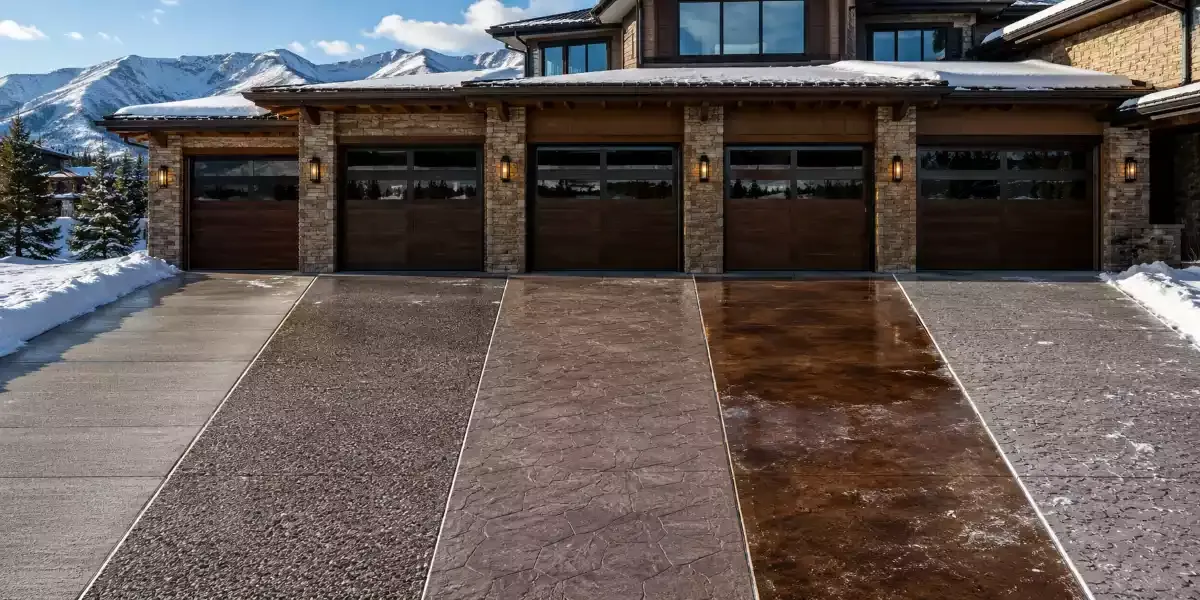
Traction should also influence finish decisions when replacing a driveway. A highly smooth surface can become difficult to walk or drive on when wet or icy. The discussion of why surface texture matters for skid resistance in Denver provides additional guidance on texture, slope, and winter grip.
Decide Whether to Monitor, Repair, or Replace
Small, stable cracks and light cosmetic wear may only require monitoring or targeted maintenance. Professional evaluation becomes more useful when cracks are widening, surfaces are scaling across multiple areas, slab sections are moving, or water continually collects in the same location.
Repair is most practical when the underlying concrete and base remain sound. Resurfacing can address certain surface problems, but it should not be used to hide active movement or extensive deterioration. Replacement may provide better long-term value when damage affects much of the driveway, several slabs have shifted, or previous repairs repeatedly fail.
Snow and ice do not affect every Denver driveway equally. Concrete quality, age, drainage, exposure, finish, deicer use, and existing damage all shape the outcome. Inspecting the surface regularly and addressing the source of moisture or movement gives repairs a better chance of lasting through future winters.

Written By:
Kurt Manalastas
Home Improvement Research Specialist
Kurt is a Home & Property Research Journalist who researches and writes educational content on home services, property improvement, and residential decision-making. He focuses on translating real-world contractor experience, industry standards, and verified research into clear, practical guidance that helps homeowners understand their options and make informed decisions.