Is It Worth Repairing an Older Concrete Driveway in Denver?
Summary
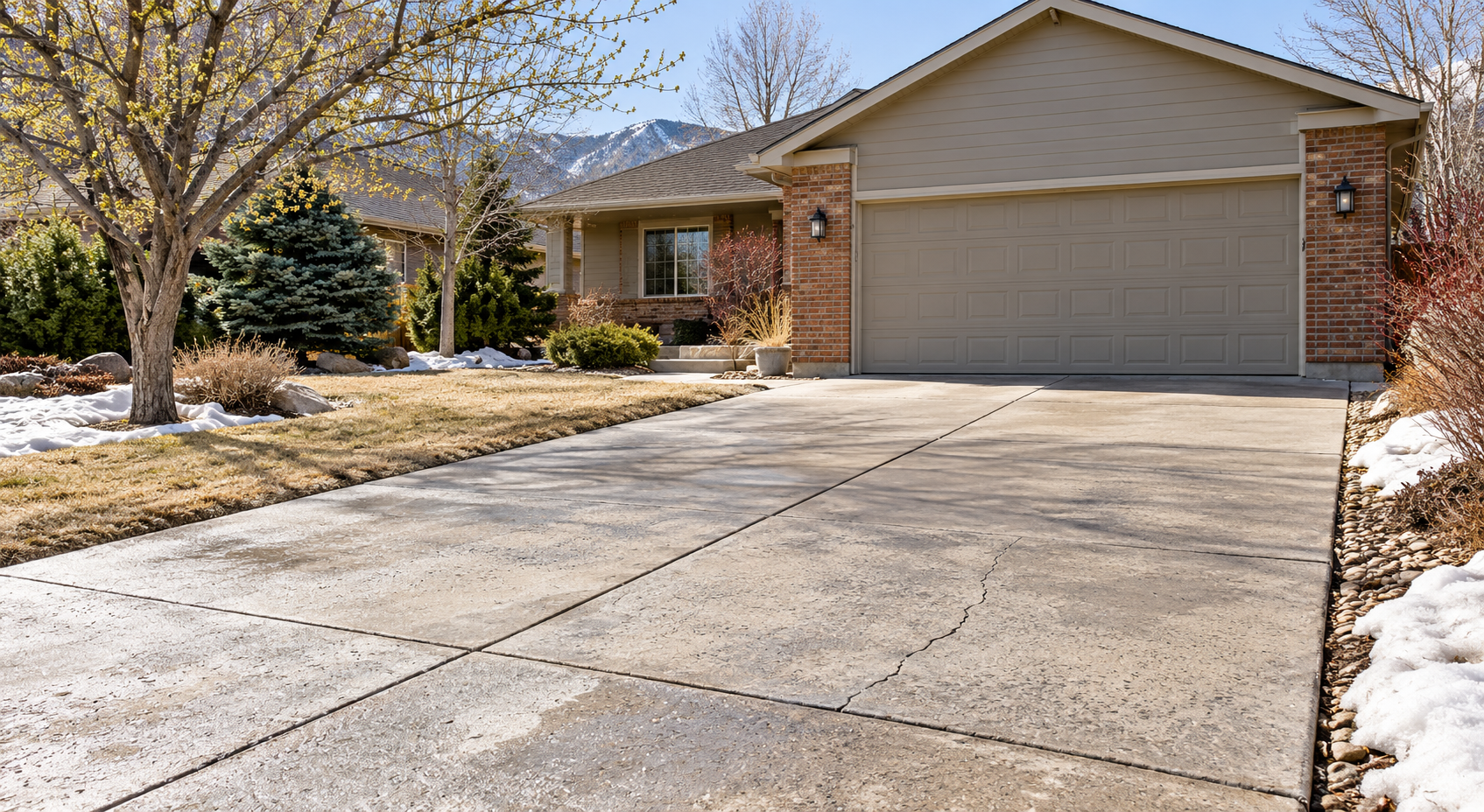
Repairing an older concrete driveway can be worthwhile when most panels remain sound and the proposed work addresses a limited, identifiable problem. For Denver homeowners, the decision depends on remaining concrete quality, drainage, recurring movement, and the total cost of keeping the driveway usable compared with partial or complete replacement.
An old driveway does not have an automatic retirement date. A weathered surface may still serve its purpose, while a newer-looking driveway can have uneven panels or persistent drainage problems. The useful question is how much serviceable concrete remains and what you would actually gain by repairing it.
Concrete driveway repair and resurfacing services in Denver include options for different levels of damage. Choosing among them requires separating appearance concerns from problems that affect access, support, or water flow.
Denver Concrete Driveway Pros provides driveway repair and replacement services. Comparing both approaches makes sense when an older surface has accumulated several repairs, but widespread replacement should have a clear reason beyond age alone.
Two existing Denver resources help test whether another repair is likely to deliver value. How to prevent repaired driveway cracks from returning focuses on continuing movement, drainage, and material compatibility, while Aftercare for a recently repaired concrete driveway in Denver frames the ownership requirements after work is completed.
Decide What the Repair Needs to Accomplish
Start with the outcome you need. Reducing water entry through a stable crack, correcting an uneven transition, and making the entire driveway look uniform are different goals. One treatment may not achieve all three.
If the driveway drains adequately and remains comfortable to walk and drive across, cosmetic wear may not justify a major project. Small, stable defects can support a limited maintenance approach after assessment.
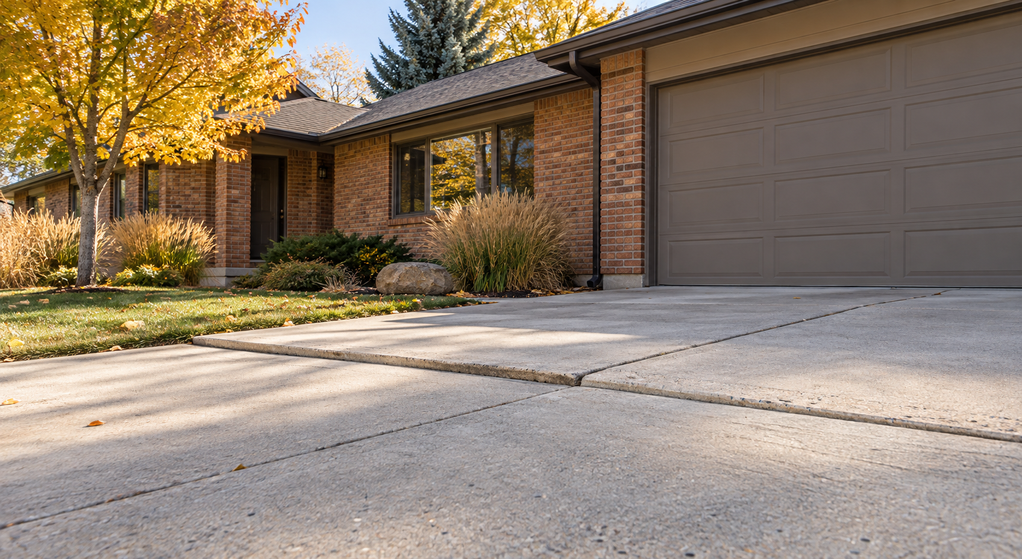
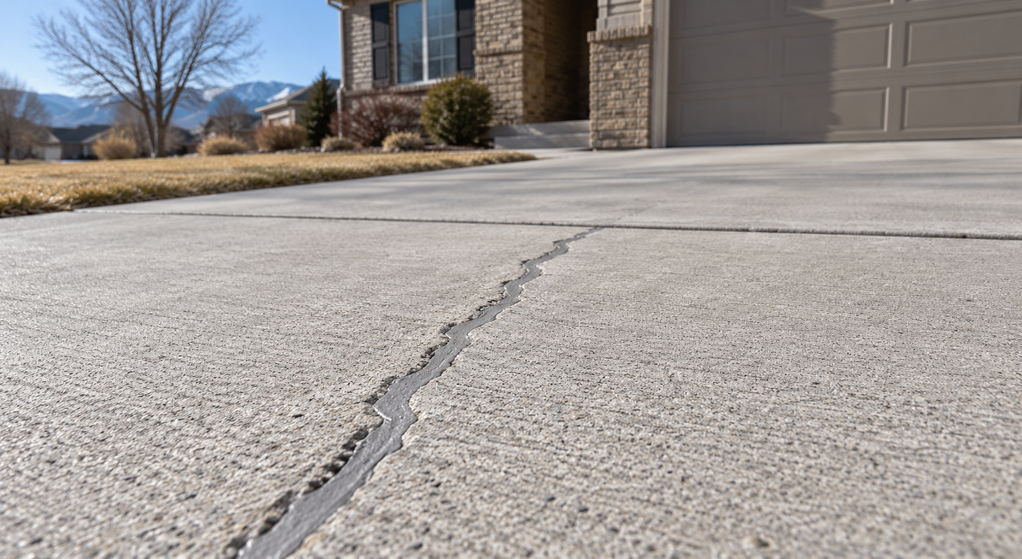
If a wheel drops into a broken area or someone catches a foot on a raised edge, appearance becomes secondary. Ask whether the proposed work will correct that specific condition. Filling a visible opening does not necessarily restore an uneven driving surface.
Be realistic about appearance, too. A functional repair may remain visible against older concrete. If uniform color is your main goal, establish the likely finished appearance before paying for isolated patches.
Judge the Concrete That Would Remain
Repair value depends partly on the material surrounding the damaged area. A patch attached to weak, deteriorating concrete has a different outlook from one placed against a sound surface.
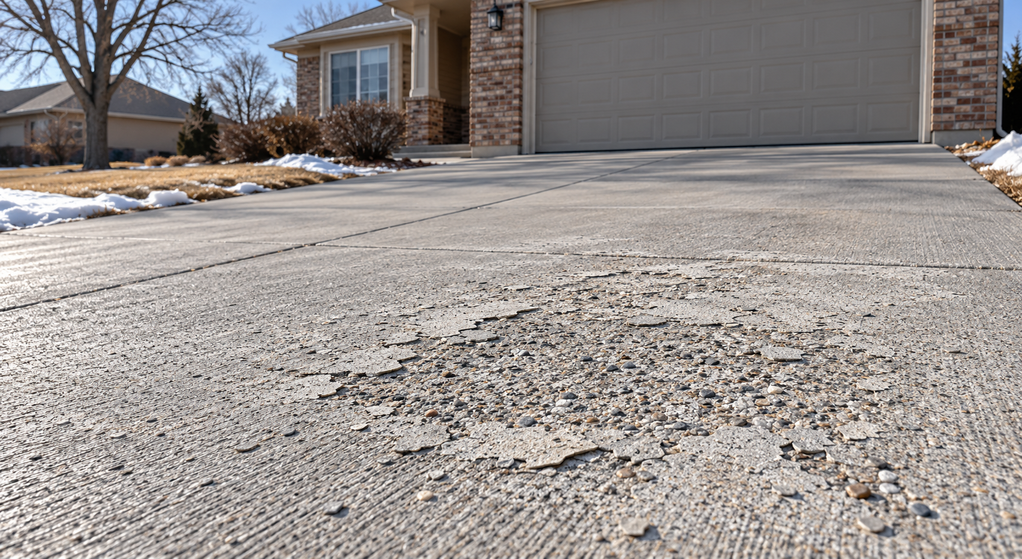
The National Ready Mixed Concrete Association’s guidance on scaling concrete surfaces explains that minor scaling may be cosmetic, while excessive, progressing scaling may make repair impractical. It also emphasizes removing unsound material and bonding repairs to sound concrete.
That distinction matters in Denver, where wet concrete can
encounter freezing and thawing. Before approving
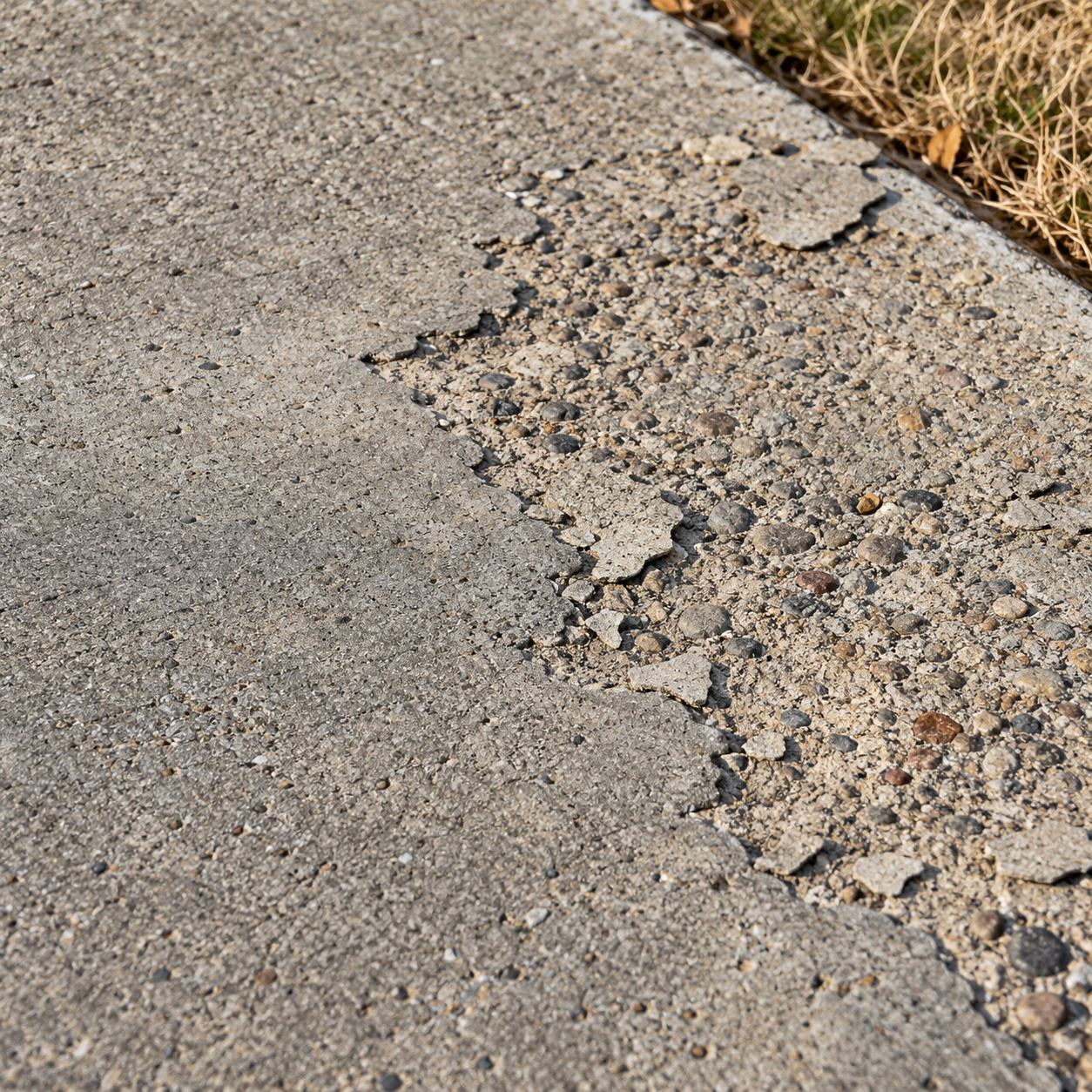
resurfacing, ask whether deterioration is limited to a removable surface layer or continues into the concrete that would support the repair.
Consider the distribution of damage as well. One deteriorated panel surrounded by usable concrete presents a different decision from crumbling surfaces across most of the driveway. A whole-driveway coating should not substitute for determining which areas are actually suitable to retain.
Treat Previous Repairs as Evidence
Previous repair spending is already gone. It should not obligate you to keep patching, but the repair history can help explain whether another attempt is reasonable.
Gather any available invoices and dated photographs. Note which repairs remained intact, which reopened, and whether new damage appeared beside them. A driveway with several old, stable repairs may still be useful. Repeated failure in the same location deserves closer investigation.
Ask what will change this time. Will the proposal address a recurring water source, unsuitable preparation, or continuing slab movement? If the answer is simply another layer over the same defect, the lower price may offer little lasting value.
Include Partial Replacement in the Comparison
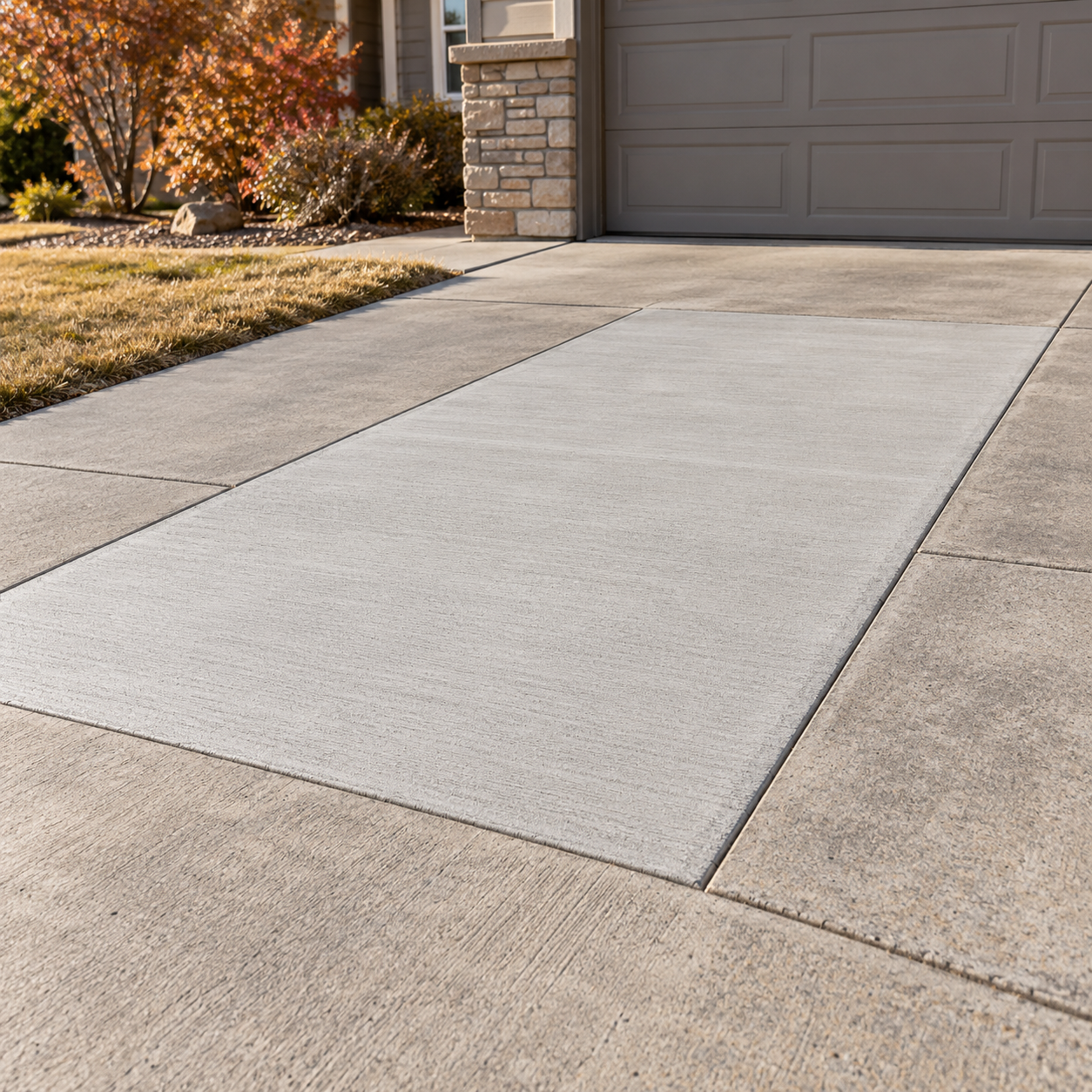
The choice is not limited to patching everything or removing everything. Replacing selected panels may preserve usable concrete while addressing areas that are too damaged for a dependable repair.
Ask for a panel-by-panel explanation of what can remain. Partial replacement deserves consideration when deterioration is concentrated and the retained sections still function well. It becomes less attractive if several neighboring panels also need major work or if retaining them prevents correction of the overall drainage pattern.
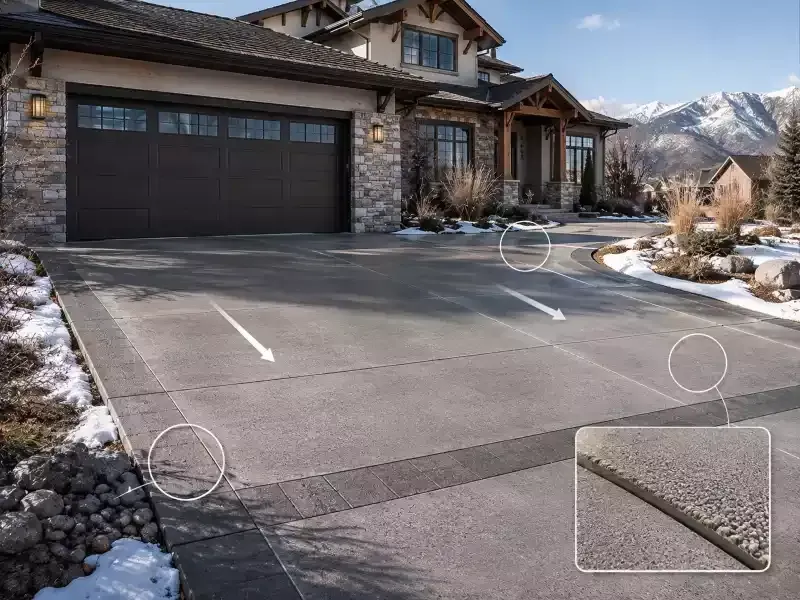
Transitions matter. New and retained concrete should meet at workable elevations, and the proposed layout should account for joints and runoff. New panels may also differ visibly in color and texture.
Full replacement becomes more compelling when extensive damage, recurring movement, and unsuitable elevations overlap. Even then, the scope should explain what happens beneath the concrete and how water will leave the finished driveway.
Compare Complete Scopes Instead of Headline Prices
A small repair estimate and a replacement estimate often purchase different outcomes. Before comparing totals, ask each proposal to identify:
- The exact panels or areas included and excluded.
- Preparation, removal, and disposal work.
- Any support or drainage correction included.
- Expected appearance and remaining defects.
- Vehicle access restrictions and maintenance requirements.
- Warranty coverage, exclusions, and uncertainty about durability.
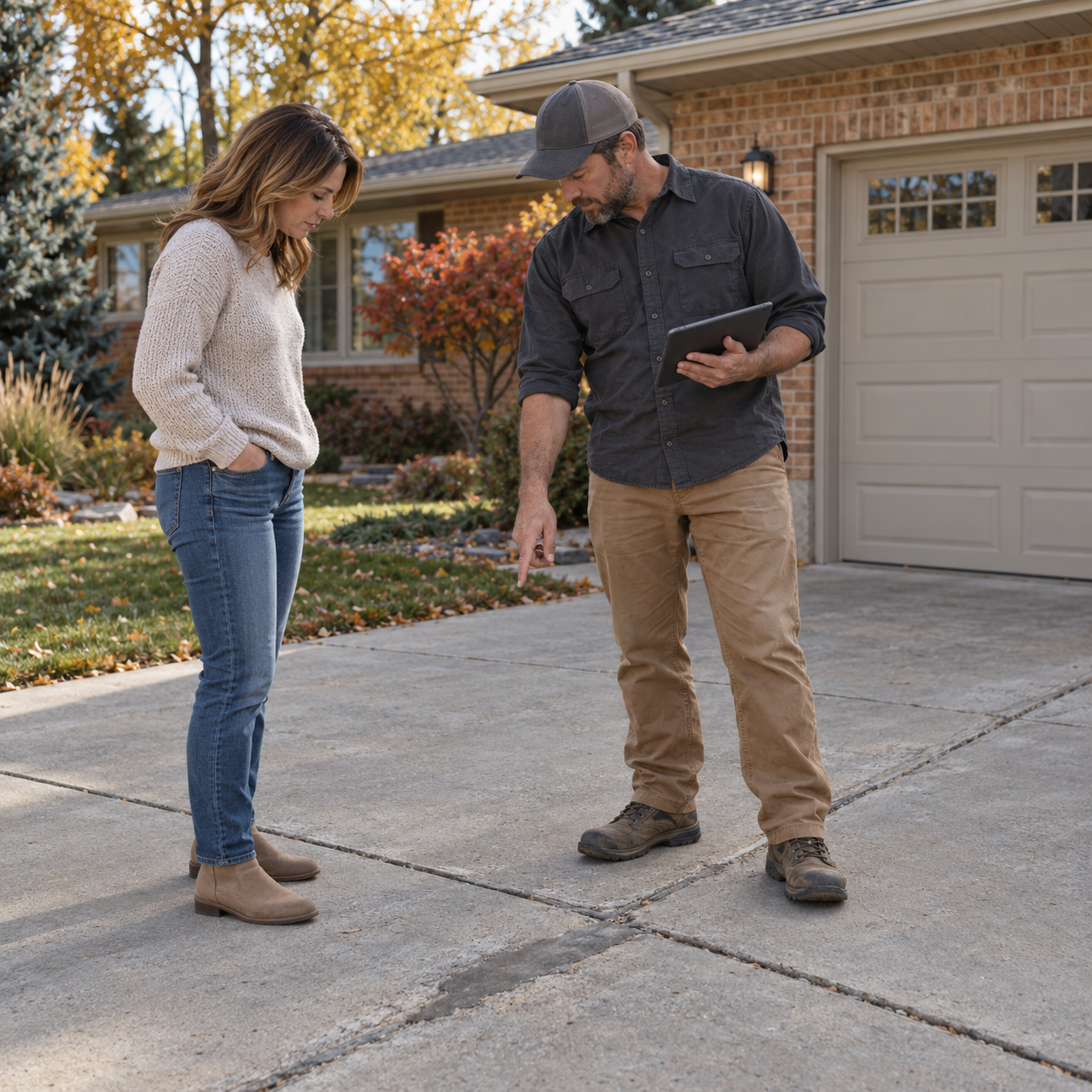
There is no universal percentage of replacement cost that makes a repair worthwhile. A modest repair that solves one isolated problem can be sensible; several overlapping treatments may approach replacement cost while retaining substantial weaknesses.
Your plans also matter. If another project will soon disturb the driveway, extensive cosmetic work may have limited value. If you intend to keep using it for years, give more weight to remaining condition and repeat-work risk.
Make the Decision Before Scheduling the Work
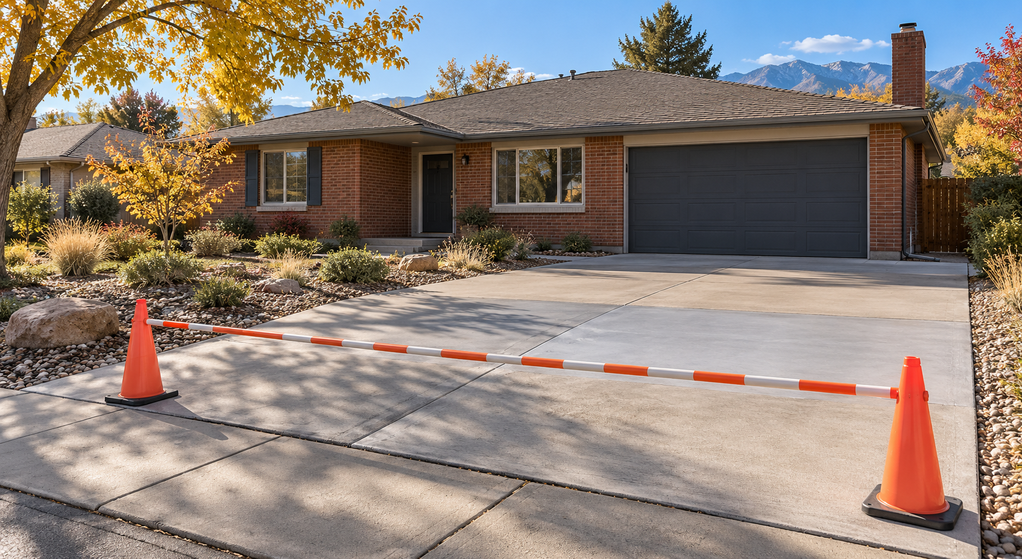
Request a written recommendation that explains what can be preserved, what cannot, and why. Ask the contractor to distinguish necessary work from optional appearance improvements and to identify conditions that could change the scope.
Repair is worthwhile when it preserves useful concrete and delivers a defined improvement at a reasonable total cost. When extensive deterioration or unresolved movement makes that outcome doubtful, partial or full replacement deserves stronger consideration.

Written By:
Kurt Manalastas
Home Improvement Research Specialist
Kurt is a Home & Property Research Journalist who researches and writes educational content on home services, property improvement, and residential decision-making. He focuses on translating real-world contractor experience, industry standards, and verified research into clear, practical guidance that helps homeowners understand their options and make informed decisions.