How Contractors Repair a Sinking Concrete Driveway in Denver
Summary
Contractors repair sinking concrete driveways by identifying why support was lost, checking whether the slab can be lifted, and choosing lifting or replacement accordingly. For Denver properties, drainage and seasonal ground movement matter. A useful repair plan addresses the underlying cause, restores workable elevations, and explains the limits of the proposed method.
A dip beside the garage or an uneven joint can make a driveway difficult to use. However, filling the visible gap does little to explain why the concrete moved. The first decision is whether the existing slab remains sound enough to reuse.
Concrete driveway repair and replacement services in Denver cover different conditions, so the proposed work should match both the concrete damage and its underlying support problem.
Denver Concrete Driveway Pros is locally owned and operated and offers repair and replacement of existing concrete. When comparing proposals, ask which methods are available for your driveway and why the recommended approach suits its condition.
Why Concrete Driveway Is the Best Choice?
An uneven joint does not automatically mean the lower panel sank. The adjacent panel may have risen. That distinction matters because lifting concrete beside a heaved slab could create an incorrect slope or an awkward garage transition.
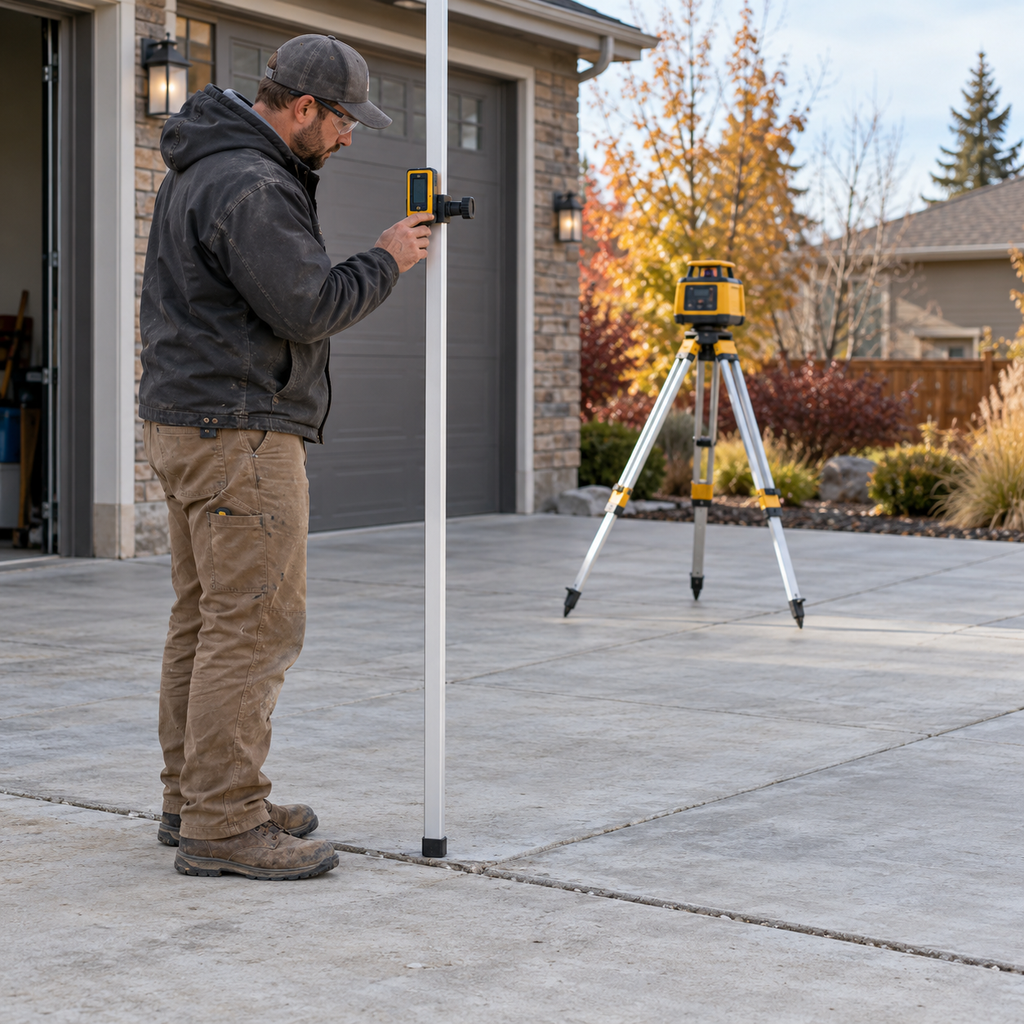
An assessment should compare elevations across the affected panels, garage entrance, sidewalk, and drainage route. It should also consider when the change appeared and whether it varies seasonally.
Possible causes include poorly compacted fill settling, water carrying supporting material away, or moisture-related soil movement. The Colorado Geological Survey’s guidance on expansive soil and rock explains that certain Colorado soils expand when wet and shrink when dry, potentially damaging slabs. This regional concern does not establish the soil conditions beneath a particular Denver driveway.
Photographs from previous seasons can help distinguish a lasting depression from changing elevations. Recurring movement or damage extending into nearby structures may justify a geotechnical or structural evaluation before selecting a repair.
Decide Whether the Existing Concrete Can Be Saved
Lifting may be suitable when a panel has settled but remains reasonably intact. The evaluation should consider cracking, surface deterioration, slab thickness where known, and connections to adjacent concrete.
Replacement becomes more practical when the slab is extensively fractured, deteriorated through its depth, or shaped so that raising it cannot restore useful drainage. Removing a panel also provides access to unsuitable material below it.
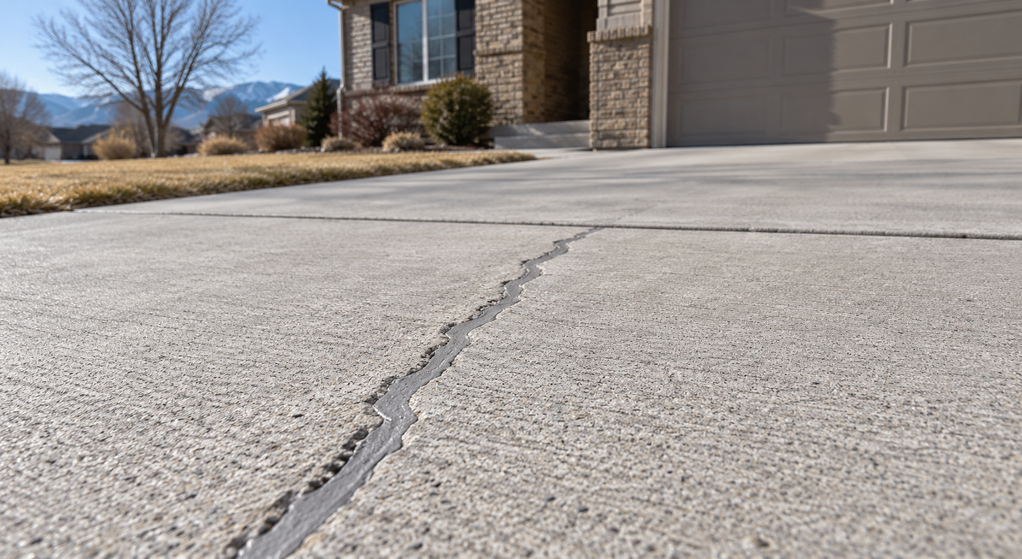
A surface coating or thin patch cannot restore missing support beneath the driveway. Grinding a raised edge may reduce a small trip hazard in suitable circumstances, but it does not lift the lower slab or correct the cause of settlement.
The condition of existing cracks also affects the decision. Understanding how to prevent repaired driveway cracks from returning helps explain why stabilizing movement should come before cosmetic crack repairs.
How Slab Lifting Works
Specialist lifting contractors generally use cementitious grout or expanding polyurethane material beneath the concrete. Both approaches require assessing whether the slab can move safely and whether the underlying conditions suit injection.
With grout-based slabjacking, access holes are drilled through the panel and a pump introduces material below it. Controlled pumping fills accessible voids and raises the slab. With polyurethane lifting, injected components react and expand beneath the concrete, providing lift and support.
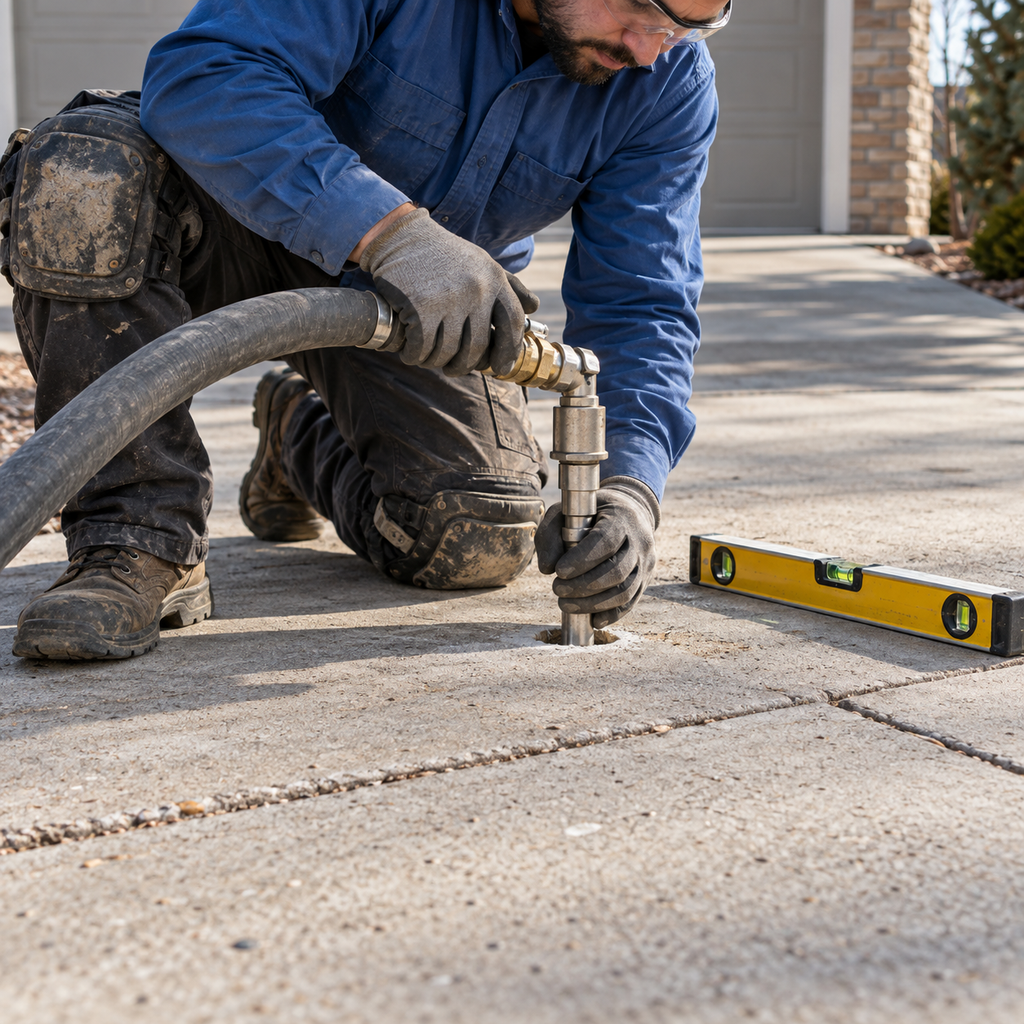
The work requires gradual adjustments and repeated elevation checks. Raising one corner too quickly can stress the panel or affect adjoining concrete. The target is an appropriate driveway slope and usable transitions, rather than making the entire driveway perfectly horizontal.
After lifting, the access holes are patched. Existing cracks and visible repair spots may remain, and the finished appearance will not necessarily match untouched concrete.
Material choice involves tradeoffs. Polyurethane systems generally use smaller holes and add less weight than conventional grout. Grout uses a different material and pumping process. Neither method automatically corrects deep soil instability, active erosion, or a continuing water leak. Ask how the proposed system addresses the diagnosed condition and when vehicles can return.
What Happens When a Panel Needs Replacement
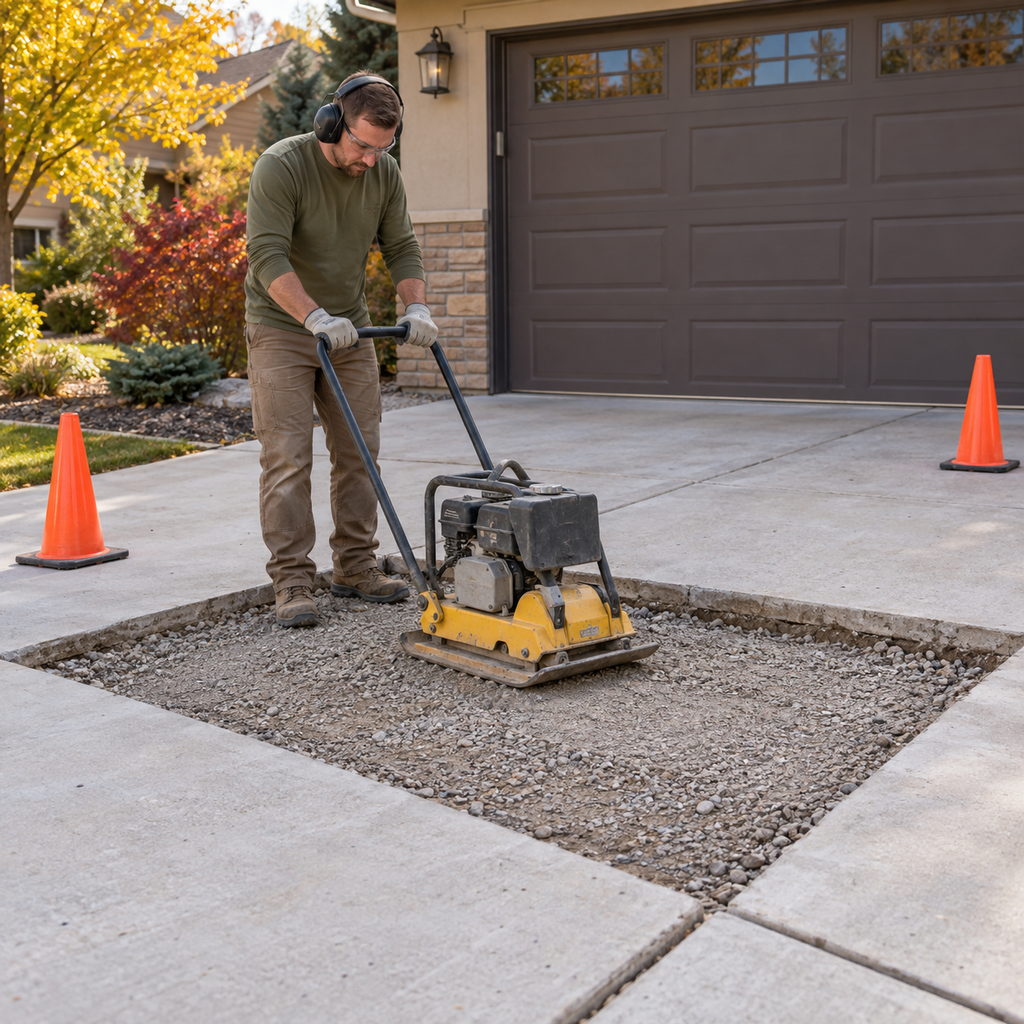
Replacement involves removing the affected concrete, examining the exposed support, and preparing the area before pouring a new panel. Simply placing new concrete over the same unresolved weakness risks another depression.
Depending on the findings, preparation may include removing unsuitable material, rebuilding and compacting the base, or correcting water entry. The replacement design should address slab thickness, joints, any required reinforcement, and connections to adjoining panels.
Denver weather also affects scheduling. Concrete placement and curing need protection appropriate to the forecast. Vehicle access should follow the contractor’s strength and curing requirements, rather than the surface appearing dry.
Partial replacement can preserve sound portions of the driveway, although new and old concrete may differ in color and texture.
Include Drainage in the Finished Repair
A raised panel can still leave a puddle if another panel, sidewalk edge, or garage threshold blocks runoff. Before work starts, establish where water should travel after the elevations change.
Check downspout discharge, irrigation leaks, and soil washed away along slab edges. Repairing an active water source may need to precede lifting or replacement.
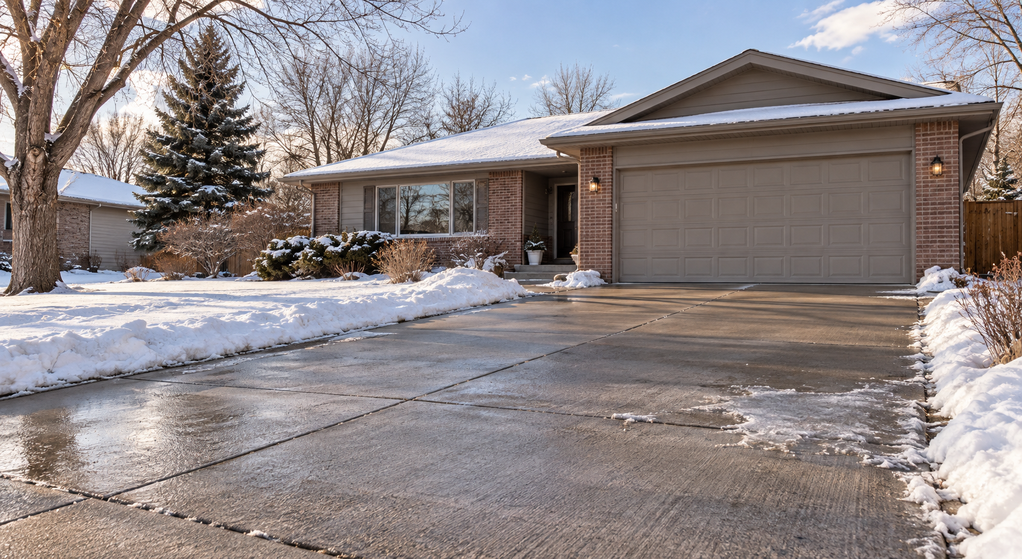
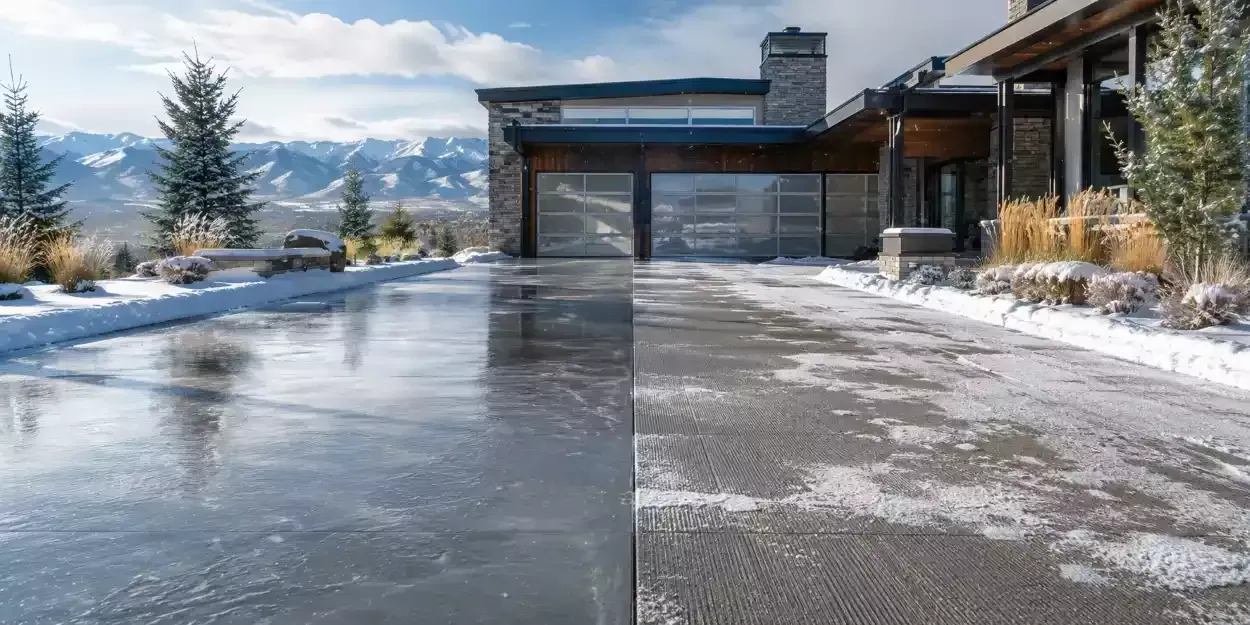
Understanding how snow and ice affect concrete driveways in Denver also helps with planning for meltwater and winter maintenance after the repair.
Compare the Complete Repair Scope
Ask each contractor to identify the affected panels, likely cause, proposed method, intended elevations, and drainage work. Confirm whether crack treatment, hole patching, debris removal, and vehicle restrictions are included.
For lifting, ask what happens if the panel cannot reach the planned elevation. For replacement, clarify how unexpected base problems will be priced. Review warranty exclusions for future soil movement or unresolved drainage.
The most useful proposal explains how the driveway will function afterward. Restoring support, preserving drainage, and setting realistic expectations provide a better basis for choosing a repair than comparing price alone.

Written By:
Kurt Manalastas
Home Improvement Research Specialist
Kurt is a Home & Property Research Journalist who researches and writes educational content on home services, property improvement, and residential decision-making. He focuses on translating real-world contractor experience, industry standards, and verified research into clear, practical guidance that helps homeowners understand their options and make informed decisions.

Written By:
Domenique Bomediano
Home Improvement Research Specialist
Domenique is a Home & Property Research Journalist who produces educational content on home services, property improvement, and residential decision-making. He converts contractor experience, industry standards, and verified research into clear, practical guidance that helps homeowners understand their options and make informed property decisions.