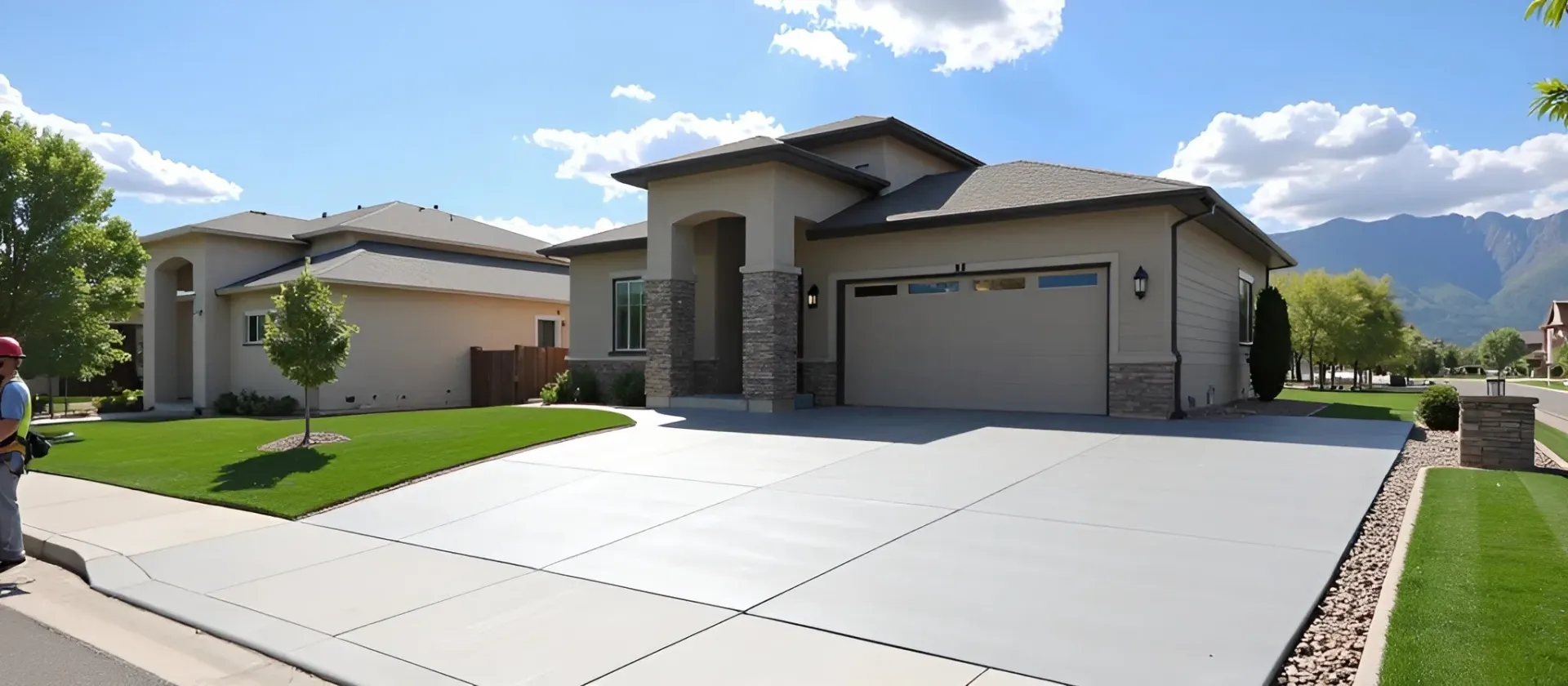
Why Spring Is a Good Time for Concrete Driveway Repairs in Denver
Summary
Spring gives Denver homeowners a useful opportunity to assess winter driveway damage, observe drainage, and arrange repairs before summer activities complicate access. Successful timing depends on the slab’s condition, overnight temperatures, moisture, and the repair material. An early inspection can help even when the actual work needs to wait.
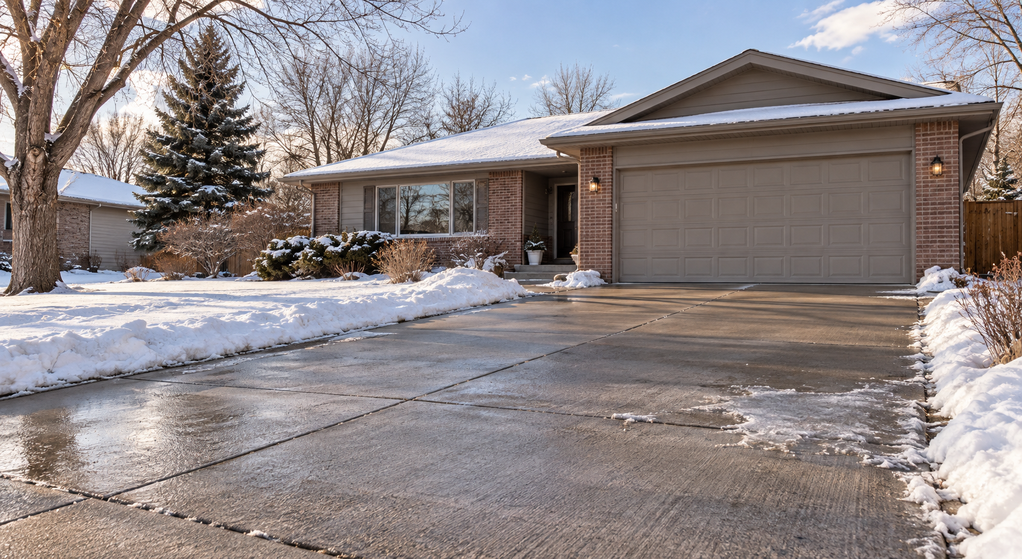
A driveway can look different once winter snow clears. Small surface flakes become visible, a repaired crack may have reopened, or water may collect beside the garage. Spring offers a chance to examine those changes while the conditions that reveal them are still apparent.
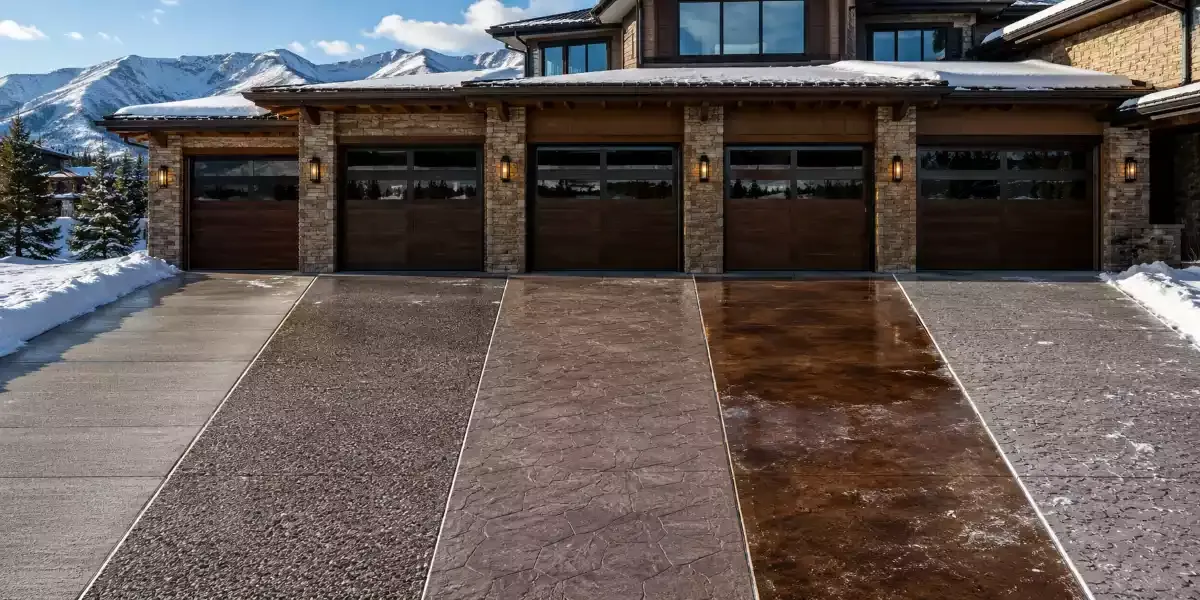
Options for concrete driveway repair in Denver depend on whether the damage involves the surface, a moving crack, or the support beneath the slab.
Denver Concrete Driveway Pros provides driveway installation, repair, and replacement for residential and commercial properties. Choosing among those services starts with understanding what changed over winter and whether conditions are suitable for lasting work.
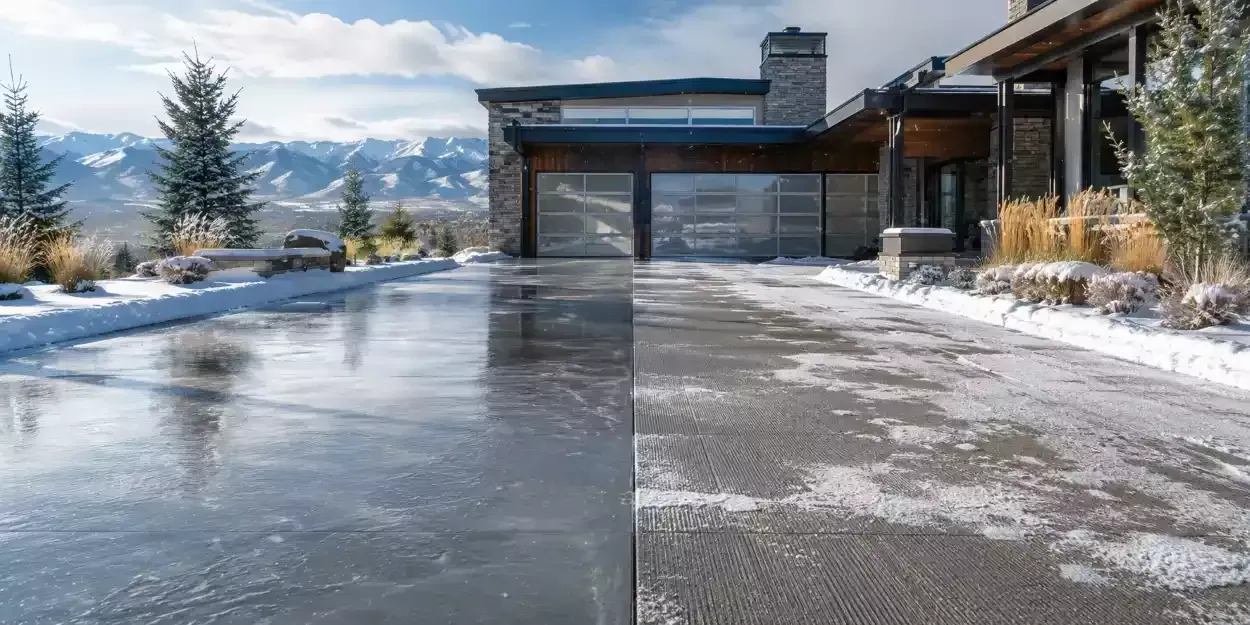
Two existing Denver guides help bracket the seasonal decision. The guide on how snow and ice affect concrete driveways in Denver provides winter-exposure context, while aftercare for a recently repaired concrete driveway in Denver prepares the access and maintenance questions that follow if repair moves forward.
Why Concrete Driveway Is the Best Choice?
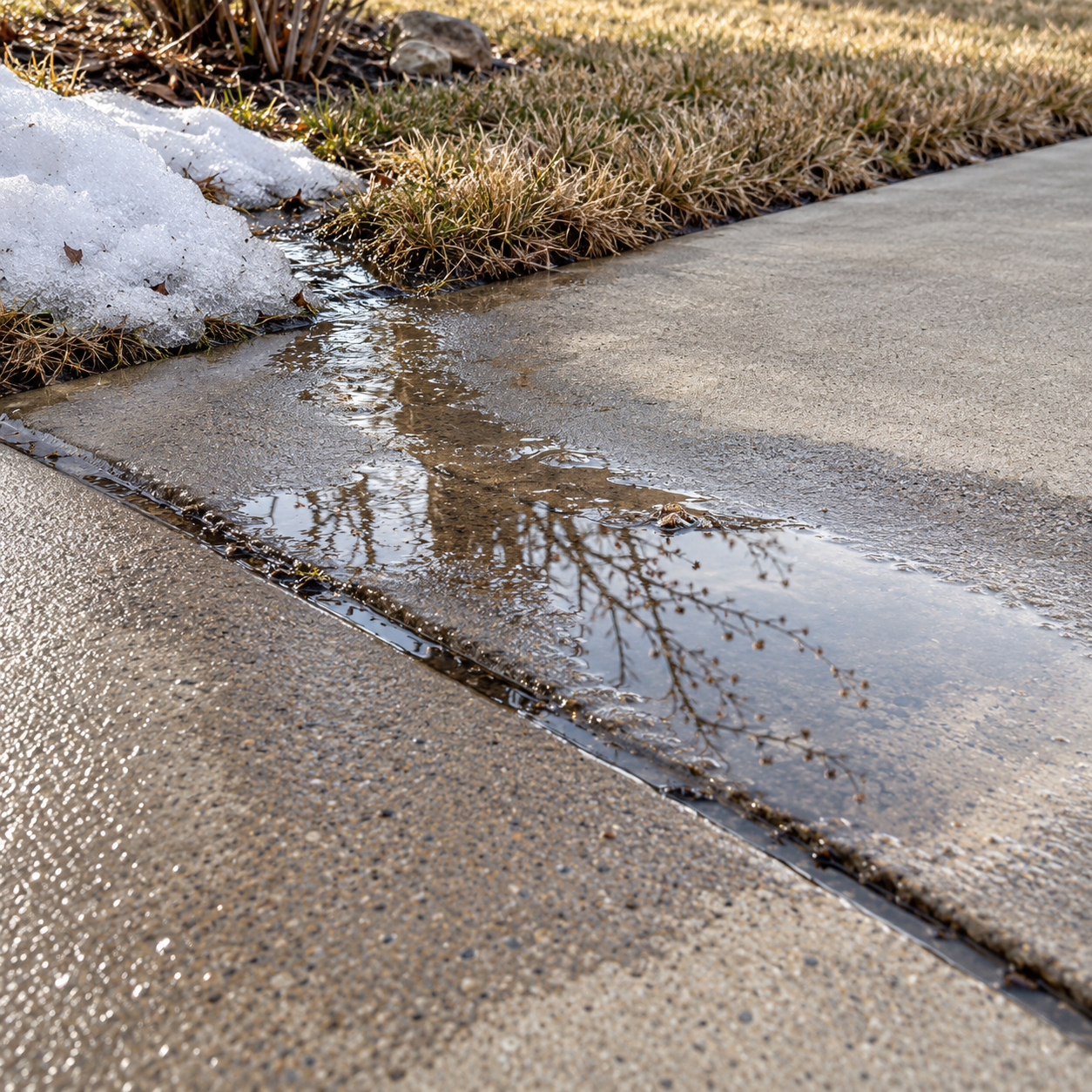
A dry driveway shows cracks, but melting snow or rainfall can show where water travels. This makes spring useful for gathering information before a repair estimate.
Watch the driveway during runoff and again after surrounding areas have dried. Note whether water crosses the surface toward the street, collects at a low joint, or remains against the garage entrance. Include nearby downspouts and snow-storage areas in your photographs.
Location matters more than simply recording that a puddle exists. Water sitting in a shallow surface depression raises
a different question from runoff disappearing beneath an exposed slab edge. Neither observation alone establishes the cause, but both help focus an assessment.
Photograph the same locations under wet and dry conditions. A contractor visiting on a sunny afternoon may otherwise miss the drainage pattern that prompted your concern.
Inspect Winter Changes Before Covering Them
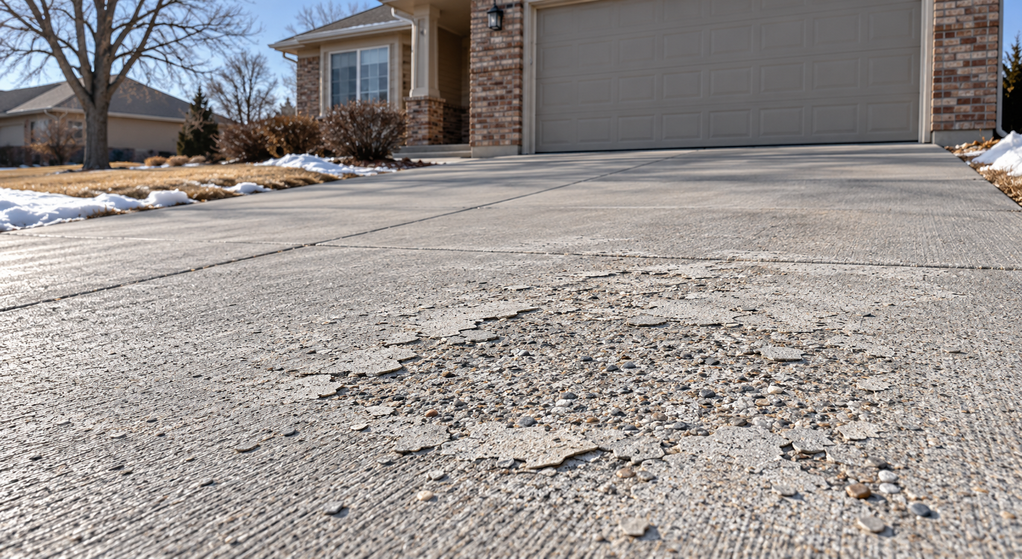
Spring cleanup creates an opportunity to distinguish cosmetic wear from damage that affects driveway use. Sweep away loose debris gently so the surface is visible, then compare damaged areas with older photographs if available.
Pay particular attention to:
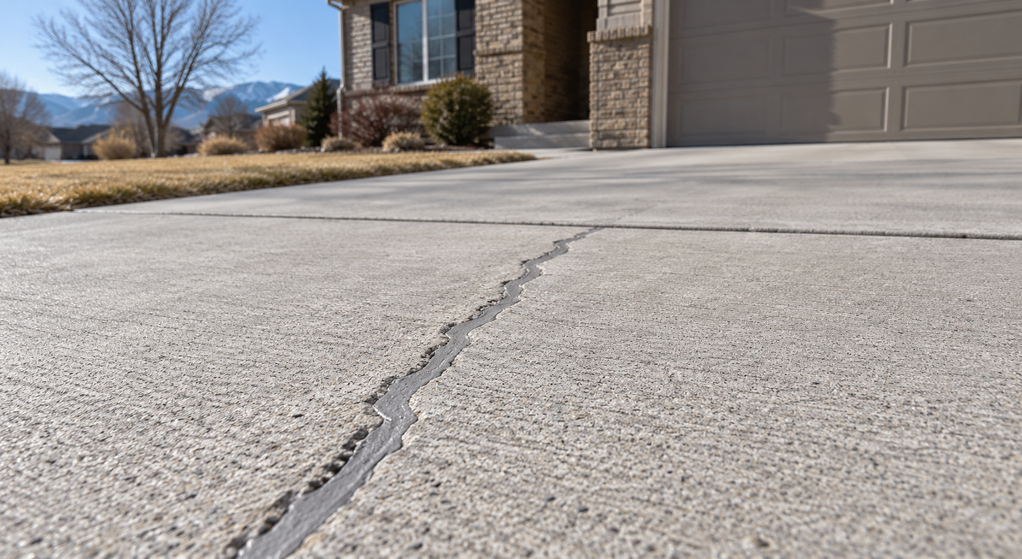
- Cracks with one side noticeably higher than the other
- Broken edges along vehicle paths
- Areas where an earlier patch has separated
- Surface flaking that exposes the aggregate beneath
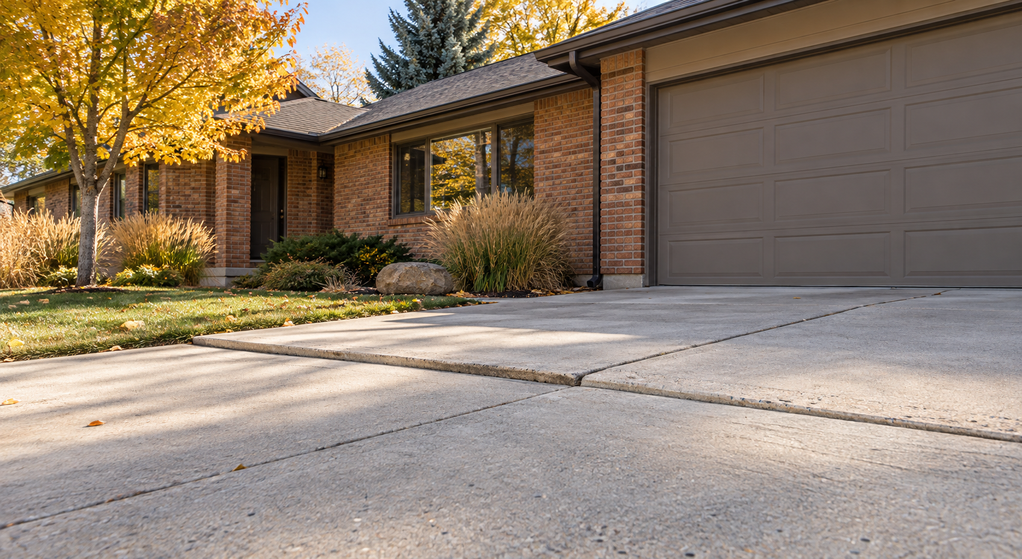
- Changes in the driveway’s height relative to the garage or adjoining walkway
These signs do not all call for the same repair. A surface treatment cannot correct an underlying elevation problem, and filling a crack does not establish why it formed.
Record when you first noticed each change. If an uneven area changes again as the season progresses, share that information before approving work. Avoid assuming that every spring defect is permanent settlement or that winter caused every visible crack.
A Good Inspection Day May Not Be a Good Repair Day
Denver can receive snow well into spring, so a warm afternoon does not establish a dependable installation window. Consider the forecast beyond the day work begins, including overnight conditions.
For repairs involving newly placed concrete, cold conditions slow setting and strength development. Fresh concrete also needs protection against freezing. The National Ready Mixed Concrete Association’s guidance on cold-weather concreting explains why concrete temperature, unfrozen supporting ground, and protection during early curing matter.
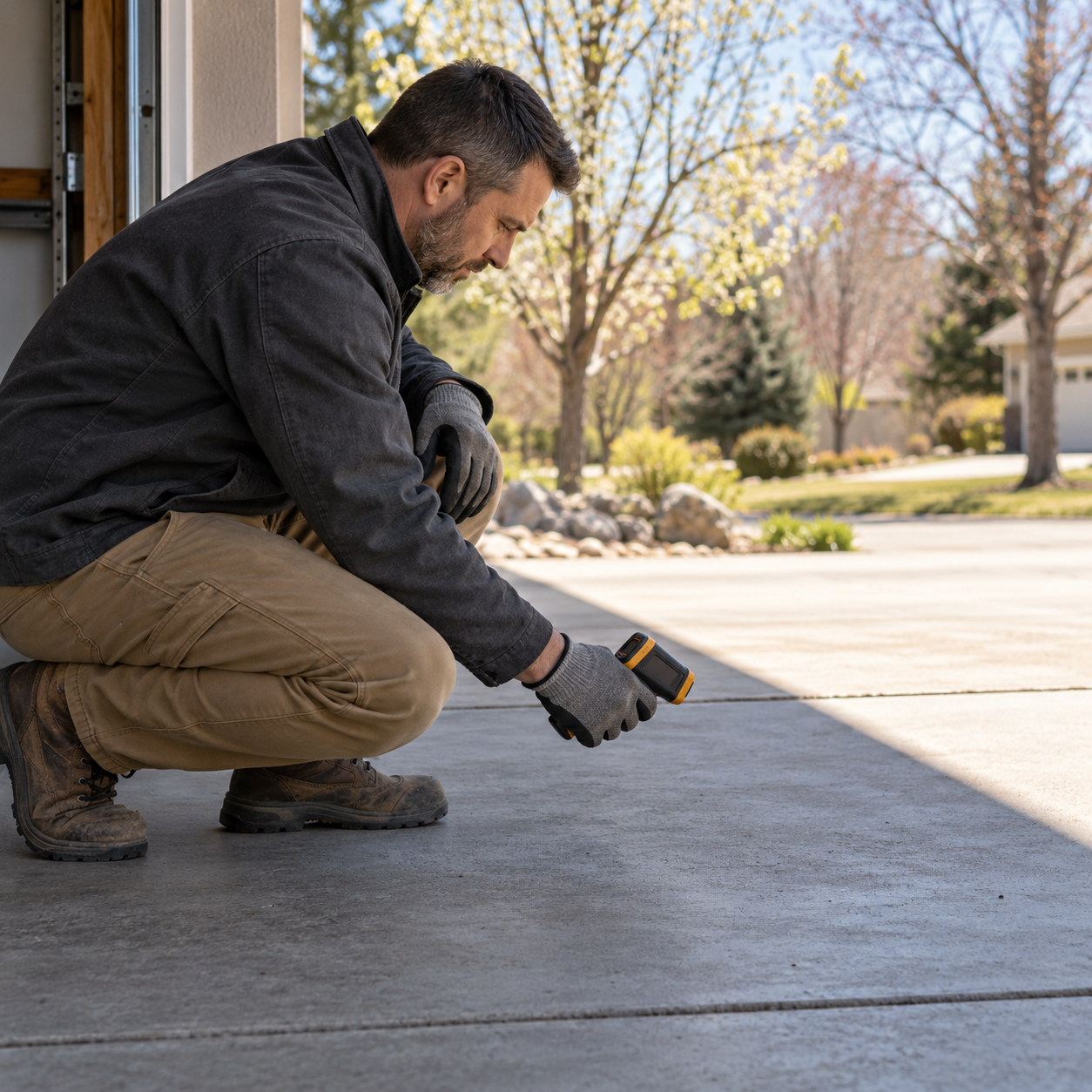
Crack sealants, patching compounds, and resurfacing products have their own application requirements. Ask about the specified air and surface temperatures, moisture conditions, and protection period for the actual material being proposed. A general rule for concrete placement should not replace a repair product’s instructions.
Shade also deserves attention. The driveway beside a north-facing garage may remain cold or wet after a sunny section looks ready. Scheduling should account for the area receiving the repair.
Spring’s advantage is the opportunity to inspect and prepare early, then use a suitable weather window.
Use the Season to Resolve the Cause Before the Finish
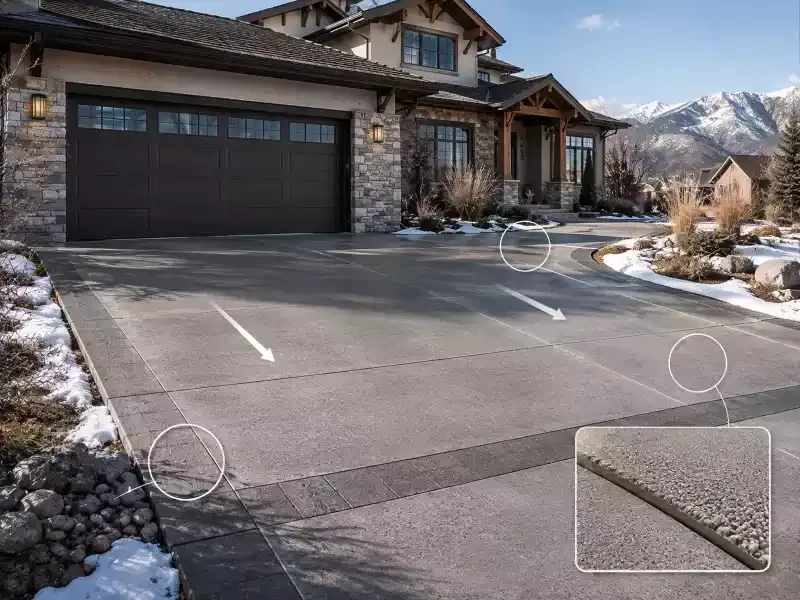
A spring repair plan can address related work in a sensible order. If roof runoff crosses a damaged area, discuss drainage before paying for a finished surface. If a slab has shifted, establish whether its support and elevation need attention before selecting an overlay.
This sequencing helps avoid spending money on appearance while the reason for failure remains unresolved.
For example, a low section beside the garage deserves an explanation of how the proposed work will affect water flow. Simply making the surface look smoother does not answer that question. Ask what the finished elevation will accomplish and whether adjoining sections limit the available correction.
An early assessment also leaves time to compare proposals. Look for a clear repair scope, preparation requirements, weather limitations, and any unresolved conditions. Spring does not automatically mean lower prices or immediate availability, but beginning the decision process early gives you more time to evaluate it.
Plan Driveway Access Around the Repair
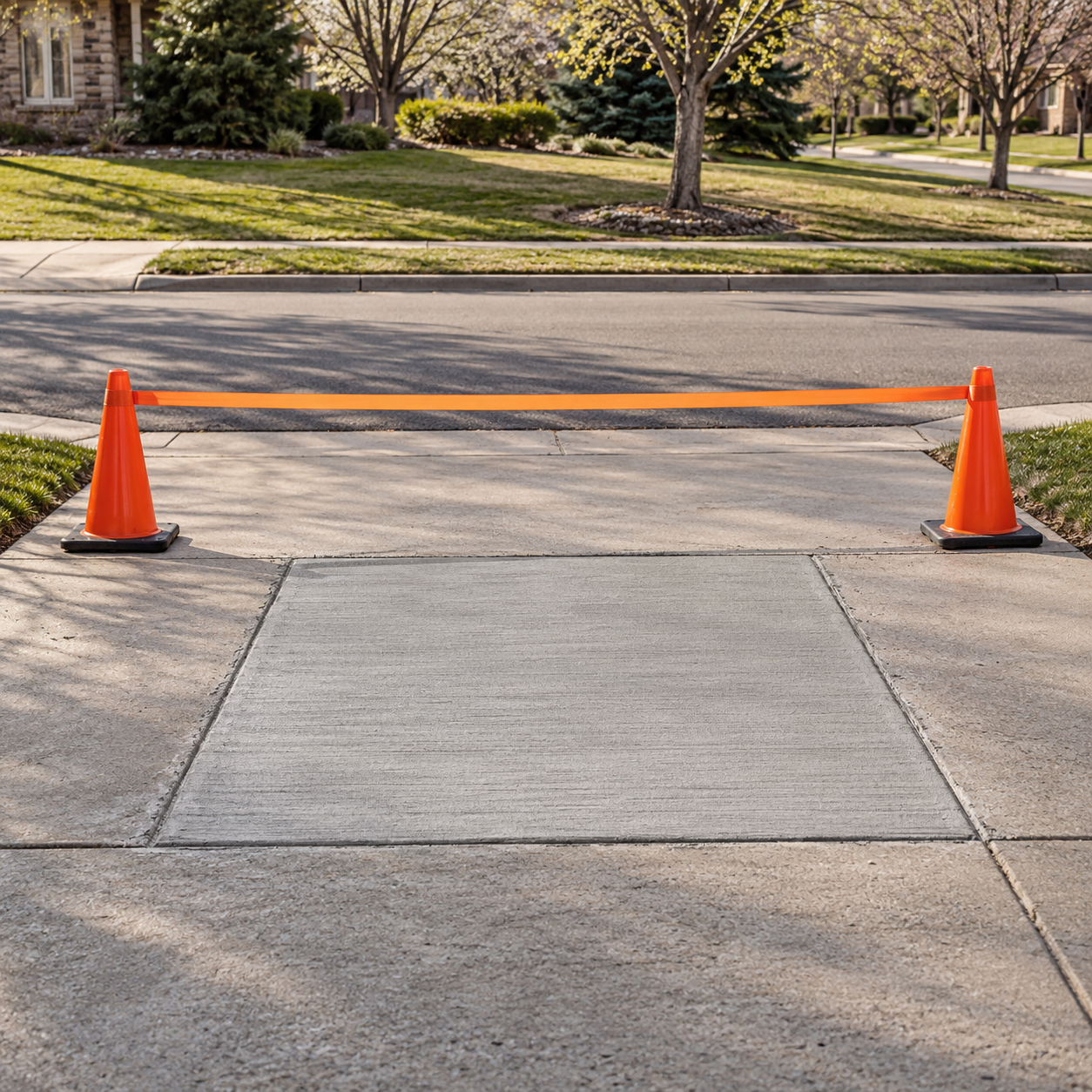
Completing suitable work in spring can help avoid conflicts with summer visitors, deliveries, or outdoor projects. That benefit depends on allowing enough time before vehicles return.
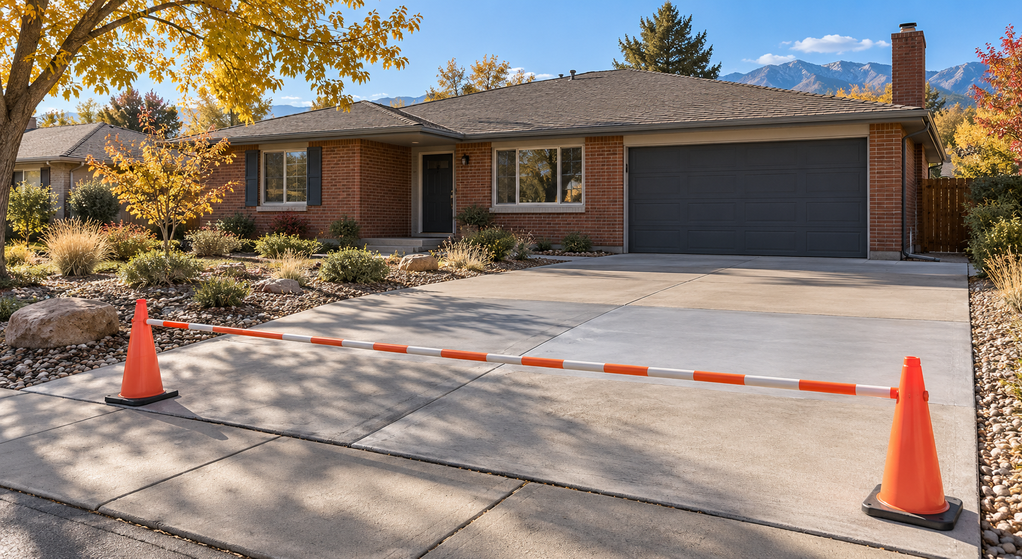
Ask for separate instructions covering pedestrian access, passenger vehicles, and heavier loads. Do not assume that a surface that looks dry is ready for parking, or that every repair has the same reopening time.
Before scheduling, arrange alternative parking and confirm who will communicate any weather-related delay. Keep
photographs of the original condition so you can compare drainage and repaired areas afterward.
Spring is a useful time to move from noticing damage to making an informed repair decision. Inspect while winter changes and runoff patterns are visible, resolve the cause, and schedule the work when the chosen material and driveway conditions are ready.

Written By:
Kurt Manalastas
Home Improvement Research Specialist
Kurt is a Home & Property Research Journalist who researches and writes educational content on home services, property improvement, and residential decision-making. He focuses on translating real-world contractor experience, industry standards, and verified research into clear, practical guidance that helps homeowners understand their options and make informed decisions.

Written By:
Domenique Bomediano
Home Improvement Research Specialist
Domenique is a Home & Property Research Journalist who produces educational content on home services, property improvement, and residential decision-making. He converts contractor experience, industry standards, and verified research into clear, practical guidance that helps homeowners understand their options and make informed property decisions.