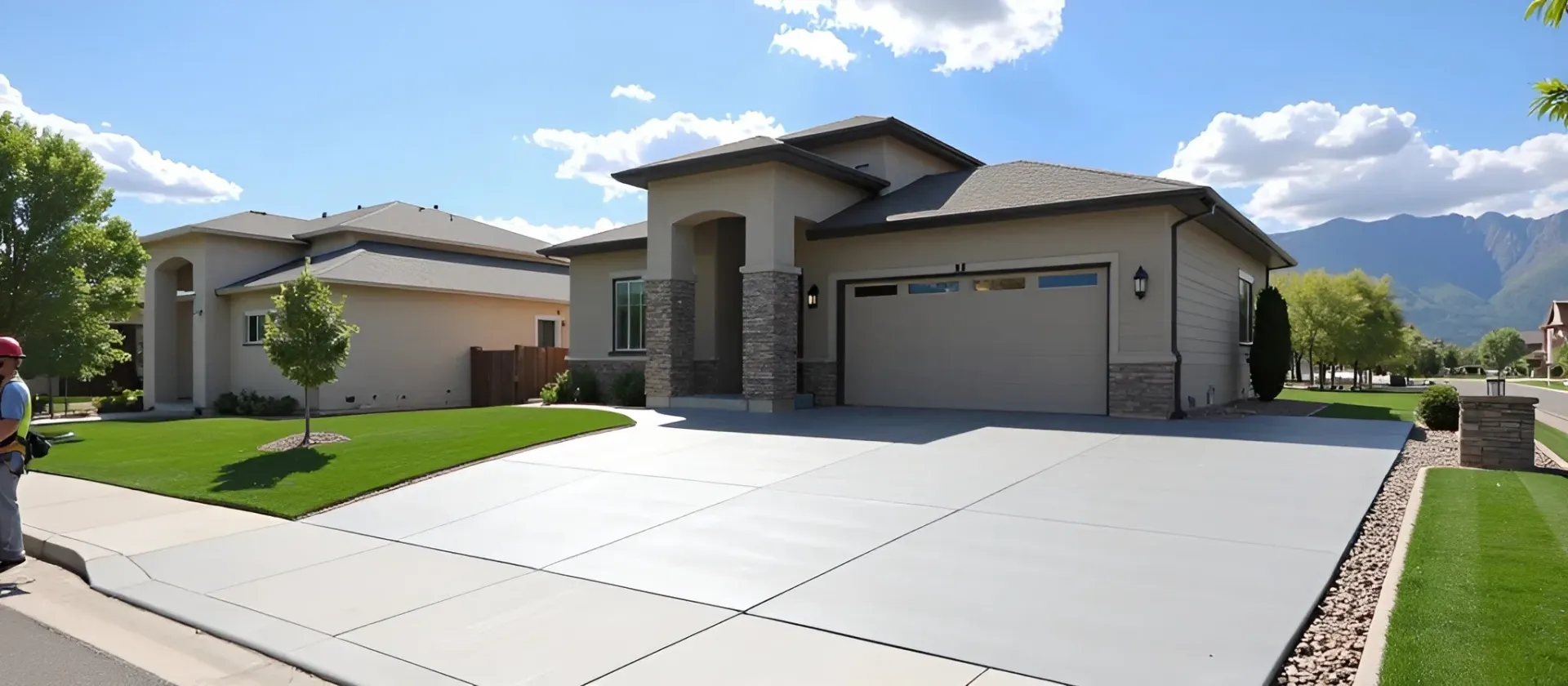
What to Do When Your Concrete Driveway Starts Flaking in Denver
Summary
Flaking concrete does not automatically mean your driveway needs replacement. Start by documenting the damage, checking whether it affects only the surface, and identifying where water collects. The right response depends on how much material is coming loose, whether the slab is stable, and what remains beneath the damaged layer.
Small flakes near the garage or rough patches beneath parked tires can leave you wondering whether to seal, patch, or replace the driveway. Before buying a product, establish what is actually failing. A peeling coating and deteriorating concrete require different responses.
For homeowners comparing concrete driveway repair and resurfacing in Denver, the useful starting point is the condition of the existing slab. Denver Concrete Driveway Pros offers driveway repair, resurfacing, and replacement, giving property owners several options to discuss after an assessment.
Two existing Denver guides help frame the repair decision before product-specific guidance. The explanation of how snow and ice affect concrete driveways in Denver adds winter-exposure and drainage context, while aftercare for a recently repaired concrete driveway in Denver outlines the curing and maintenance questions that follow if repair is selected.
First, Record What Is Coming Loose
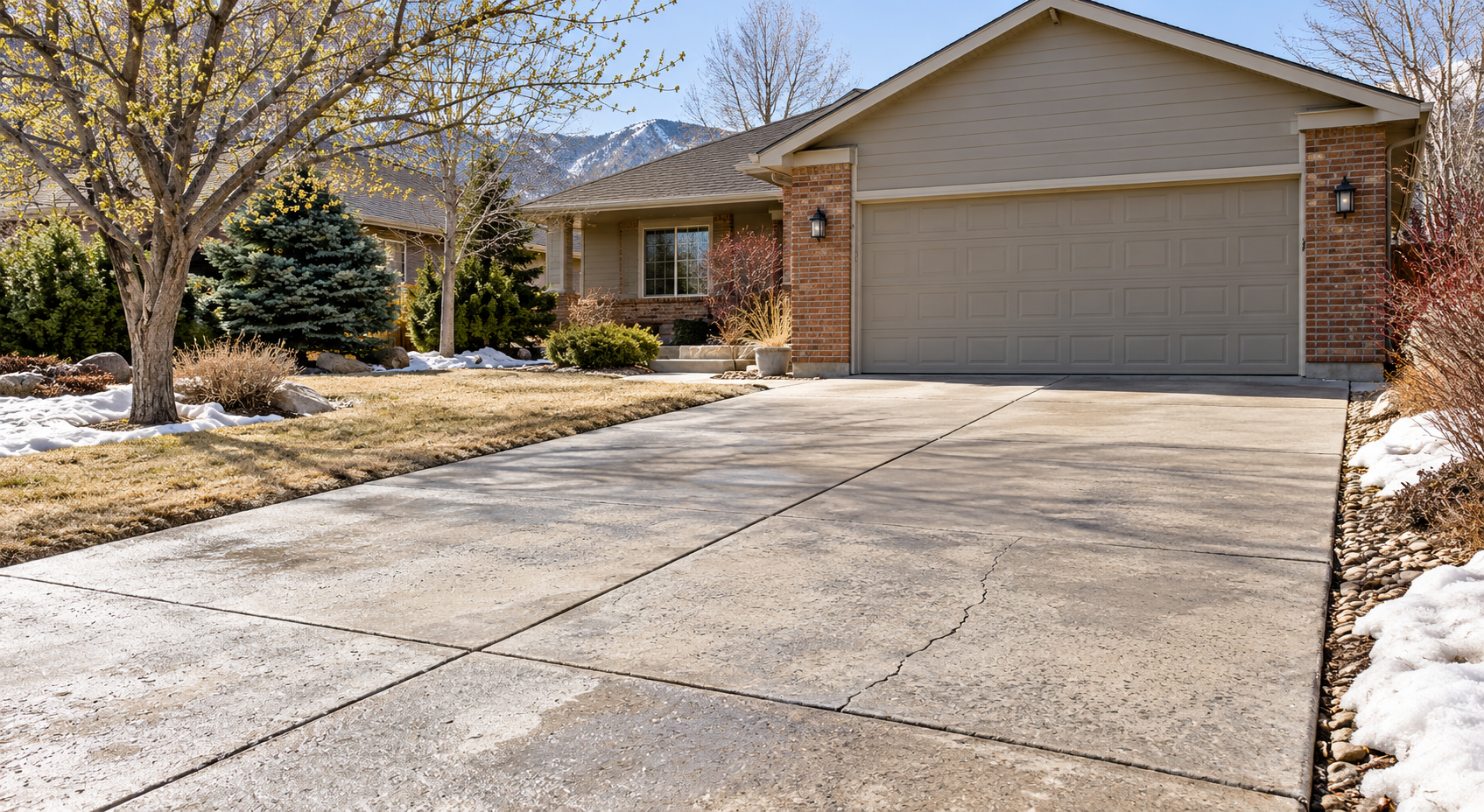
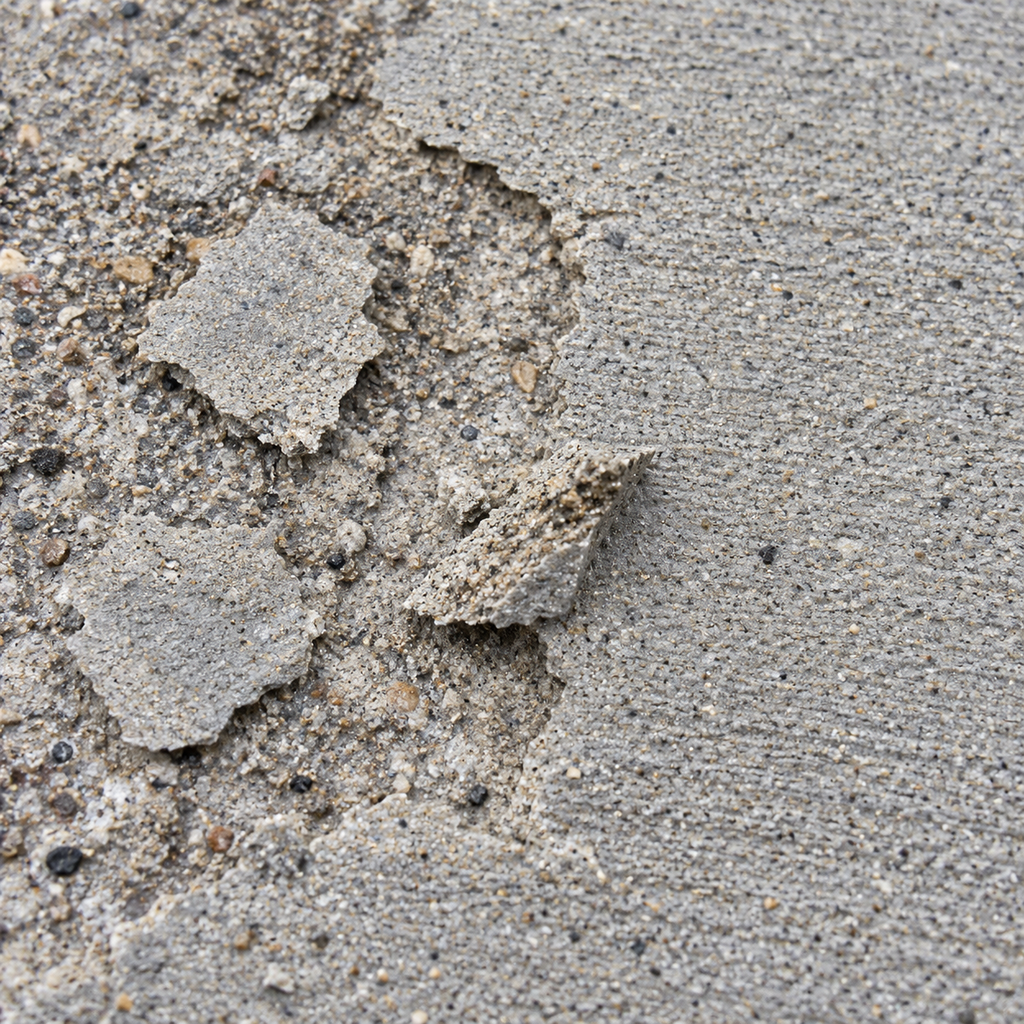
Before cleaning the area, photograph the entire driveway and take close-ups with a ruler beside the damaged spots. Include an unaffected section for comparison. Note when you first noticed the problem and whether it followed winter weather, cleaning, or a coating application.
Look at the loose material without deliberately breaking away more:
- Thin, paintlike pieces: Ask whether an existing coating is peeling.
- Gritty concrete flakes: Ask whether the concrete surface itself is scaling.
- Deeper missing pieces: Have the depth and remaining concrete evaluated.
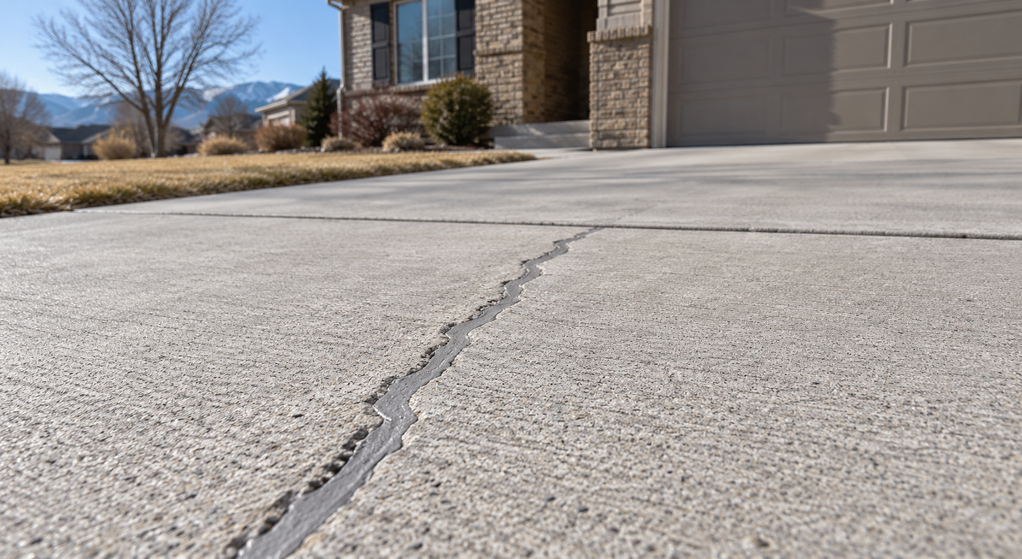
- Flaking beside uneven cracks: Request an assessment of the height difference as well as the surface damage.
These observations help describe the problem; they do not establish its cause. Avoid choosing a repair based solely on a photograph that resembles your driveway.
If the driveway is relatively new, contact the installer before altering it. Keep installation records, maintenance instructions, and photographs together so the original condition can be reviewed.
Why Flaking Can Appear After Winter
The National Ready Mixed Concrete Association’s guide to scaling concrete surfaces explains that scaling can occur when moisture-saturated concrete undergoes freezing and thawing. Deicing chemicals can aggravate exposure. Inadequate air entrainment, improper finishing, and insufficient curing can also contribute to a vulnerable surface. Flaking alone does not identify which factor caused the damage.
For a Denver property, record where snowmelt travels and which areas remain wet before temperatures fall again. Check whether damage appears beneath a downspout, along a low edge, or where vehicles park. Treat those patterns as information for the assessment, rather than proof that one product or weather event caused everything.
Decide Whether to Monitor, Patch, or Resurface
Minor scaling may be cosmetic and need no immediate repair. A repair requires sound underlying concrete, with loose material and contaminants removed. Extensive, progressing scaling may make repair impractical, and repaired areas can differ in appearance from the original surface.
Use that distinction to frame the estimate.
For a small, shallow area: Ask whether monitoring is reasonable. Agree on what change would justify intervention, such as a larger affected area or increasing material loss. Repeat photographs from the same position so comparisons are useful.
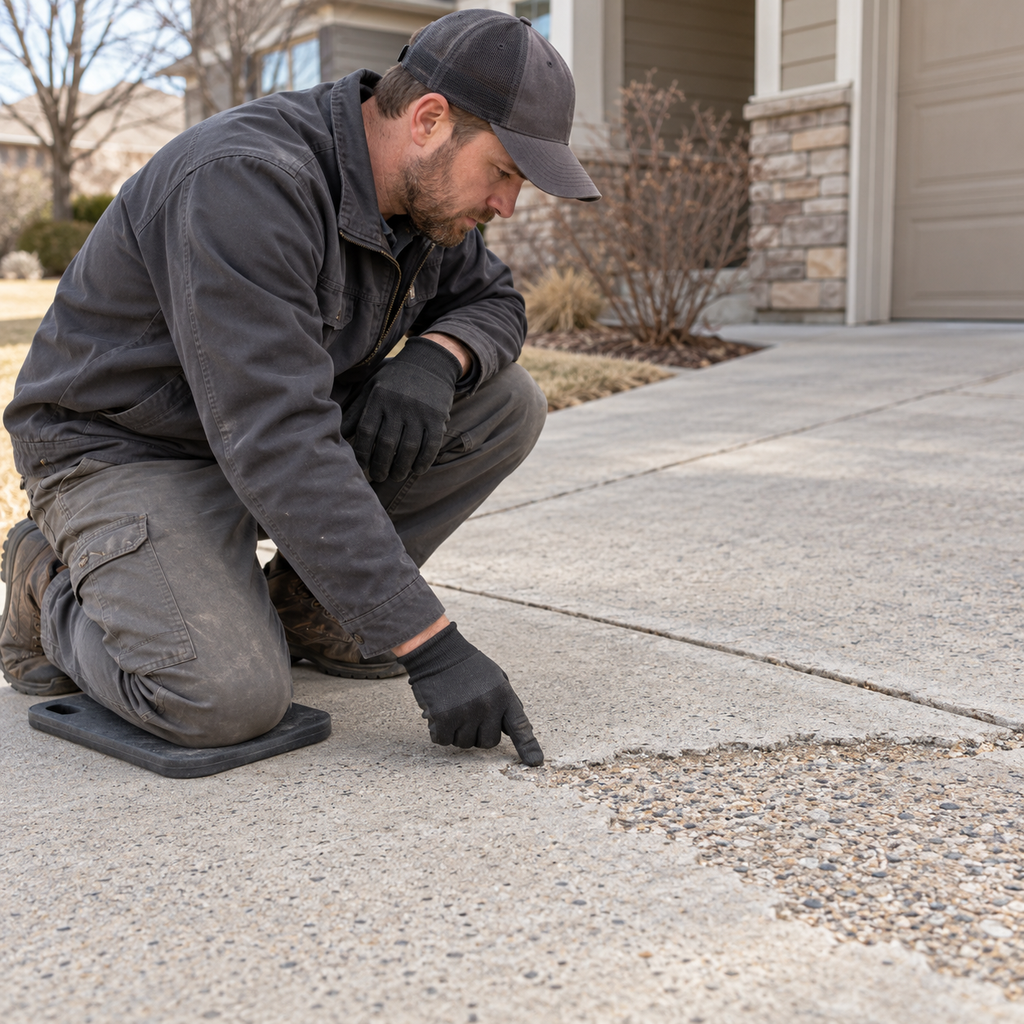
For isolated damaged patches: Ask what the contractor expects to find beneath the loose surface and how patch boundaries will be chosen. Discuss visible color and texture differences before approving the work, especially if appearance is your main concern.
For widespread surface wear: Ask whether resurfacing is suitable for the remaining slab. Request an explanation of how cracks, joints, edges, and drainage will be handled. An estimate should describe more than the name of the material being applied.
Resurfacing is generally intended for suitable existing concrete without underlying structural problems. Where significant sinking or deep cracking accompanies flaking, compare replacement with repair rather than assuming a new surface addresses every issue.
Do Not Buy a Cosmetic Fix Before Understanding the Scope
Pause before coating over the damage simply to make it look uniform. Ask what preparation the proposed system needs and whether any existing sealer must be removed.
Likewise, avoid experimenting with aggressive cleaning before the assessment. Photograph first, then ask for a cleaning method appropriate to the surface condition.
When comparing proposals, request answers to four practical questions:
1. What evidence makes this driveway a suitable candidate for the proposed repair?
2. How much damaged material is included in the removal allowance?
3. What happens to the scope and price if removal reveals deeper deterioration?
4. What appearance differences and maintenance requirements should I expect?
A cheaper proposal may cover a smaller area or less preparation. Compare the written scope, exclusions, and response to unexpected conditions alongside the price.
Plan the Days After Repair Before Work Begins
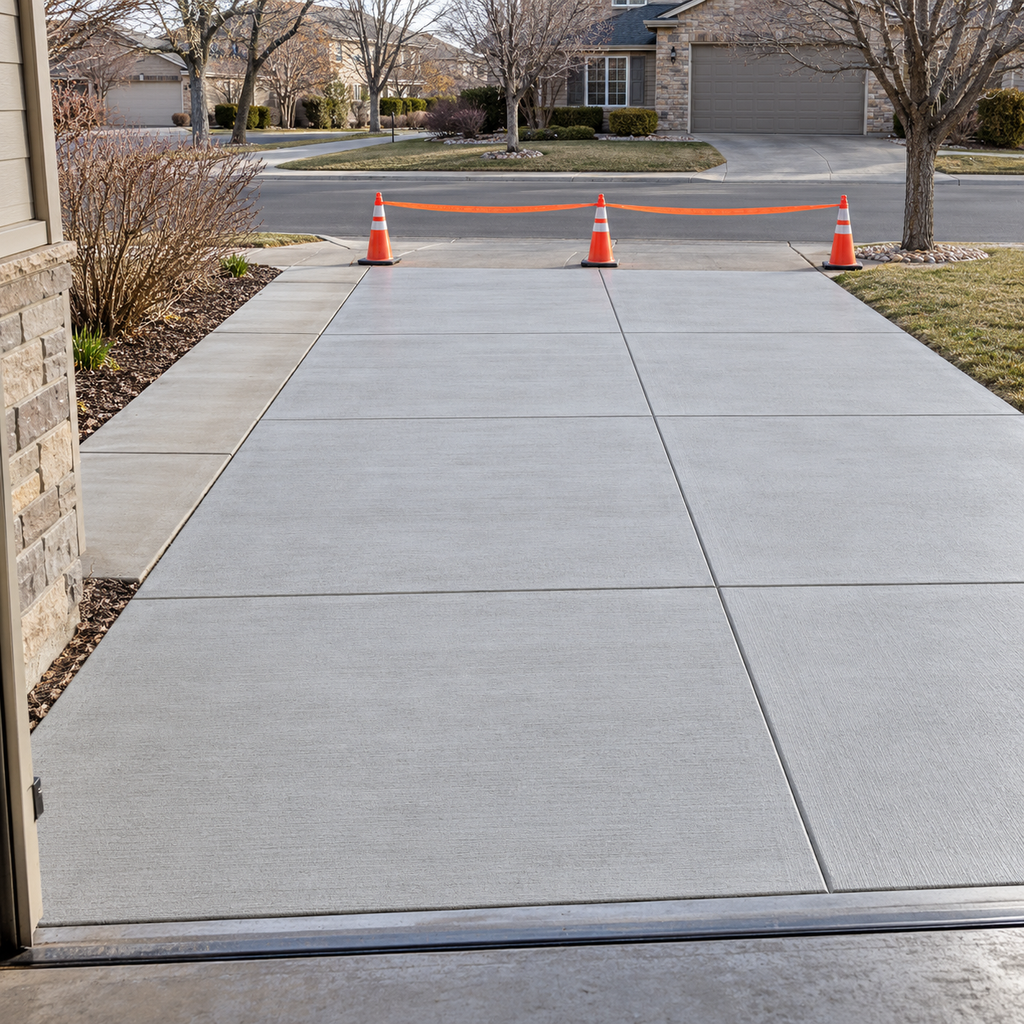
Get written instructions for pedestrian access, vehicle access, cleaning, and any later sealing. Ask whether those timings change with the selected material or forecast conditions. Arrange parking around the actual instructions rather than an assumed reopening date.
Discuss winter care too. NRMCA recommends avoiding deicing chemicals during the first winter of newly placed concrete and considering an appropriate breathable sealer according to manufacturer instructions. Ask which guidance applies to your particular repair system.
Your next step is to document the flaking and obtain an assessment that explains the remaining concrete’s condition. Choose the scope of work from that evidence, with clear expectations for preparation, appearance, and aftercare.

Written By:
Kurt Manalastas
Home Improvement Research Specialist
Kurt is a Home & Property Research Journalist who researches and writes educational content on home services, property improvement, and residential decision-making. He focuses on translating real-world contractor experience, industry standards, and verified research into clear, practical guidance that helps homeowners understand their options and make informed decisions.