Aftercare for a Recently Repaired Concrete Driveway in Denver
Summary
Aftercare for a recently repaired concrete driveway starts with following the specific repair system’s curing and traffic restrictions. Once reopened, use gentle cleaning, manage runoff, and confirm sealer compatibility. In Denver, prepare for snow and freezing conditions, and document any separation, movement, or deterioration for contractor follow-up.
A finished repair can look ready for everyday use before it is ready for vehicle traffic or cleaning. A filled crack, cement-based patch, resurfaced driveway, and replacement panel may each require different care. Start by finding out exactly what was installed and which instructions apply to it.
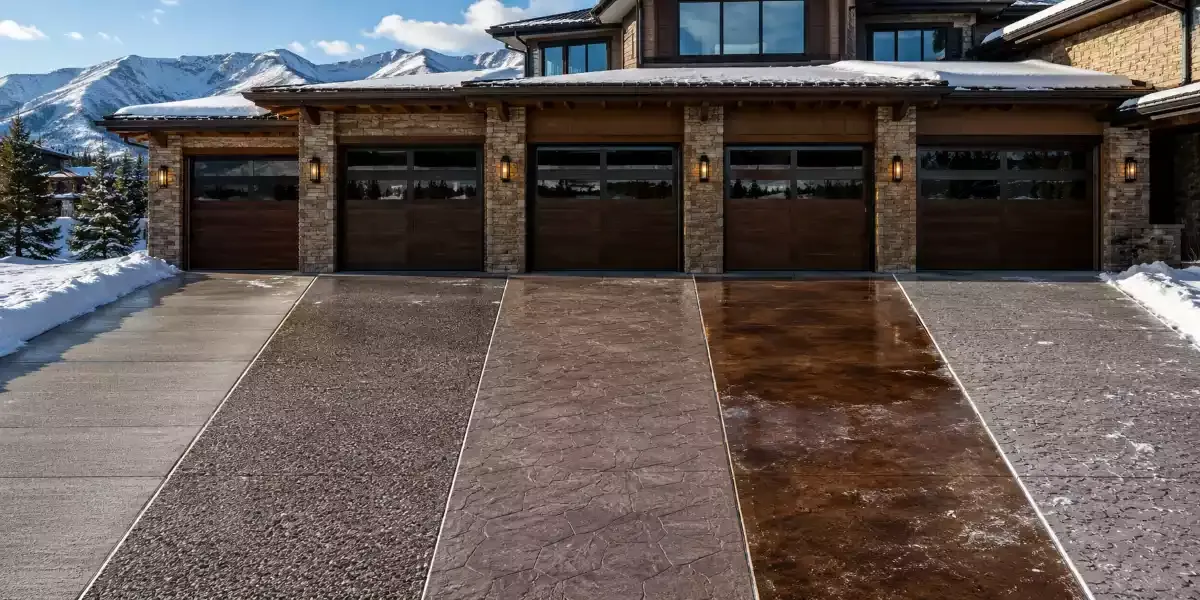
Concrete driveway repair and resurfacing services in Denver address different types of deterioration, so the completed repair scope should guide your maintenance plan.
Denver Concrete Driveway Pros is locally owned and operated and provides concrete repair and replacement services. Whatever the repair involves, keep the written scope and product information accessible for future cleaning, sealing, or follow-up work.
Get Clear Instructions Before Reopening the Driveway
Ask for separate guidance on foot traffic, passenger vehicles, and heavier loads. Permission to walk across a patch does not necessarily mean it can support a parked truck. Surface dryness also does not establish that curing is complete.
Before removing barriers, confirm:
- The repair product or system used
- When normal parking can resume
- Whether cold weather changes that timing
- Whether coverings or other curing protection must remain
- When washing and sealing are allowed
Avoid substituting a generic waiting period for these instructions. Different repair materials develop strength differently, and installation conditions matter. If an overnight freeze is forecast while the repair is still protected, ask the installer whether the protection needs adjustment.
Do not start watering the repair or remove a covering simply because that approach worked for another concrete project. Follow the specified curing method.
Clean Gently Once the Repair Allows It
Once cleaning is permitted, start with sweeping and the least aggressive method that removes the dirt. For washable surfaces, use a compatible mild cleaner and a soft-bristle brush, following the product directions. Address oil spills promptly with an appropriate absorbent instead of spreading them across the driveway with a hose.
Pressure washing should wait until the repair system permits it. A concentrated jet directed at patch edges or flexible crack filler can damage vulnerable areas. Ask about suitable equipment and technique before scheduling a professional cleaning.

Skip acid cleaners, solvent treatments, and abrasive scrubbing unless they are approved for both the repair material and any existing coating. A cleaner suitable for bare concrete may be unsuitable for a sealed or repaired surface. Test an approved cleaner in a small, inconspicuous area first.

Check Where Water Goes After Rain or Snowmelt
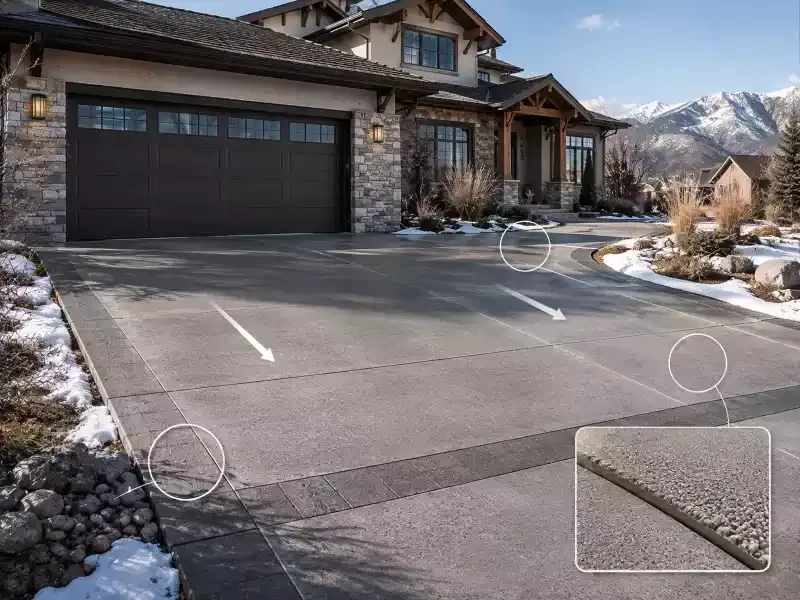
Observe the repaired area during the first few wet-weather events. Look for water collecting along patch edges, runoff crossing the same crack, or a downspout discharging directly onto the work.
Clear leaves and sediment from drainage paths. Adjust sprinklers that repeatedly soak the driveway, and check that stored items or snow piles do not obstruct runoff. Avoid adding a raised bead of filler across a drainage path without understanding where the water will go.
Winter exposure makes these checks especially useful in
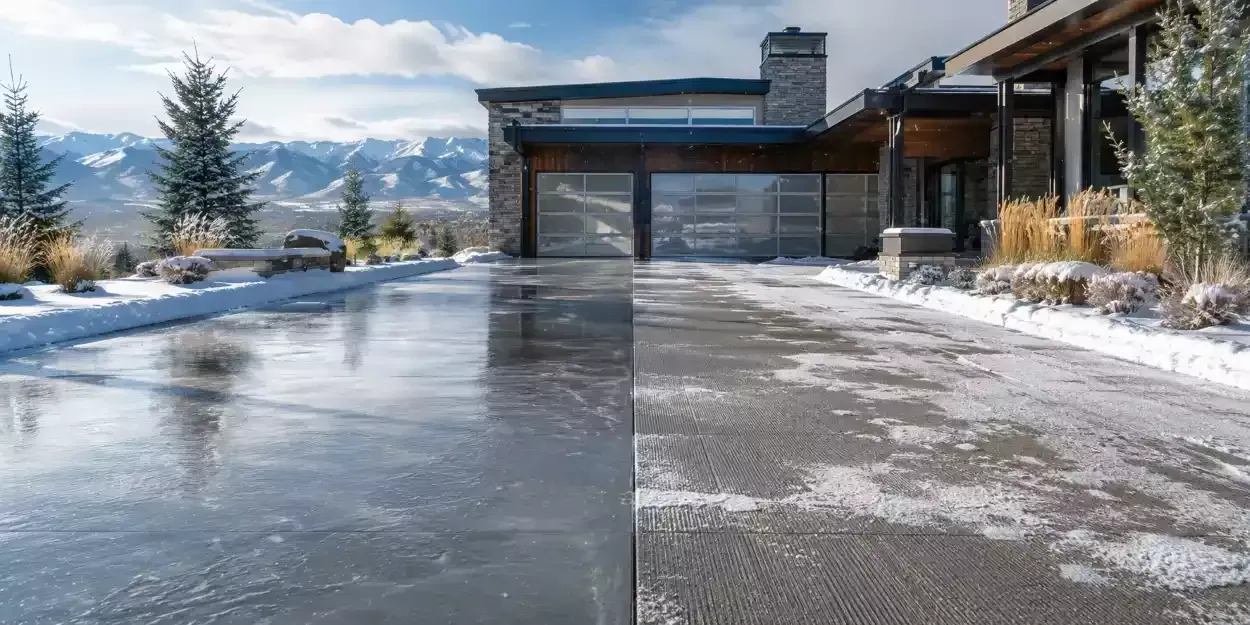
Denver. Water may drain freely during a thaw and collect again where a snowbank blocks the outlet.
How snow and ice affect concrete driveways in Denver explains the broader relationship between meltwater, freezing, and concrete deterioration.
Confirm Sealer Compatibility Before Applying It
Sealing is a product-selection decision, not an automatic final step after every repair. Find out whether the repaired area already has a curing compound, coating, or sealer and whether another treatment is appropriate.
Ask for the recommended product, earliest application date, surface preparation, and suitable weather conditions. A penetrating water repellent and a film-forming coating behave differently. Neither should be assumed compatible with every patch or crack filler.
Avoid applying extra coats simply to make the repaired area match the surrounding driveway. Color differences alone do not establish repair failure, and an unplanned coating can create additional maintenance work. Keep the product name and application date so future treatments can be selected with that history in mind.
Prepare for the First Winter After Repairs
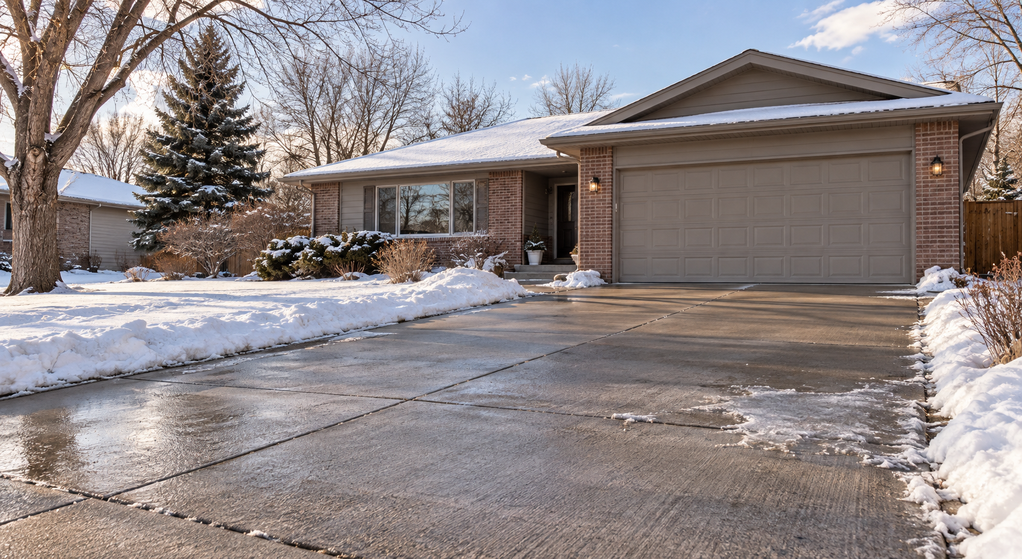
Remove snow with equipment suitable for the repaired surface, taking care around transitions and patch edges. Avoid striking the repair with an ice-chopping tool. Keep a clear runoff route as snow melts.
The National Ready Mixed Concrete Association’s guidance on preventing concrete surface scaling recommends avoiding deicing chemicals during the first winter on newly placed concrete and using clean sand for traction. That is particularly relevant when repairs include a new concrete panel. For proprietary patches, overlays, or fillers, also follow the manufacturer’s restrictions.

Sand provides traction without melting ice. Apply it where needed and sweep up accumulated grit when conditions allow. Do not assume a deicer advertised as safe for concrete is approved for your particular repair system.
Record Changes and Know When to Follow Up
Photograph the completed repair after access is permitted. Include a wider view showing its location and closer views of the edges. Compare those images after winter or if you notice deterioration.
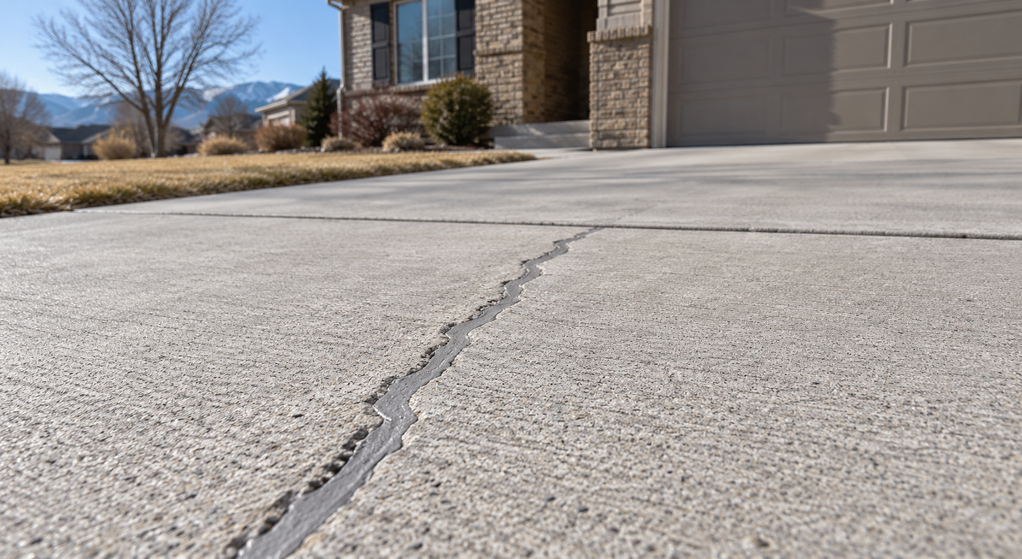
Contact the installer if the patch loosens, its edges separate, the crack reopens, or one side becomes higher than the other. Describe when the change appeared and whether it followed rain, freezing weather, or vehicle use. Avoid covering the area with another product before it can be assessed.
How to prevent repaired driveway cracks from returning explains why recurring movement or repair separation may require more than routine maintenance.
Keep the aftercare instructions, photographs, and product details together. Consistent cleaning, drainage checks, and timely follow-up make the repair easier to maintain and give the installer useful information if its condition changes.

Written By:
Kurt Manalastas
Home Improvement Research Specialist
Kurt is a Home & Property Research Journalist who researches and writes educational content on home services, property improvement, and residential decision-making. He focuses on translating real-world contractor experience, industry standards, and verified research into clear, practical guidance that helps homeowners understand their options and make informed decisions.