How to Choose a Better Finish for Denver Concrete Driveways
Quick Summary:
Choosing a concrete driveway finish in Denver means balancing appearance with snow, ice, UV exposure, and freeze-thaw cycling. Broom, exposed aggregate, stamped, stained, and salt finishes all carry different trade-offs, and the best choice depends on traction needs, maintenance expectations, driveway slope, and long-term performance.
The concrete driveway finish decision is one of those choices that feels simple until you start thinking about it seriously. There are more options than most homeowners initially realize, each with its own performance characteristics, maintenance requirements, and visual outcomes. In Denver’s climate, where snow, ice, UV radiation, and freeze-thaw cycling all interact with whatever surface is on your driveway, the finish choice has real consequences beyond aesthetics that are worth understanding before any concrete is poured.
This guide covers the main finish options available for Denver driveways, what each one actually delivers in Colorado’s conditions, and the questions worth asking before making a decision. The goal is not to push any one finish over another — different situations call for different choices. The goal is to make sure the choice you make is informed by what the surface will actually face rather than by how it looks in photos that were not taken in a Denver January.
Start With What Your Driveway Actually Has to Do
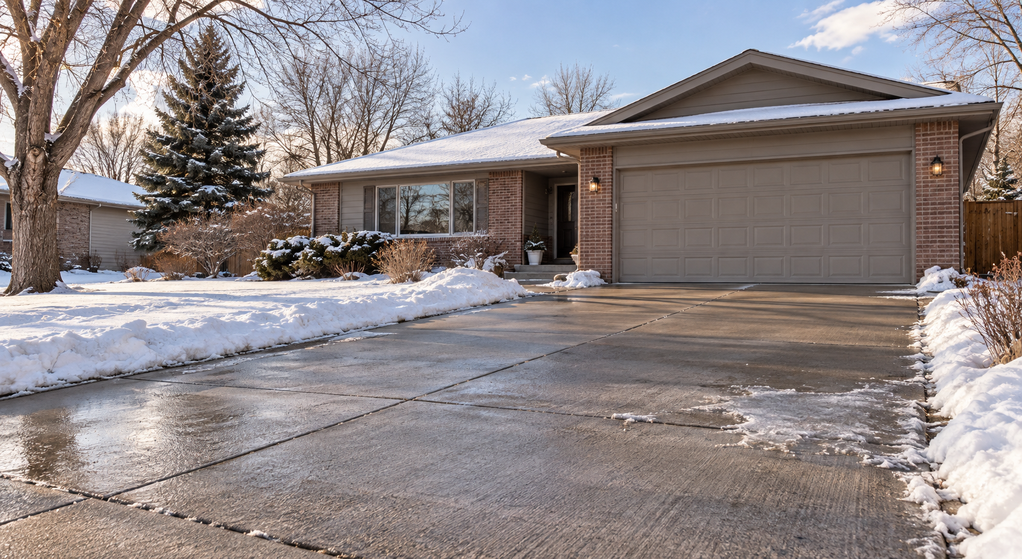
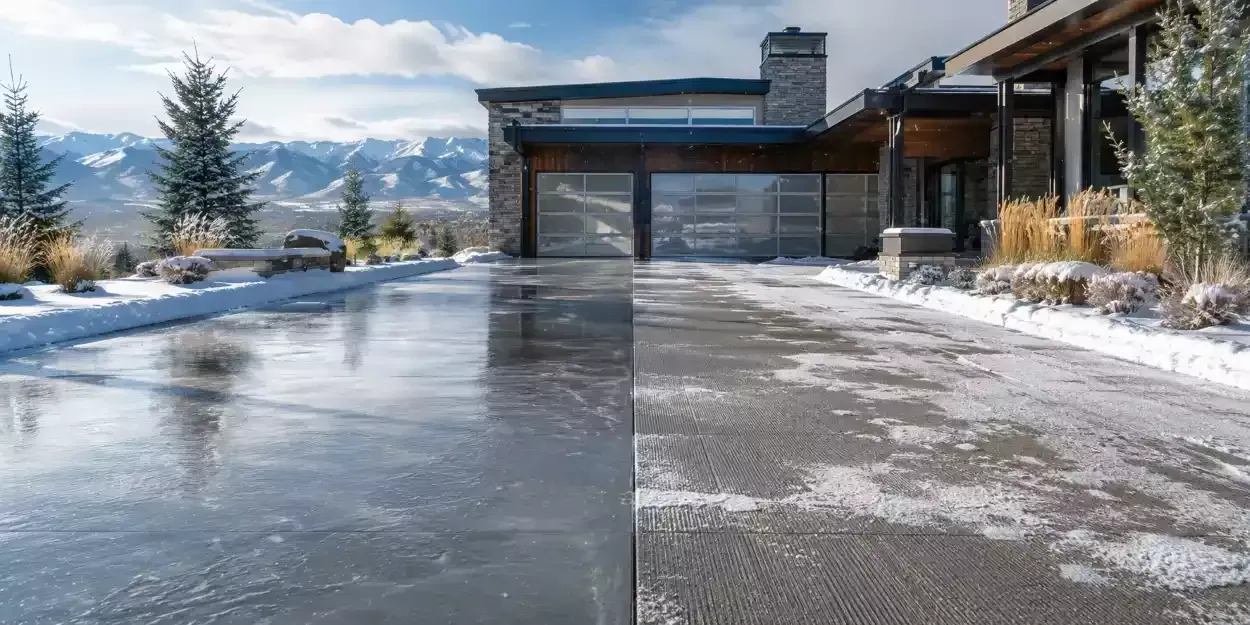
Before evaluating specific finishes, it helps to define what the driveway needs to accomplish. Safety in winter conditions is the non-negotiable for any Denver driveway that will be used year-round — which is to say, all of them. Traction on snow and ice, the ability to hold up through repeated freeze-thaw cycles without surface scaling, and resistance to the de-icing products that most Denver homeowners use are baseline performance requirements that any finish choice needs to meet or at least accommodate through complementary measures. Beyond safety, the driveway’s aesthetic goals, the homeowner’s realistic maintenance commitment, and the specific site conditions — grade, sun exposure, proximity to the street — all factor into which finish is genuinely the better choice for that property.
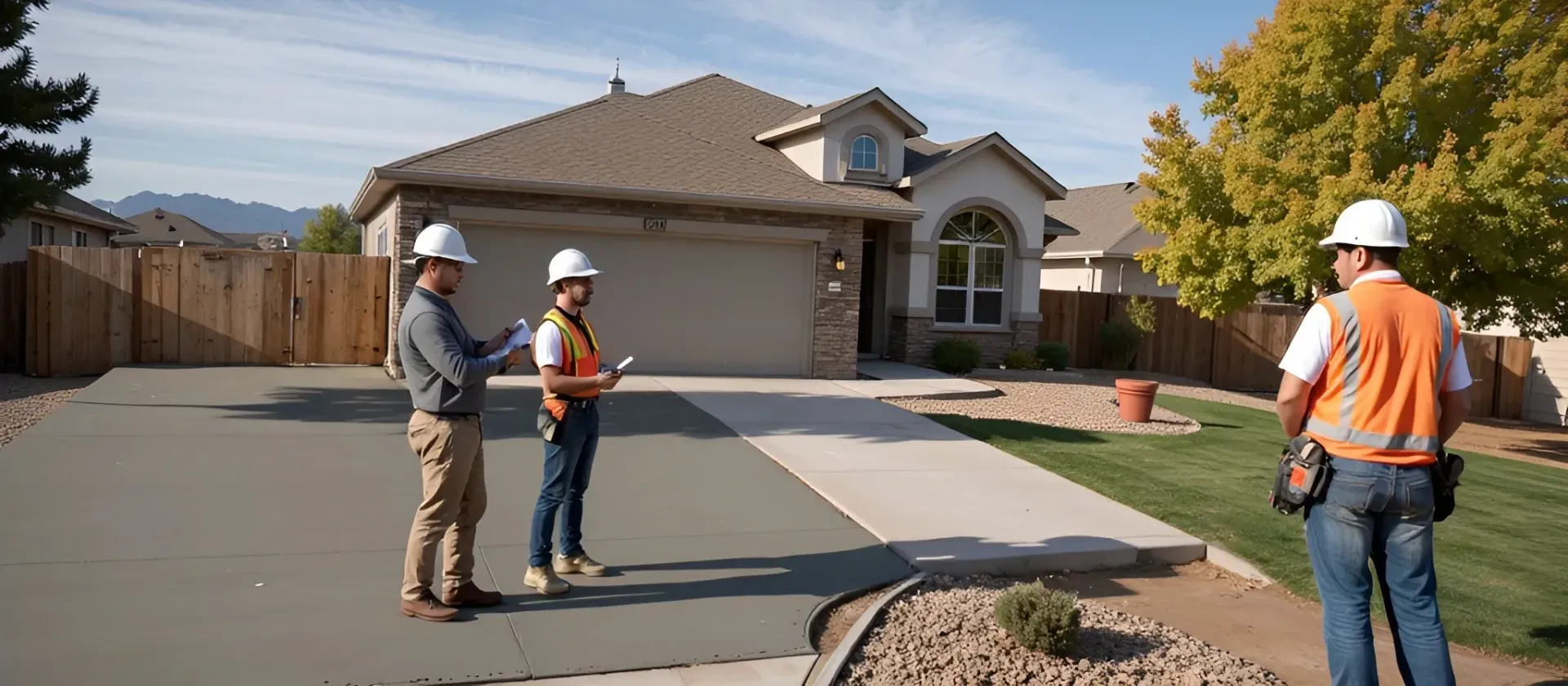
Working through this with a contractor experienced in broom finished concrete driveways in Denver, CO gives the finish conversation a practical anchor that catalog browsing alone cannot provide.
The site’s slope is particularly relevant to the finish decision in Denver. A flat or nearly flat driveway on a sheltered property where snow management is consistent and ice formation is less frequent can accommodate a wider range of finishes than a sloped driveway in a more exposed location where ice forms regularly and the grade amplifies the hazard it creates. Finishes that provide adequate traction for a flat driveway may be inadequate for a steep one, and designing the finish choice around the actual slope of the specific driveway rather than a generic property is part of what makes the decision site-appropriate rather than generic.
Broom Finish: The Practical Standard
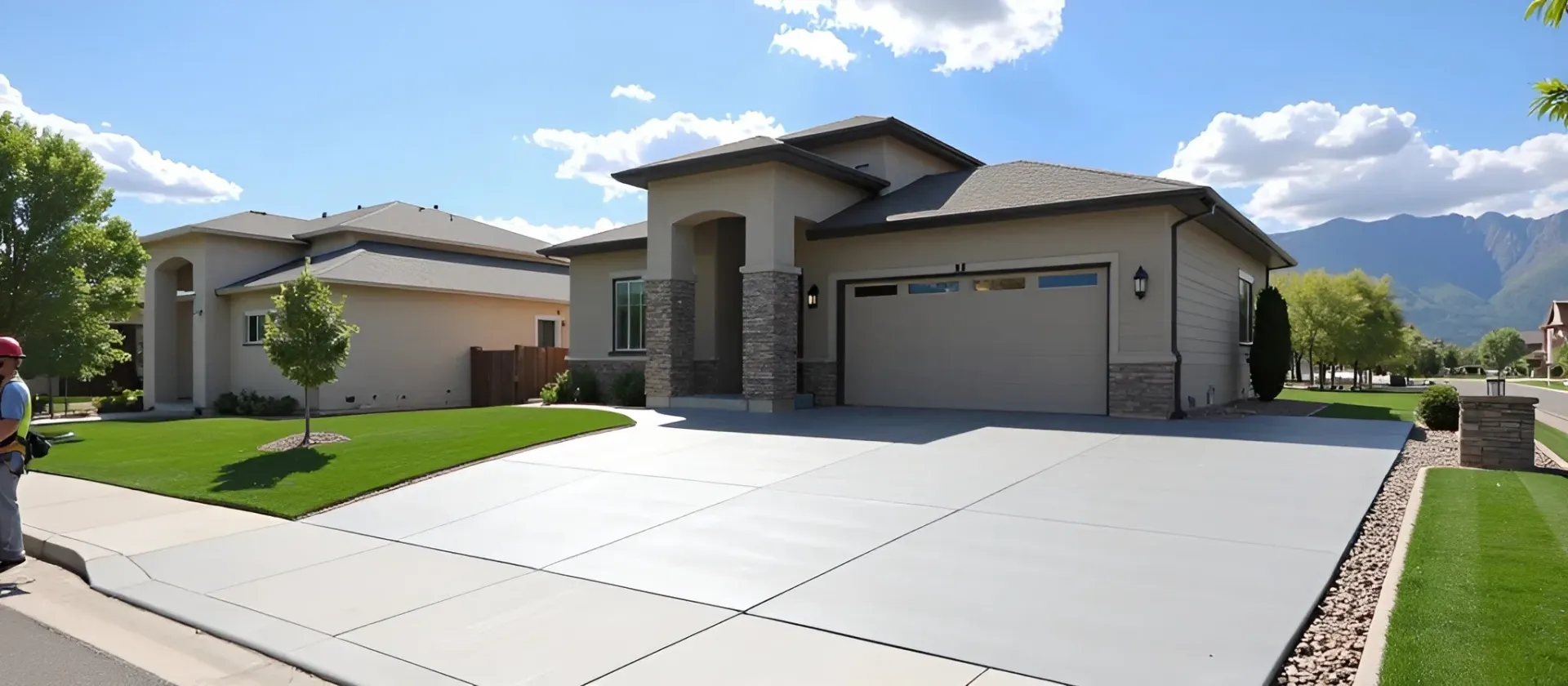
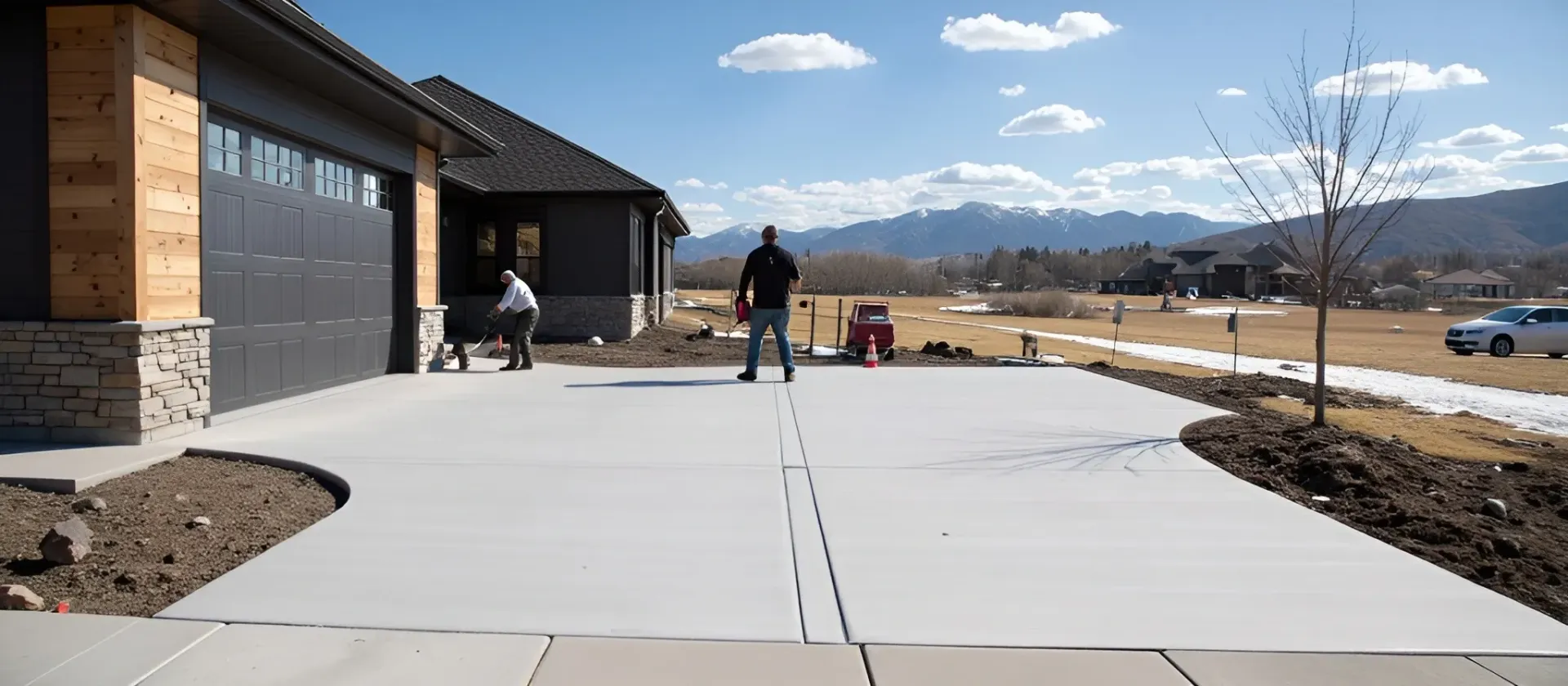
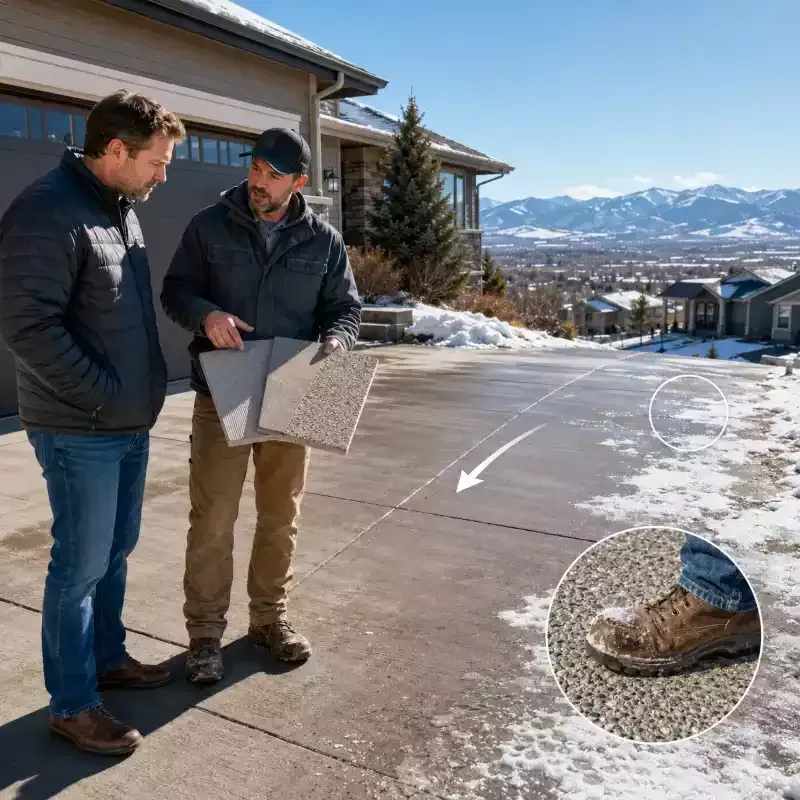
A broom finish is the most widely used driveway surface in Denver, and its prevalence reflects genuine performance advantages in Colorado’s conditions rather than simply inertia. The linear texture created by drawing a broom across fresh concrete before it sets provides reliable traction that works mechanically rather than depending on a coating or sealer to remain effective. It holds up through freeze-thaw cycling without the surface vulnerability of smoother finishes. It ages consistently without the visual indicators of wear that decorative finishes show when their protective coatings degrade.
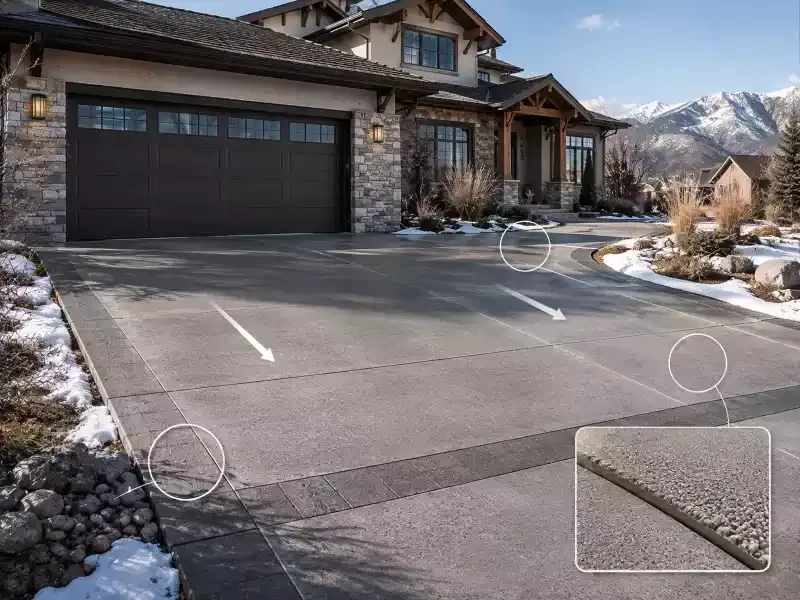
The main limitation of broom finish is aesthetic — it is functional rather than visually distinctive. For homeowners who want a driveway that makes a design statement, broom finish alone does not deliver that. But it can be combined with other elements — colored concrete, saw-cut borders, a contrasting exposed aggregate band around the perimeter — that add visual interest without compromising the traction and durability that the broom texture provides across the main surface. This combination approach is worth considering for homeowners who want something that looks more intentional than a plain gray slab without sacrificing the performance characteristics that Denver winters demand.
Exposed Aggregate: Traction and Texture
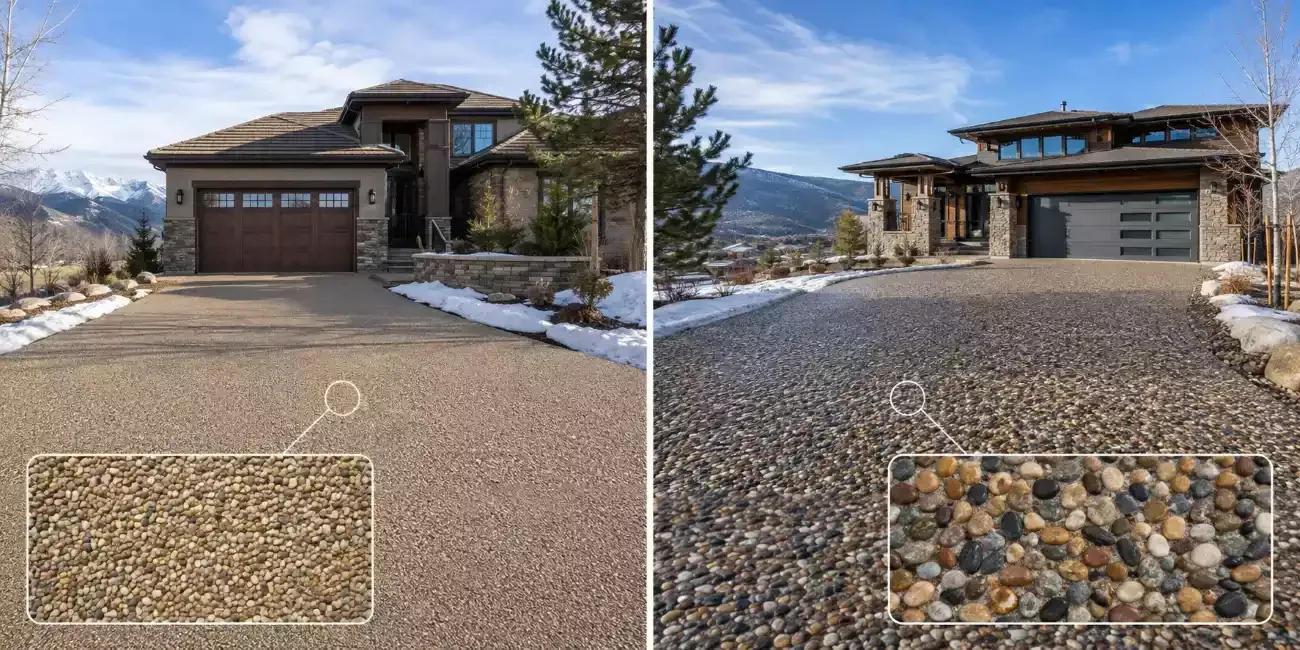
Exposed aggregate is one of the finishes that performs genuinely well in Denver’s winter conditions. By washing away the surface paste from fresh concrete to reveal the aggregate beneath, this finish creates a naturally textured surface whose traction is built into the material rather than applied on top of it. The aggregate itself does not degrade or wash away with de-icing products the way a surface coating can, which means the traction characteristics of exposed aggregate remain consistent over the life of the driveway in a way that coated smooth finishes do not.
The visual character of exposed aggregate varies depending on the aggregate used. Standard pea gravel produces a consistent, rounded texture with warm tones. Larger decorative aggregate creates a more dramatic texture with potentially more varied color depending on the stone selected. For Denver homeowners who want a surface that is visually interesting, texturally reliable, and performs well through freeze-thaw cycles, exposed aggregate is one of the stronger options available and one that does not require the same level of ongoing sealer maintenance that decorative coated finishes need to maintain their appearance.
Stamped Concrete: The Decorative Option With the Most Trade-Offs
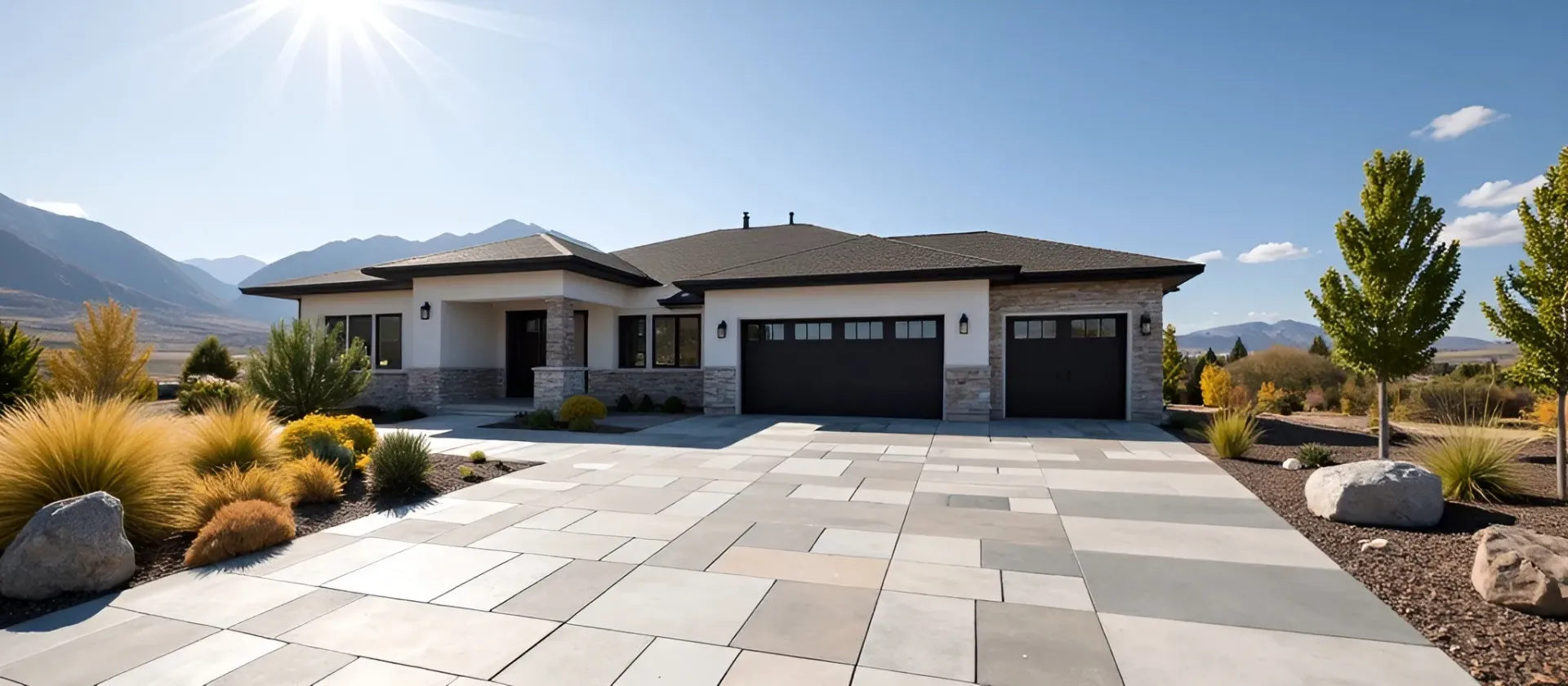
Stamped concrete is the most visually versatile finish option — patterns that replicate stone, brick, slate, wood, and tile can produce genuinely impressive driveway surfaces that contribute significantly to a home’s curb appeal. For Denver driveways, it is also the finish option that requires the most careful evaluation against Colorado’s climate conditions before committing.
The traction concern with stamped concrete in Denver comes from two directions. First, the pattern surface itself can be relatively smooth between pattern lines depending on the specific stamp design used, which reduces effective traction against ice compared to a consistently textured broom or aggregate surface. Second, the acrylic sealer that protects the stamped surface and enhances its color also affects the surface’s friction characteristics — when the sealer is fresh and in good condition, it provides reasonable grip. When it has worn thin, the surface traction is reduced. In Denver’s UV environment, sealer degrades faster than at lower elevations, which means the interval between resealing applications is shorter than in milder climates and the window of potential reduced traction is more frequent.
At
Denver Concrete Driveways Pro, we install stamped concrete driveways for homeowners who want them, but we are direct about what they require — regular resealing on a schedule calibrated to Denver’s UV intensity, attention to the sealer condition before winter arrives, and in some cases anti-slip additives mixed into the sealer to maintain traction through the winter. A stamped driveway that is properly maintained in Denver can look great and perform adequately through Colorado winters. One that is installed and then treated like a broom-finish driveway in terms of maintenance will not hold up the same way.
Stained Concrete: Color Without Pattern
Concrete staining adds color to a driveway surface without creating the pattern texture of stamped concrete. Acid staining produces rich, mottled earth tones through a chemical reaction with the concrete itself — because the color penetrates rather than sitting on the surface, it does not peel or chip the way surface-applied color hardeners can. Water-based staining offers a wider color range for homeowners who want a specific tone rather than the organic variation that acid staining produces.
For Denver driveways, staining is typically applied over a broom finish or light texture rather than a smooth surface, which addresses the traction concern while adding the color dimension that staining provides. This combination — broom textured base with a stain applied over it — gives homeowners the visual interest of color without sacrificing the traction that a broom finish provides. The stain itself requires periodic sealing to protect the color from UV fading in Denver’s high-altitude sun, but the sealing requirement is less critical to traction performance than it is for stamped concrete where the sealer directly affects the surface’s grip.
Salt Finish: A Less Common Option Worth Knowing
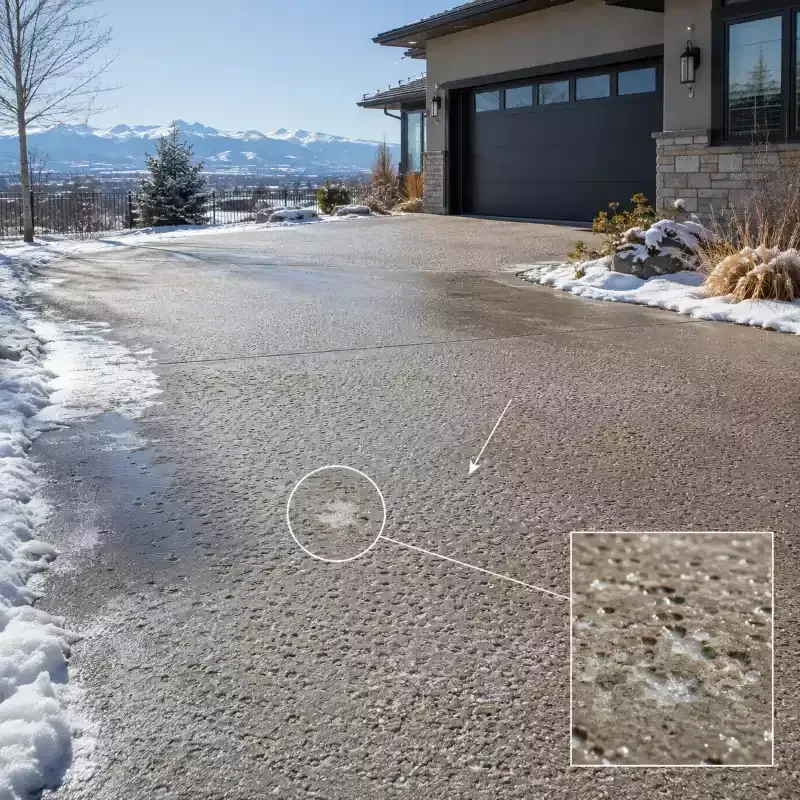
A salt finish is created by pressing rock salt crystals into fresh concrete and then washing them out once the surface has set, leaving a pitted, dimpled texture. The texture provides reasonable traction and has a distinctive appearance that works well in certain residential contexts. In Denver’s climate, salt finish is less commonly specified for driveways than broom or exposed aggregate, partly because the pitted texture can accumulate ice melt product residue and require more thorough cleaning, and partly because the pits themselves can hold water in a way that accelerates freeze-thaw cycling damage at those specific points over time.
For homeowners who like the visual character of salt finish and are prepared to manage the additional cleaning it requires in Denver’s conditions, it is a viable option for flat or gently sloped driveways where the ice management demands are lower. For steeper driveways or properties where aggressive winter ice management is the norm, the additional maintenance requirements and the freeze-thaw vulnerability of the pitted surface make it a less practical choice than broom or exposed aggregate alternatives.
For homeowners who want a comprehensive comparison of Denver driveway finish options with detailed consideration of how each performs in Colorado’s specific conditions, our article onchoosing the right style and finish for your Denver driveway covers the full range of options and the practical factors that determine which is most appropriate for different property types and homeowner priorities in the Denver metro area.
Making the Decision: A Practical Framework
The finish decision for a Denver concrete driveway comes down to three questions answered honestly. First, what are the traction requirements for this specific property given its slope, exposure, and the household’s approach to winter ice management? Second, what maintenance commitment is the homeowner realistically going to follow over the life of the driveway, not just initially? Third, what aesthetic outcome matters enough to justify the additional maintenance or performance trade-offs it requires?
Answering all three honestly, rather than weighting aesthetics heavily and treating the other two as manageable afterthoughts, produces a finish choice that performs the way the homeowner expects over the long run. The most common source of finish regret in Denver driveways is not choosing something that looked bad — it is choosing something that looked great and then discovering that maintaining it in Colorado’s conditions requires more consistent effort than was anticipated, or that the traction it provides in winter conditions is not adequate for the slope of the specific driveway.
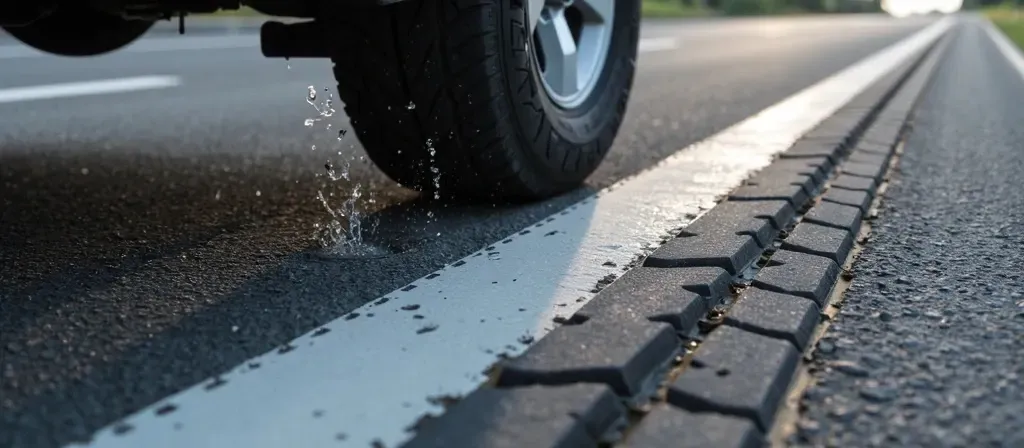
For Denver homeowners who want to understand how texture directly affects traction in wet, icy, and sloped conditions, our article on
why surface texture matters for skid resistance in Denver explains how surface grooves, friction, and water movement influence safety, which is useful context whether you are choosing a finish for a new driveway or evaluating an existing one.

Written By:
Kurt Manalastas
Home Improvement Research Specialist
Kurt is a Home & Property Research Journalist who researches and writes educational content on home services, property improvement, and residential decision-making. He focuses on translating real-world contractor experience, industry standards, and verified research into clear, practical guidance that helps homeowners understand their options and make informed decisions.