Broom Finished Concrete for Safer Denver Driveways
Quick Summary:
Broom finished concrete is one of the most practical driveway surface choices for Denver’s climate — it provides reliable traction in snow and ice, holds up to freeze-thaw cycling, and requires less upkeep than decorative finishes in Colorado’s demanding conditions. It is not just the default option; in many situations it is the right one.
Broom finish is often treated as the plain option — the default choice when homeowners are unsure what else to select. But in Denver, where the combination of snow, ice, freeze-thaw cycling, and significant temperature swings creates one of the more demanding environments for outdoor concrete in the country, broom finish has practical advantages that make it a genuinely smart choice rather than simply a default one. Traction on an icy driveway matters. A surface that does not require resealing every year to hold up in Colorado’s UV and temperature extremes matters.
A finish that ages gracefully without showing every weather-related imperfection matters.
This article is for Denver homeowners who are choosing a finish for a new driveway or reconsidering a more decorative option that has not performed the way they hoped. Here is a clear look at what broom finish actually offers in Colorado’s climate and why it continues to be the most widely used driveway surface in the Denver metro.
What Broom Finish Is and How It Works
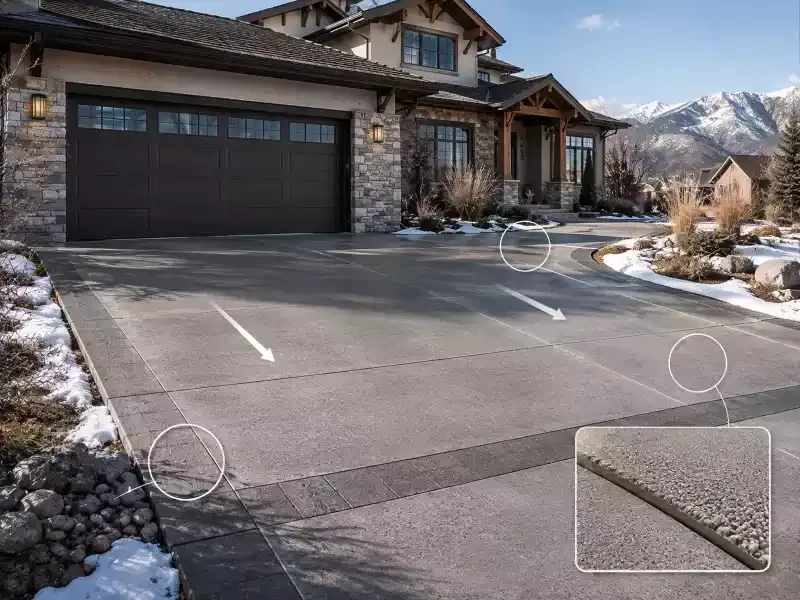
A broom finish is created by drawing a stiff-bristled broom across the surface of fresh concrete before it fully sets, creating a series of parallel lines or a textured pattern that remains in the surface once the concrete cures. The result is a surface with a consistent, moderate texture that increases friction between the concrete and vehicle tires or foot traffic. The depth of the broom texture can be adjusted by the timing of the broom pass and the stiffness of the bristles — a light broom produces fine texture, a heavy broom produces deeper grooves that provide more aggressive traction. For Denver homeowners planning a new installation, working with a contractor experienced in
broom finished concrete driveways in Denver who can advise on the appropriate broom texture for the driveway’s slope, intended use, and exposure conditions is the right starting point for getting this finish right.
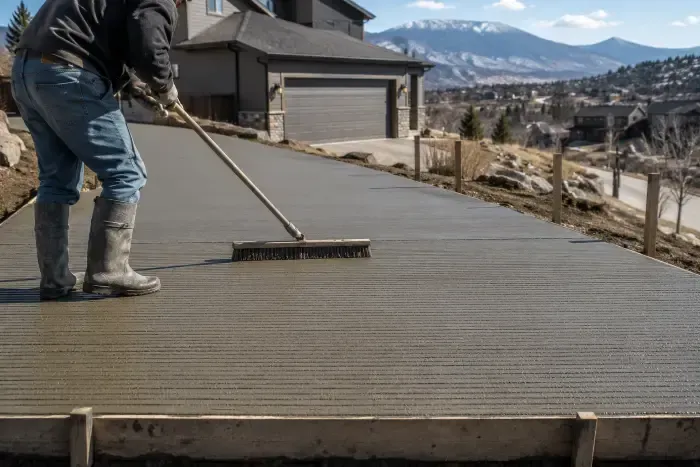
The broom marks are typically applied perpendicular to the direction of traffic, which means they run across the driveway width rather than along its length. This orientation places the texture grooves directly in the path of tires and foot traffic, providing maximum friction against the direction of potential slipping. On a driveway with a significant grade, this is the orientation that matters most for traction — and in Denver, where driveways with notable slope are common in hillside neighborhoods and where winter ice can make any grade a hazard, getting the broom orientation right is a detail that has practical safety implications.
Why Denver’s Climate Makes Traction Critical
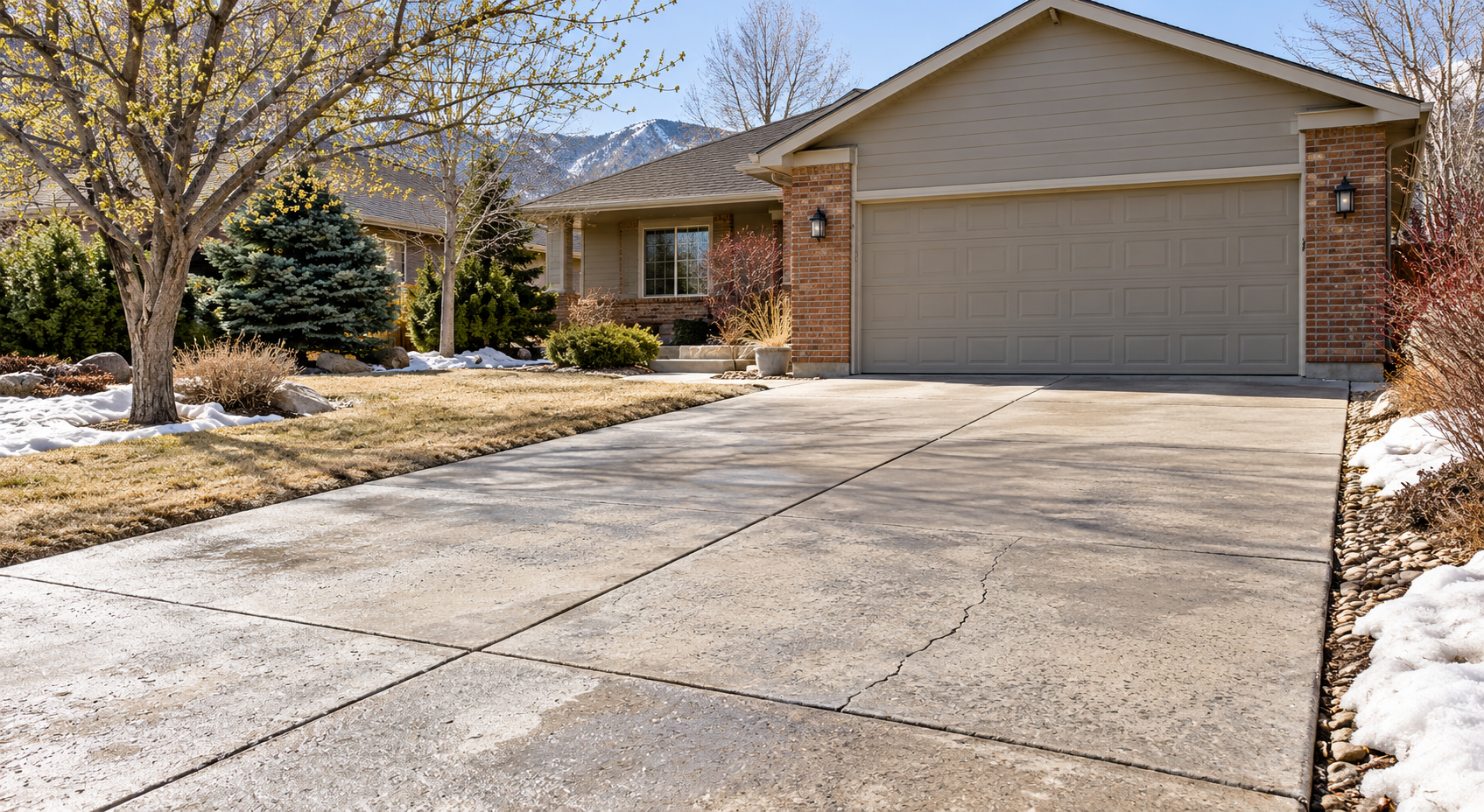
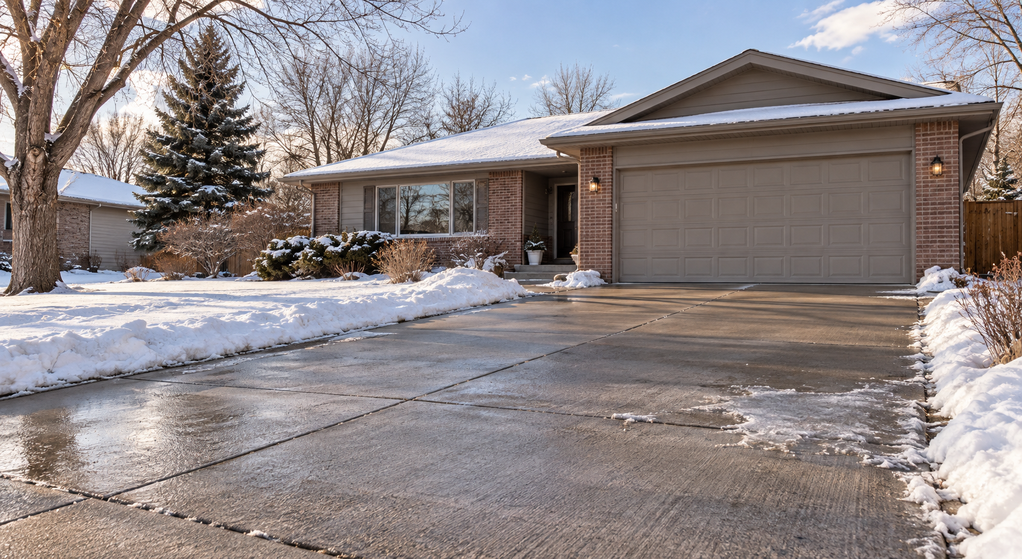
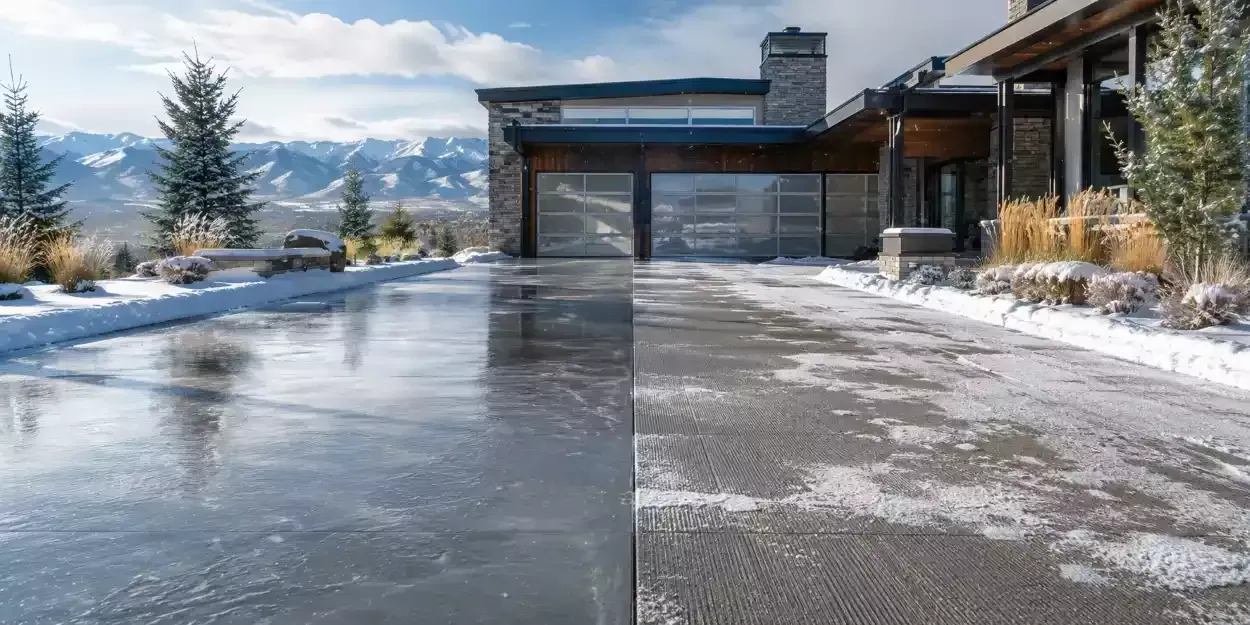
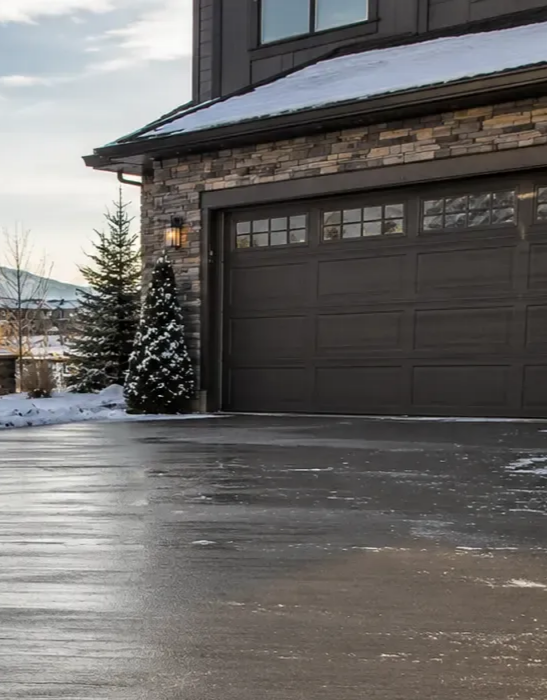
Denver receives regular snowfall throughout the winter, and the city’s temperature patterns create a specific traction challenge that homeowners who have relocated from warmer climates sometimes underestimate. Denver regularly experiences freeze-thaw cycles, with snow melting during warmer daytime periods and refreezing overnight, leaving a layer of ice on driveways that is often thinner and more transparent than the snow cover that preceded it. That ice-over-concrete condition is where driveway traction matters most, and where the difference between a textured broom finish and a smoother alternative becomes most apparent.
Colorado’s high altitude also means the UV radiation reaching driveway surfaces is more intense than at lower elevations, which accelerates the degradation of surface sealers and the oxidation of concrete finishes that depend on a maintained surface layer for their appearance and traction properties. Decorative finishes — stamped concrete with an acrylic sealer, stained concrete, polished surfaces — require more frequent resealing in Denver’s UV environment to maintain their condition and traction characteristics. Broom finish provides its traction mechanically, through the physical texture of the concrete surface, rather than through a coating that must be maintained to remain effective.
Broom Finish and Freeze-Thaw Performance
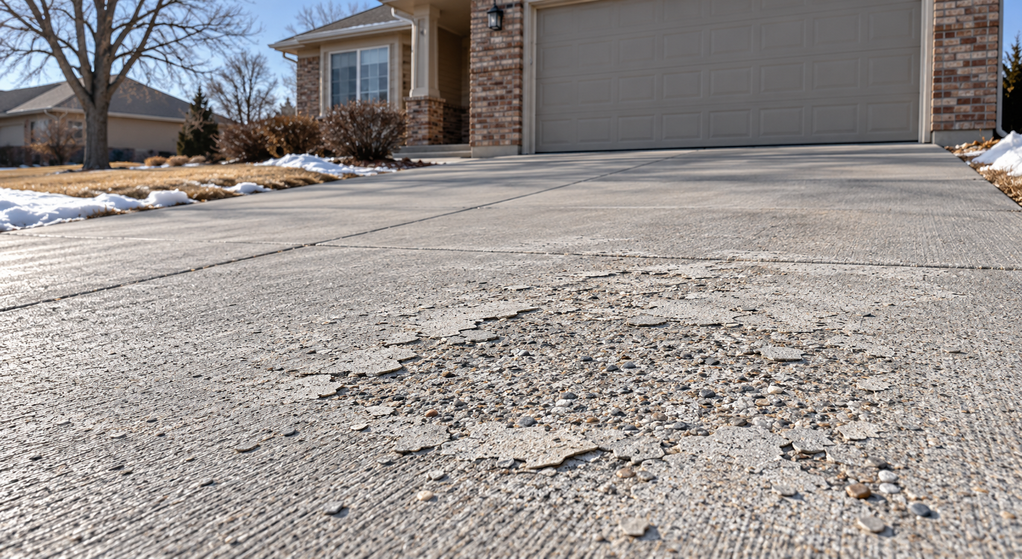
One of the most significant performance factors for any driveway concrete in Denver is how well it handles freeze-thaw cycling. When water infiltrates a concrete surface and freezes, it expands and exerts pressure on the surrounding concrete. Repeated freeze-thaw cycles produce the surface scaling and spalling that is one of the most common concrete deterioration problems in Colorado. Air-entrained concrete — concrete with tiny air bubbles mixed in that provide room for freezing water to expand without damaging the surrounding material — is the standard specification for exterior concrete in Denver’s climate precisely for this reason.
A broom finished surface, when applied to properly air-entrained concrete and cured adequately, provides reasonable resistance to freeze-thaw scaling compared to surfaces that are finished too smooth, finished too wet, or that have had water added to the mix in a way that increases the water-to-cement ratio and reduces durability. The broom texture does not in itself prevent scaling — that is a function of the concrete mix and curing — but it does not amplify the problem the way that polished or heavily troweled smooth finishes can, which close the surface pores and can trap water in ways that accelerate scaling when freezing occurs.
Maintenance: Where Broom Finish Earns Its Practical Advantage
One of the most consistent reasons Denver homeowners choose broom finish over stamped or stained concrete is the maintenance comparison. Stamped concrete with a decorative sealer needs that sealer reapplied periodically — in Denver’s UV environment, typically more frequently than the manufacturer’s stated interval, which is usually calibrated for lower-altitude and milder-climate conditions. Stained concrete needs periodic resealing to maintain its color and protect the stain from UV fading. When those maintenance steps are deferred, the surface’s appearance and traction characteristics both deteriorate in ways that require professional attention to restore.
Broom finish requires cleaning and periodic sealing as well, but the sealer on a broom-finished driveway is protecting the concrete from moisture infiltration rather than maintaining the appearance of a decorative surface. When it degrades, the consequence is reduced moisture protection rather than obvious visual deterioration. That lower consequence of deferred maintenance is one reason broom finish often looks better over time without intensive upkeep. At Denver Concrete Driveway Pros, we are locally owned and operated, and we have built our reputation on giving Denver homeowners honest advice about what different finish choices actually require to maintain in Colorado’s climate — not just what they look like on the day they are installed
.
Getting the Broom Texture Right for Your Driveway
Not all broom finishes are the same, and the specific texture depth and pattern appropriate for a given Denver driveway depends on several factors. Driveways with a significant grade, where vehicles and pedestrians are navigating a slope in winter conditions, benefit from a heavier broom texture that provides more aggressive traction. Flat or nearly flat driveways where the primary concern is aesthetics rather than slope-related traction can use a lighter broom texture that provides functional slip resistance without the coarser appearance of a heavy broom application.
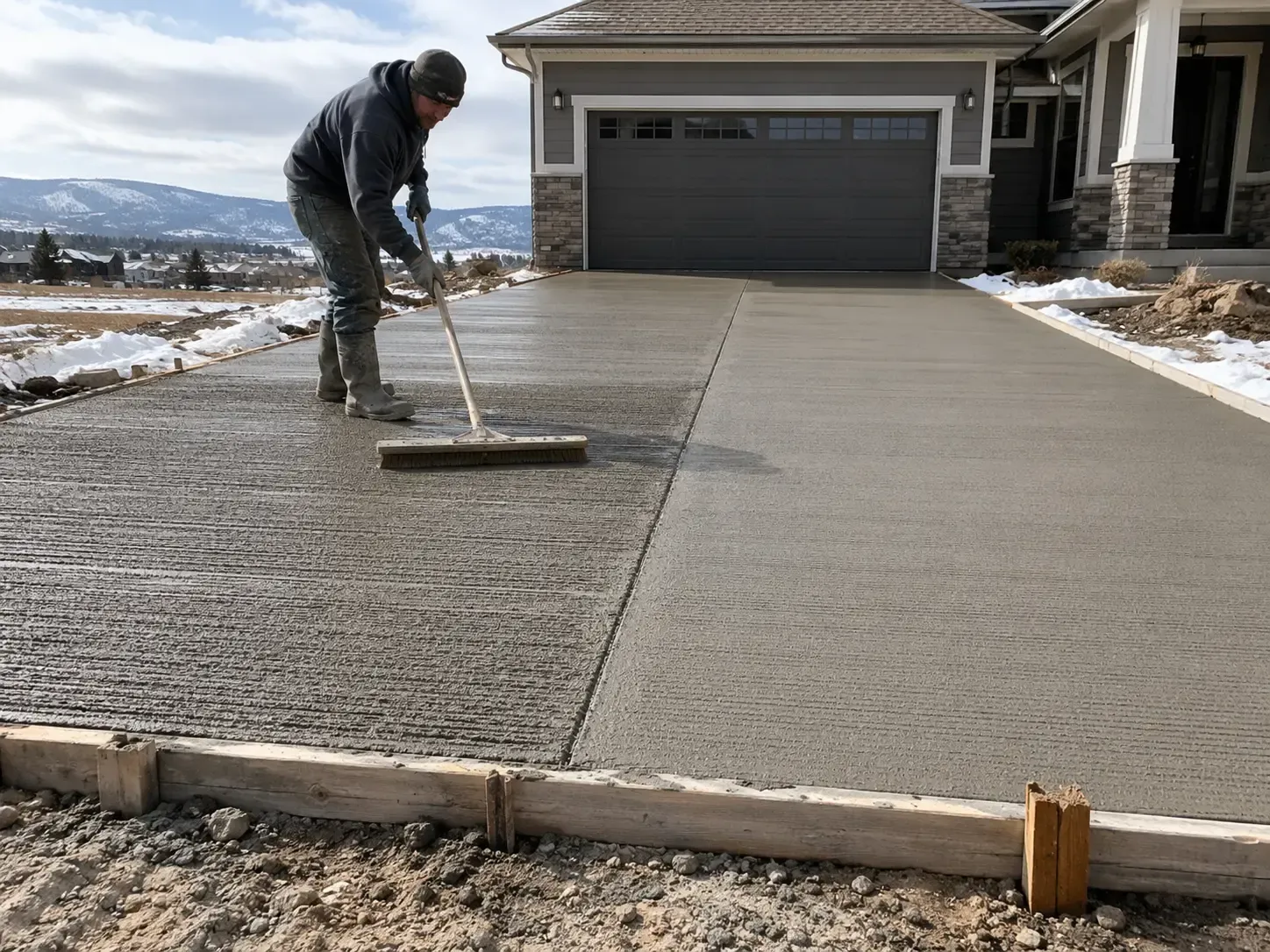
The direction of the broom pass also matters for driveways with a specific traffic pattern. For a standard straight driveway where traffic runs perpendicular to the garage, a cross-broom application — running the broom parallel to the garage wall and across the direction of traffic — provides optimal traction. For driveways with curved sections or multiple access directions, the broom pattern can be adjusted in different zones to provide appropriate traction for the actual traffic flow in each area.
Broom Finish Compared to Other Popular Denver Options
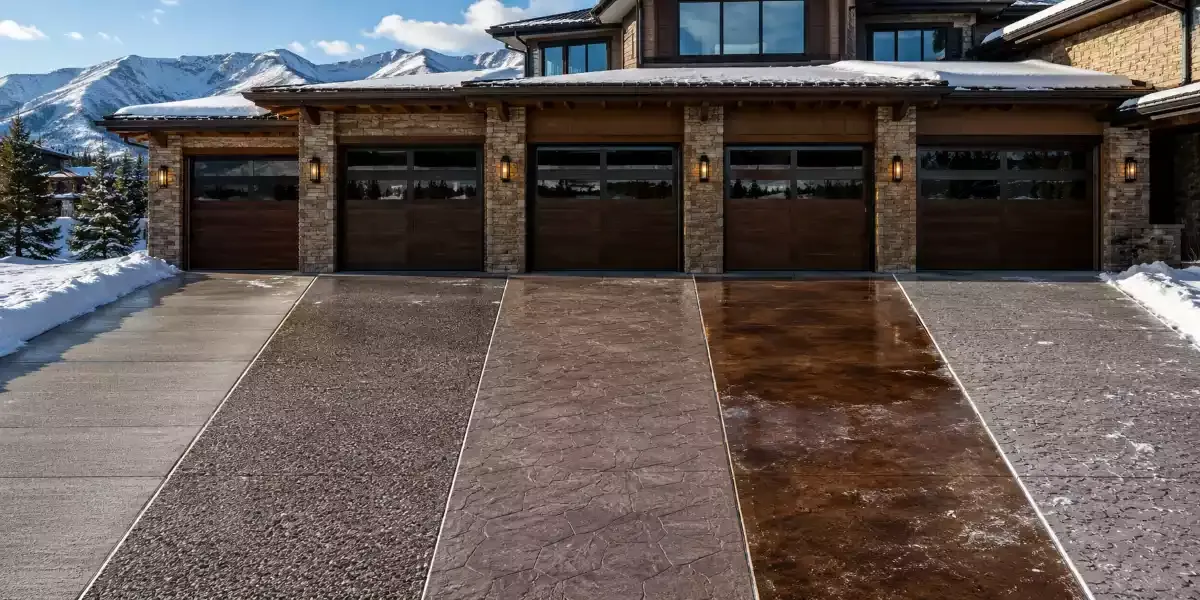
Stamped concrete is the most common decorative alternative to broom finish for Denver driveways, and it can produce genuinely attractive results. The trade-off is a surface whose traction depends partly on the pattern depth and partly on the condition of the sealer protecting it. Patterns with shallow relief provide less traction than a broom finish when the sealer is worn, and the sealer reapplication required to maintain both appearance and protection is a recurring cost and time commitment that flat-rate maintenance-minded homeowners sometimes underestimate in Colorado’s UV environment.
Exposed aggregate is another popular Denver option that provides excellent traction — comparable to or better than broom finish, depending on the aggregate size and exposure depth — but with more visual complexity and a cleaning requirement that accommodates the accumulation of debris in the aggregate texture. For driveways where the visual appeal of aggregate is a priority, and the homeowner is prepared for the more thorough cleaning that the texture requires, it is a durable and attractive choice. For homeowners who want reliable traction with minimal maintenance and a consistent, clean appearance over time, broom finish typically comes out ahead in Denver’s conditions.
For homeowners weighing finish options as part of a broader driveway decision, understanding how Denver’s specific climate affects each finish’s long-term condition is essential. Our article on proper maintenance for Denver concrete driveways covers the maintenance requirements for different concrete surfaces in Colorado’s climate — a useful reference for any homeowner comparing finish options based on long-term performance rather than initial appearance alone.
What a Well-Executed Broom Finish Requires
A broom finish is straightforward in concept but requires appropriate timing and technique to execute well. The broom pass needs to happen when the concrete has set enough to hold the texture without slumping but not so much that the surface is too stiff to accept the broom cleanly. In Denver’s variable weather conditions, where a sunny day can cause concrete to set faster than expected and a cloudy day or cold front can slow the process, reading the concrete and timing the broom pass correctly is a practical skill that experienced local crews develop through repeated work in Colorado’s specific conditions.
Curing after the broom pass is equally important. Adequate curing — keeping the surface moist and protected from rapid drying for several days after placement — ensures that the concrete achieves the density and strength its mix design intended. In Denver’s low humidity and high UV environment, concrete can lose surface moisture faster than in more humid climates, and inadequate curing produces a surface that is weaker and more porous than a well-cured slab from the same mix. The broom texture is visible; the curing quality is not — but the curing quality is what determines how the finished surface performs through Denver’s freeze-thaw cycles over the following years.
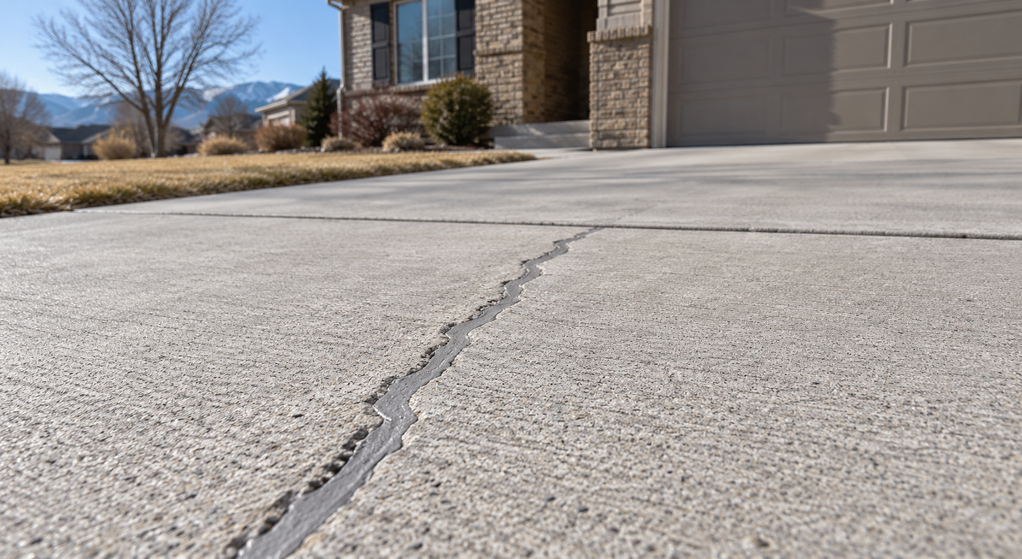
For Denver homeowners who want to understand the specific types of surface damage that develop on concrete driveways in Colorado’s climate — and which ones indicate a maintenance response versus a more significant repair — our article on why surface texture matters for skid resistance in Denver covers why surface texture, friction, wet-weather grip, and skid resistance matter for driveway safety in Denver’s climate.

Written By:
Domenique Bomediano
Home Improvement Research Specialist
Domenique is a Home & Property Research Journalist who produces educational content on home services, property improvement, and residential decision-making. He converts contractor experience, industry standards, and verified research into clear, practical guidance that helps homeowners understand their options and make informed property decisions.